Best Time For Kilimanjaro
The best time for Kilimanjaro is usually during the dry months, when the trails are more stable and the views are clearer. January, February, and the period from July to October are often the most recommended. These months usually bring better weather, less rain, and more comfortable climbing conditions. Still, mountain weather can change quickly at any time, so good preparation matters no matter when you plan your climb on Kilimanjaro.
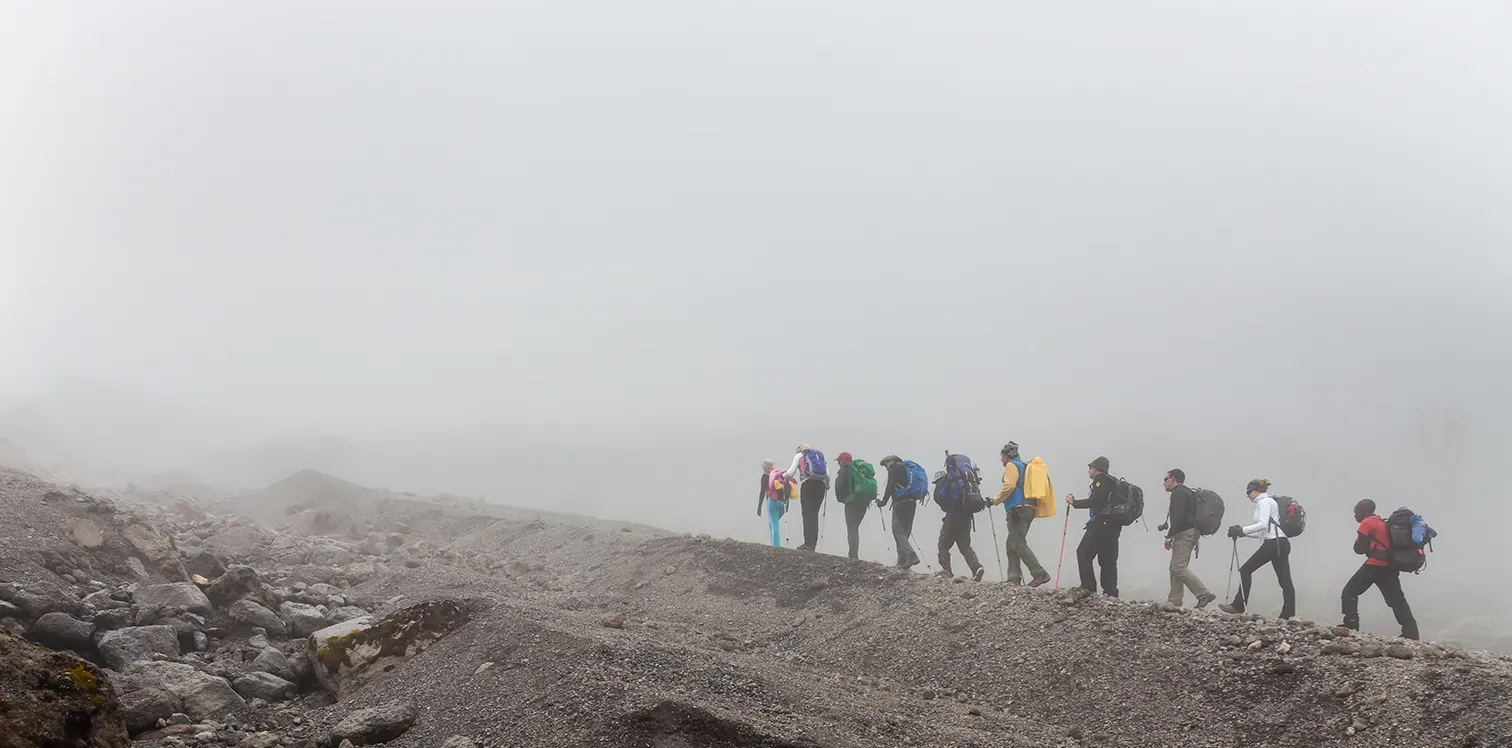
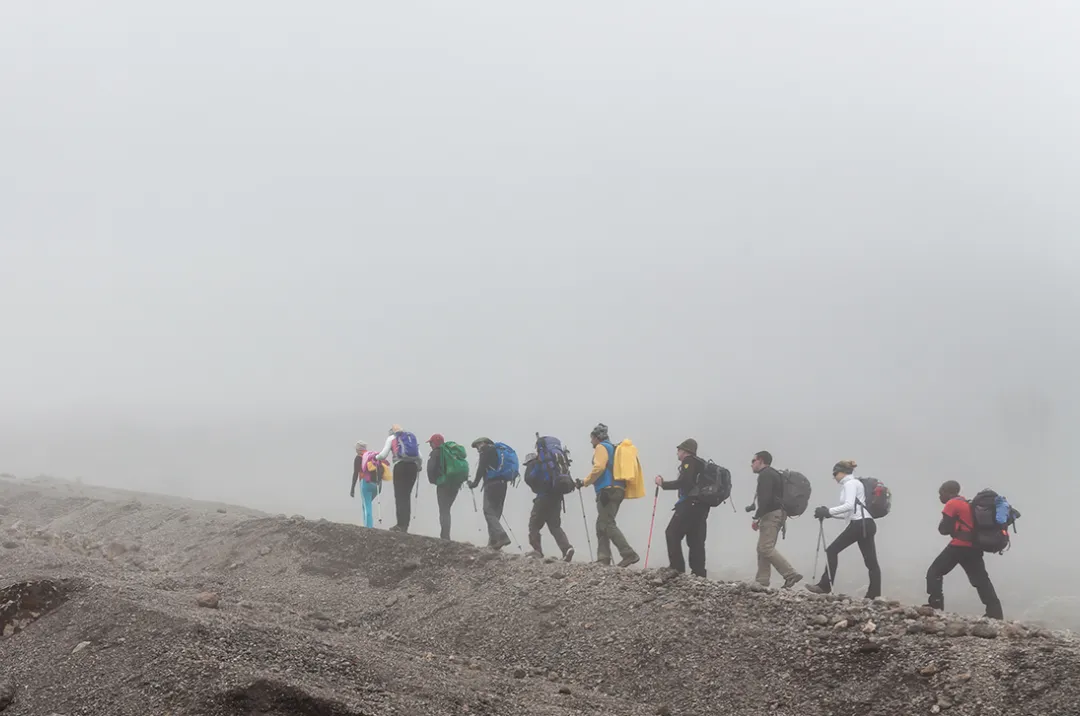
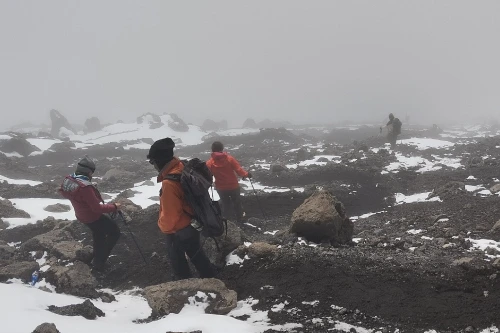
A group of climbers walks through a misty, rocky section of the mountain, showing how fog, cold air, and trail conditions can influence the best time to climb Kilimanjaro.
When is the Best Time to Climb Kilimanjaro?
The Best Time for Kilimanjaro Climbing is during the two drier windows, from December to mid-March and from late June to October. For most people booking Kilimanjaro Climbing Tours, these periods bring clearer views, firmer trails, and a better chance of steady climbing conditions, though the mountain can still change fast.
Still, no month works the same for everyone. Some people care most about dry weather and want quieter trails. Others might try to fit the climb around work leave, school holidays, safari dates, or flights home. So, the ideal time isn't always the driest. It is the time that fits the kind of climb you want to have.
At Bestday Safaris, that is how we help people plan it. Not by throwing a weather chart at them and leaving them there, but by looking at the full picture. The month, the route, the crowd level, the pace of the itinerary, and how the climb fits into the rest of the travel in Tanzania.
- 1. Understanding Kilimanjaro’s Climate
- 2. Climbing Kilimanjaro During the Peak Season
- 3. Climbing Kilimanjaro During the Short Dry Season
- 4. Climbing Kilimanjaro During the Long Rainy Season
- 5. Climbing Kilimanjaro During the Short Rainy Season
- 6. Kilimanjaro Full Moon Climbs - A Magical Experience
- 7. How Bestday Safaris Helps You Pick the Best Time for Kilimanjaro
- 8. Frequently Asked Questions
Understanding Kilimanjaro’s Climate
Kilimanjaro does not experience four distinct seasons like many other countries. It has dry and wet periods, which change the trail far more than most first-time climbers expect.
The usual dry windows run from December to mid-March and from late June to October. The long rains usually begin in late March and continue through May, while the short rains usually arrive in November.
The other thing people miss is this: one mountain day can feel like several different climates. This is because when climbing Kilimanjaro, you walk through five different worlds on this mountain. Here are the zones you’ll walk to:
- Cultivated and savanna zone – Warm, lower slopes.
- Rainforest zone – Hot, humid, where most rain falls.
- Heath and moorland zone – Cooler, misty, otherworldly.
- Alpine desert zone – Dry days, freezing nights, almost no life.
- Arctic zone – Bitter cold, ice, snow. Like standing at the top of the world. It feels like walking from the equator to the North Pole in less than a week.
Lower down in the rainforests, you can be warm and damp. As you go higher up, the air gets much colder, drier, and thinner. By summit night, you are dealing with freezing cold, wind, and sometimes snow or ice underfoot. That is why Kilimanjaro weather by month helps, but it never tells the whole story on its own.
A simple way to think about it is this:
- The dry season usually gives you clearer views and easier footing
- Rainy season brings more mud, more clouds, and more wet gear
- Heath and moorland zone – Cooler, misty, otherworldly.
- Summit conditions stay cold all year
- Forest sections can still be damp even in good months
It is important to note that the climate also varies depending on the route you choose. There is a total of seven different routes up Kilimanjaro. And the surprising thing is that with each route you choose, the experience is different.
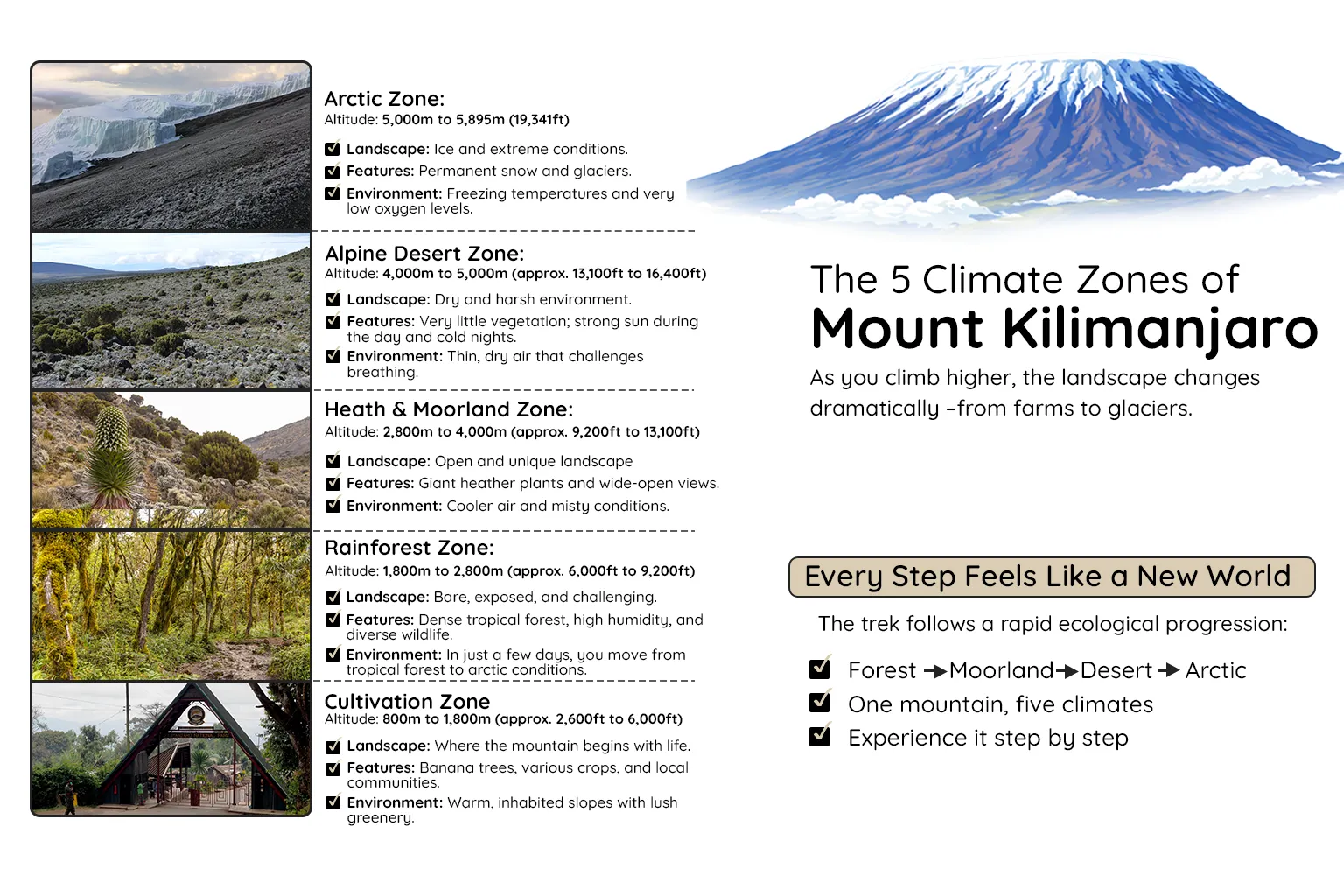
Infographic showing Mount Kilimanjaro’s five climate zones, from cultivation to arctic, with altitude ranges, landscapes, features, and environments, illustrating dramatic ecological changes experienced while trekking from base to summit.
Climbing Kilimanjaro During the Peak Season (Late June – October)
Late June through October is the most dependable time to climb Kilimanjaro for many travellers. The weather is usually drier, the views are often clearer, and the trail tends to feel more straightforward underfoot. That is why this stretch pulls the biggest numbers every year.
July and August are usually the busiest months, with September still strong and October often giving a useful shoulder-season balance. This is also when Kilimanjaro's peak season becomes real. The weather is good, school holidays line up in some markets, and full moon dates bring even more people.
If your main goal is stable conditions and you do not mind crowds, this is the Best Time for Kilimanjaro. But if your main goal is solitude, it needs a bit more thought.
Note: June, September, and early October often feel like smarter compromises than the center of July and August.
This season is usually best for:
- Climbers who want the strongest weather window
- Photographers chasing clearer mornings and broader views
- First-time trekkers who feel more comfortable on drier ground
- People climbing on popular routes and booking well in advance
The route you choose plays a big part in getting this right. Machame route crowds are usually the most noticeable because Machame is one of the mountain’s most used trails. Marangu also gets busy during peak months, especially because the hut setup attracts a certain kind of climber, and many budget climbs converge there. Lemosho stays beautiful, but its lower sections can still feel busier now than people expect.
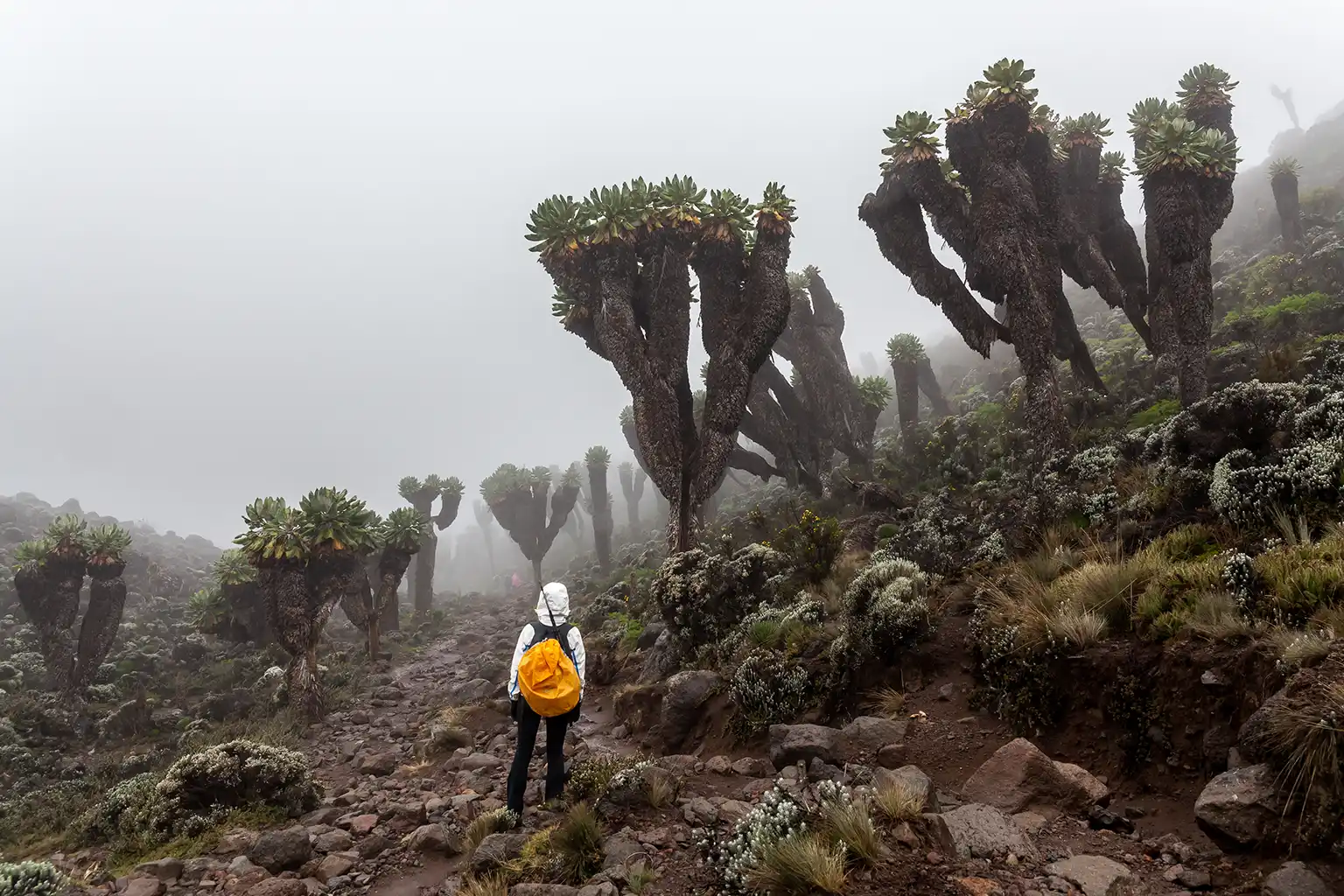
A lone hiker moves through Kilimanjaro’s misty alpine zone, where damp trails, low visibility, and colder weather show why seasonal conditions matter when deciding the best time to climb.
Climbing Kilimanjaro During the Short Dry Season (December – Mid-March)
This is one of the better windows on the mountain, if not the best.
January and February are usually the strongest months in this period. Days are often clearer, trails are usually drier, and the balance between weather and crowd level can feel quite good.
Early March can still work well, but once the month progresses, conditions become less predictable.
This period also feels a bit different from the June-to-October stretch. It is still popular, but it often feels less packed than the middle of peak season. Some climbers like this window because they get solid conditions without the heaviest trail traffic of July and August.
There is also a fair chance of seeing snow higher up, which gives summit photos a different look. If someone asks for the best month to climb Kilimanjaro, January and February are always in the serious conversation.
This season usually works well for:
- First-time climbers who want a safer weather window
- People who want good views without the heaviest peak-season traffic
- Climbers using Machame Route, Lemosho Route, Rongai Route, or Shira Route
- Travelers linking the climb with a safari soon after
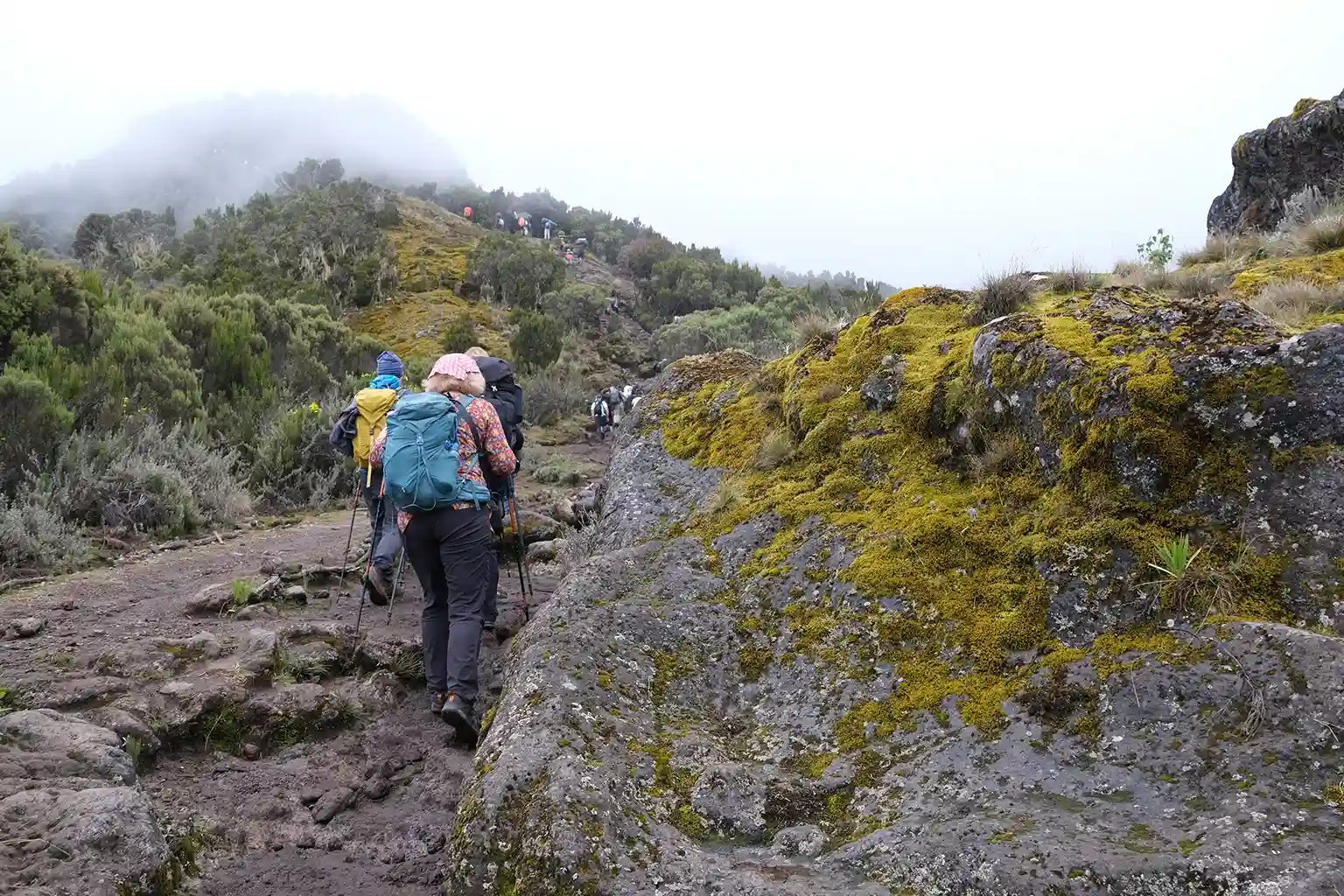
Climbers move along a damp mountain trail during Kilimanjaro’s short dry season, showing that even favorable months can still bring mist, moisture, and cooler trekking conditions on the route.
Climbing Kilimanjaro During the Long Rainy Season (March -May)
This is the long rainy season, and honestly, it is the hardest time to recommend to most people.
Rain on Kilimanjaro is not just a small inconvenience. It gets in the way of your entire day’s schedule in the following ways:
- Trails turn muddy as the boots get heavier.
- Gaiters stop feeling optional.
- Camps feel damp, and views disappear for hours.
Simple things start taking more effort. By the time people are a few days into a wet climb, they usually understand the difference between reading about rain and living inside it.
April and May are usually the wettest stretch. If your dates are flexible, this is the part of the calendar most people avoid. That does not mean climbing stops. It goes on, but the climb is harder, messier, and less comfortable.
The Rongai route, on the mountain's northern side, is the preferred route for climbing
during the rains as it is comparatively drier than other routes.
Some trekkers
still like this period because the mountain is quieter with fewer climbers and less
noise around camp.
Still, these long rains are favourable for climbers:
- Trekkers who want to avoid crowds
- Avoid all the noise around camps
- Prefer peaceful treks
- Trekkers who are highly experienced and don’t mind getting drenched.
But for most first-time climbers, the long rains ask for more patience than they expect.
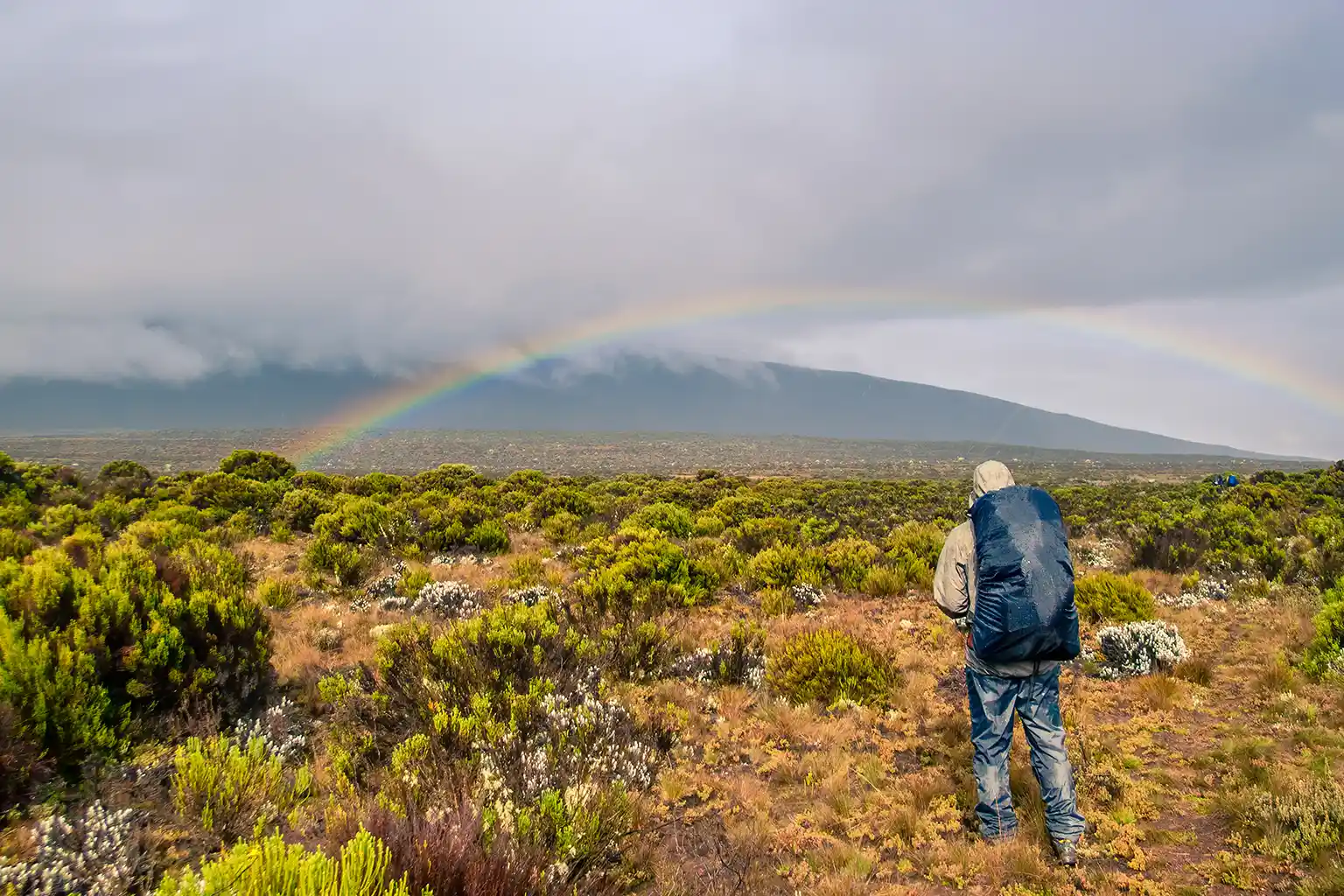
A hiker stands beneath rain clouds and a rainbow on Kilimanjaro, illustrating the long rainy season when wetter ground, shifting weather, and dramatic views can define the climbing experience.
Climbing Kilimanjaro During the Short Rainy Season (November)
November sits in that awkward space where it can work well for some climbers and feel frustrating for others.
This is the short rainy season. Rain often comes in bursts instead of settling in for weeks like the long rains, but it still changes the climb. Trails can get slick. Clouds can close in without much warning. Some days feel fine, then suddenly you are pulling on waterproof layers again and wondering why your gloves are damp.
And yet, November has its own appeal. It is quieter. Camps are calmer. The mountain feels less crowded and a bit more personal. Some climbers like that immediately. Others miss the broad, clear views that dry-season climbs often give.
So November is not a bad month. It just needs the right mindset. If you are fine with trading some weather stability for fewer people, it can still be a good time to go on a Kilimanjaro Climbing Tour.
The best time to climb Kilimanjaro is usually during the dry months, but preparation still matters. Good weather helps, yet the right route and pace matter just as much.
Peter Charles
Kilimanjaro Full Moon Climbs - A Magical Experience
A wonderful glow will be added to your summit attempt if you participate in a Kilimanjaro Full moon climb. That’s why a significant number of climbers intend to schedule their Kilimanjaro Climbing Tour within this time frame.
Benefits of full moon climbs
- Natural light helps during midnight summit attempts
- Stunning views of glaciers at night
- A memorable photographic experience
- Shared camaraderie with fellow trekkers
The instructions to be at the Uhuru Peak right during the full moon are pretty simple. Suppose you have booked a 7-day Kilimanjaro Climbing Package; you need to start trekking 5 days before the full moon date. In that way, you will be on the summit exactly during the full moon.
Similarly, for an 8-day trek, begin 6 days in advance.
To make planning your Kilimanjaro Full Moon Climb easier, here’s a clear list of upcoming full moon dates that offer the best visibility for a magical summit experience.
| Month | Jan | Feb | Mar | Apr | May | June | July | Aug | Sept | Oct | Nov | Dec |
|---|---|---|---|---|---|---|---|---|---|---|---|---|
| 2026 Full Moon | 3rd | 2nd | 3rd | 2nd | 1st | 30th | 29th | 28th | 26th | 26th | 24th | 24th |
| 2027 Full Moon | 22nd | 21st | 22nd | 21st | 20th | 19th | 18th | 17th | 16th | 14th | - | 13th |
Note: Climbs revolving around full moon dates are very popular. If you want to secure your desired route and accommodations, you should book your Kilimanjaro Climbing Package in advance. Also, we have tried to give you the most accurate dates for the full moon climbs. Still, you can always double-check before booking.
- Kilimanjaro
- Private
- Luxury
- Camp
6 Days Shira Route
Starts from: On Request
View Tour
- Kilimanjaro
- Private
- Luxury
- Camp
6 Days Rongai Route
Starts from: On Request
View Tour
- Kilimanjaro
- Private
- Luxury
- Hut
5 Days Marangu Route
Starts from: On Request
View Tour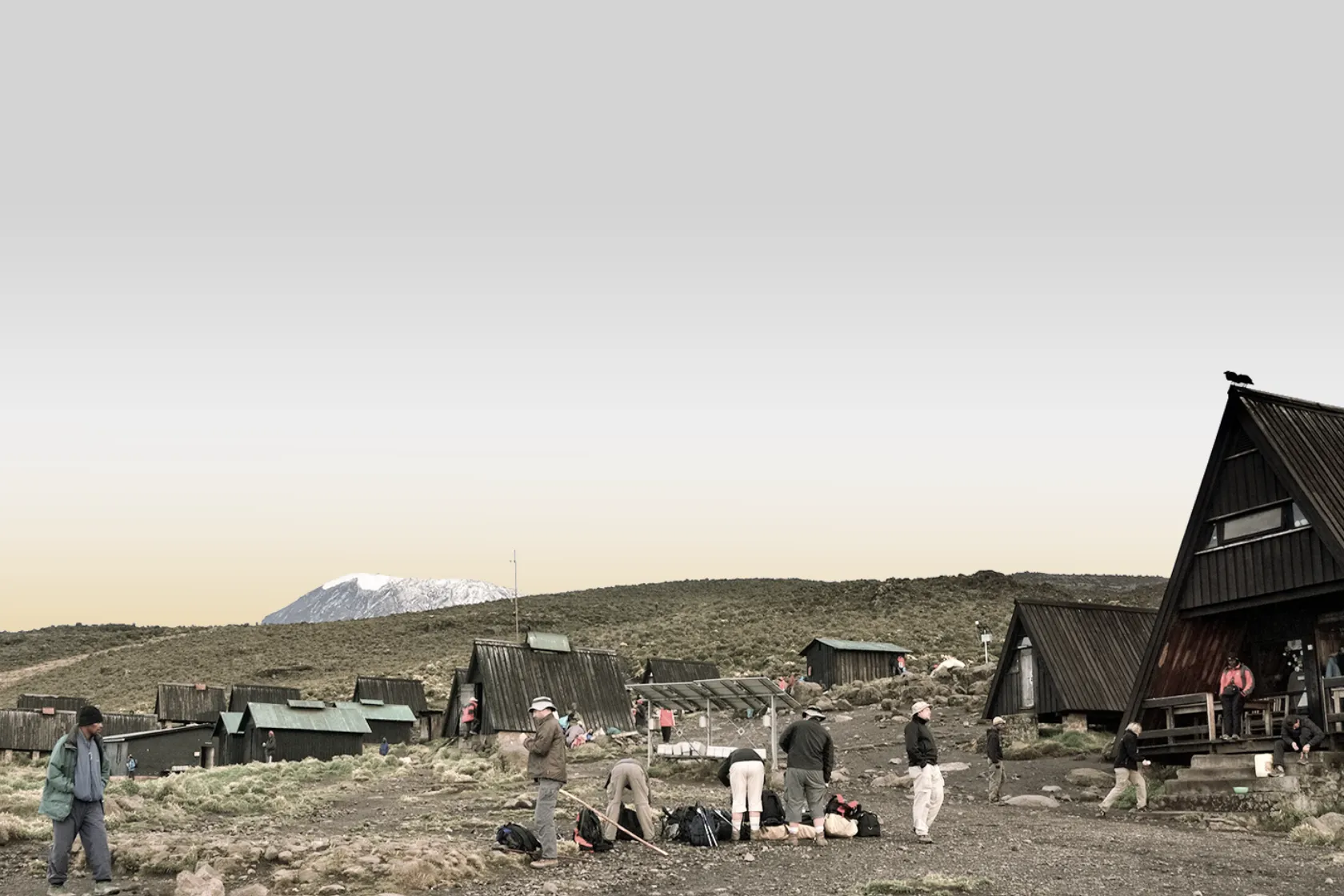
- Kilimanjaro
- Private
- Luxury
- Hut
6 Days Marangu Route
Starts from: On Request
View TourHow Bestday Safaris Helps You Pick the Best Time for Kilimanjaro
At Bestday Safaris, we do not treat every climber the same, because they are not.
Some people want the driest trail possible, while others care more about having a quieter route. Some are strong hikers but nervous about altitude. Some want to climb and go straight into the Tanzania safari after. Many are trying to fit the whole trip into a very specific leave window and just need honest advice.
We understand this and recommend strong planning before starting for the mountains. Our approach is to know your travel dates, preferred route, comfort level, and the pace you want on the mountain.
Then we help you choose a time that gives you the best chance of a climb that feels right from the beginning. Now that the timing is confirmed, you can move ahead and just start packing for the Kilimanjaro Climbing Tours without any more complications.
Choose the right season for a smoother and more enjoyable climb.
Find Your Best Month
Frequently Asked Questions
The best time is usually during the dry seasons, from December to mid-March and from late June to October.
Yes, you can climb Kilimanjaro during the rains. But the climb is usually wetter, muddier, and less comfortable, especially in April and May.
Months like January, February, June, September, October, and November can feel less crowded than the busiest part of peak season, depending on the Kilimanjaro Climbing Route you choose.
It can be. November suits climbers who want quieter trails and do not mind some rain along the way.
Rongai Route is often a better option in wetter periods because the northern side of the mountain is usually drier.

Plan a Mountain Climbing Trip
We offer a range of mountain climbing experiences. You can also chat with our climbing specialist for a customized trekking itinerary in Tanzania.
Recommended by

Kilimanjaro Travel Guide
Your Trusted Guide for Every Climb Detail
Our Kilimanjaro travel guide is here to make planning easier. It covers the best time to climb, route options, costs, fitness preparation, packing advice, and useful mountain tips that matter once you are really on the trail. Climbing Kilimanjaro feels much more manageable when the right information is in one place, and that is exactly what this guide is meant to give you from the start.
Guestbook Moments
Real Stories from Safari Guests
A good safari often lives on through the words guests bring back. Here, Bestday Safaris travelers share notes on the people, pace, small comforts, wildlife moments, and honest care that became part of their journey. Their reviews help future travelers see beyond the itinerary and understand how each safari feels on the ground.
Excellent

4.9 out of 5
753 Reviews
Lorena T

We had an amazing experience with BestDays Safaris. Our driver Muro was very knowledgeable, took us away from crowds to spot animals and was an excellent guide. The camping accommodation that BestDay Safaris
Mar 2026
Annabella R
Climbing Mount Kilimanjaro was one of the most intense and beautiful experiences of my life, and a huge part of that is thanks to our guide, Boni. From day one, Boni set the tone for...
Mar 2026
Александр Е
Finally went to fulfill his long-held dream of climbing Kilimanjaro. The journey exceeded all my expectations. I enjoyed nature, met new people, experienced mountain sickness and overcoming myself again...
Mar 2026
Alejandra Q
We just finished an incredible safari as our honeymoon on a private safari tour for us two with Best Day Safaris in Tanzania and the whole experience exceeded our expectations.During the trip we explored Tarangire...
Mar 2026
Gabriel R
Our safari in Tanzania was honestly better than we ever imagined, easily the best trip we’ve ever taken. We visited Tarangire National Park, the incredible Serengeti National Park, and the breathtaking and the breathtaking...
Mar 2026
Rustam K
In February 2026, we took the Lemosho route to Kilimanjaro with this wonderful team. Everything was perfectly organized, from the first meeting to the climb. And frankly, I don't want to call these guys just...
Feb 2026
Start planning your safari. Get matched with a local adventure specialist.
 David
David
 Jackson Mollel
 Stephen
Faraj
Abel
Stephen
Faraj
Abel