Serengeti Safari Regions
A proper Serengeti Safari Experience really comes down to two things: where you are in the park and when you are there.
The park is huge. Not just big on a map, but genuinely varied once you are inside it. The land changes, so does the wildlife. Even the feel of the day changes. So when people talk about “going to Serengeti,” it is never quite that straightforward. You need to know exactly what region you are going to.
Regions of Serengeti:
Central Serengeti, or Seronera, is where many first-time travelers get that immediate feeling of, yes, this is what they came for. Wildlife is strong here through much of the year because water is more reliable, so the area stays active. You do not usually spend long wondering if the drive will deliver. It often does.
Northern Serengeti, around Kogatende and the Mara River, feels different almost at once. It is quieter in its own way. The distances feel wider. There are usually fewer vehicles, and the landscape has a more remote, untidy kind of beauty. This is also the region many people look at for river crossing season, but even outside that, it has a wilder feel that stays with you.
Western Corridor / Grumeti Area: This area gives you dramatic river scenes. You watch huge crocodiles patiently waiting, and the lighting near the water is often moody and striking.
Eastern Serengeti
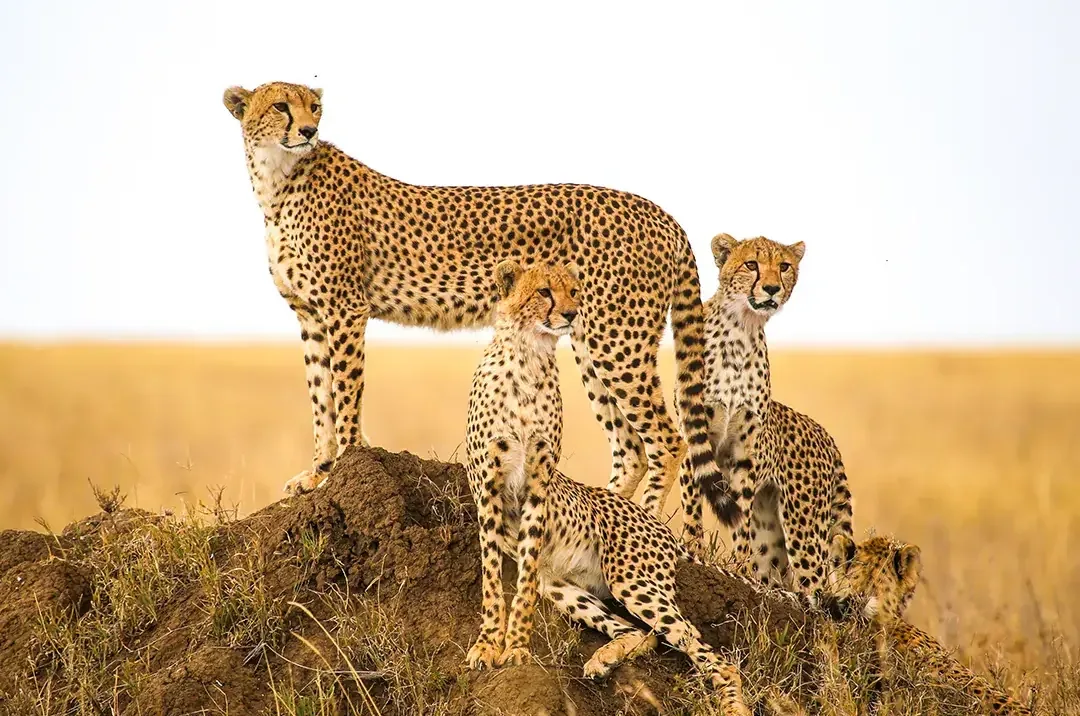
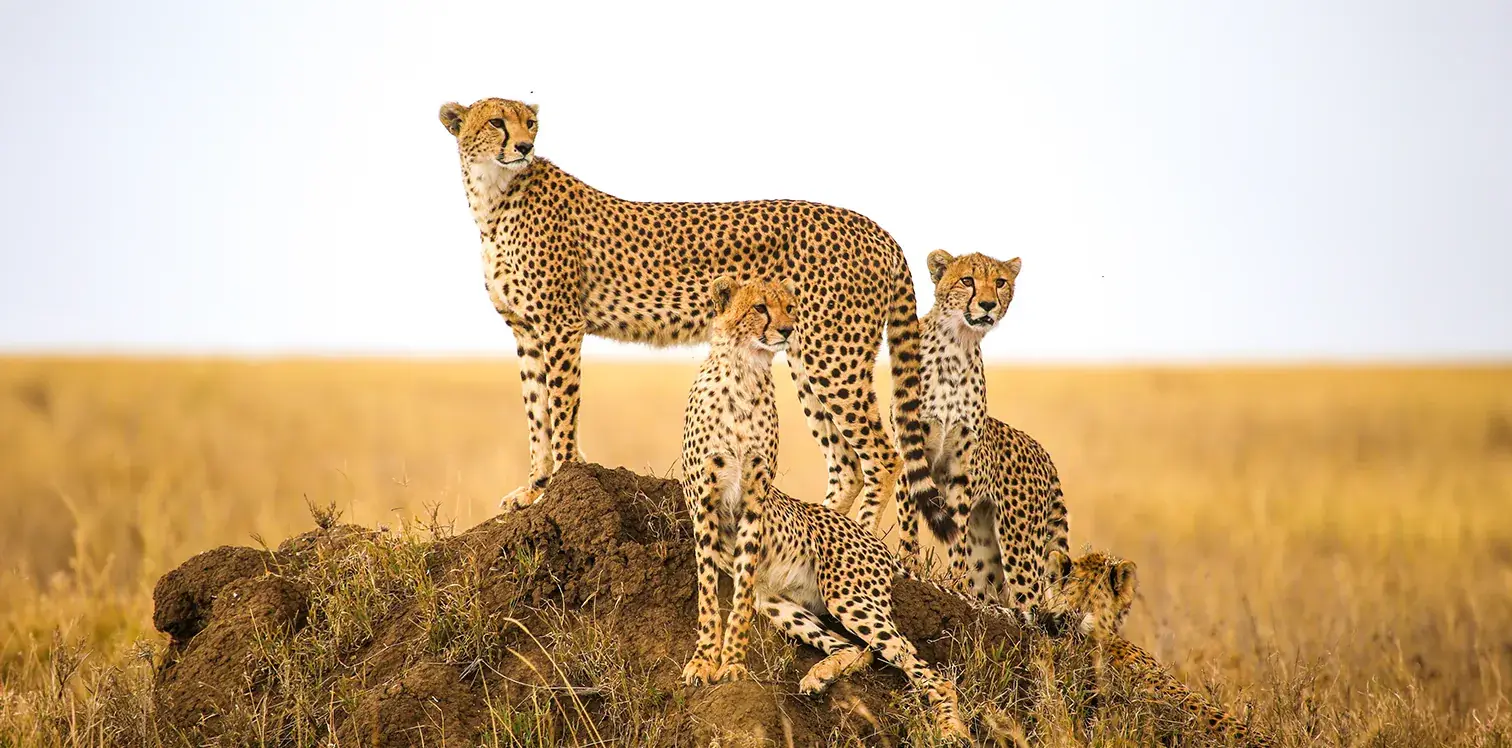
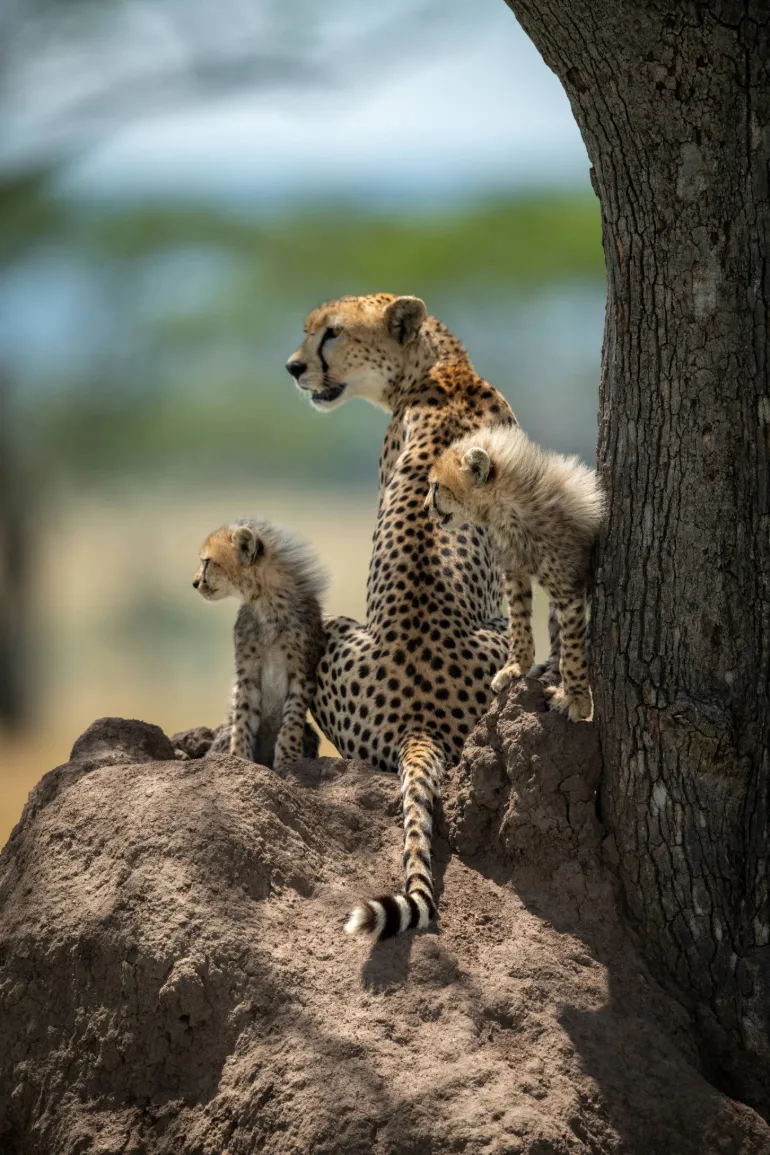
This feels quieter and much more open. The flat terrain is excellent for scanning long distances, and many visitors feel it’s wonderful for spotting cheetahs.
Southern plains (Seasonal feel)
During the calving time, this area pulses with intense new life. You feel completely surrounded by the cycle of nature under a massive sky.
Smart itineraries shift you between these zones. Good planning ensures you experience a variety of settings, avoiding endless repetition of the same views.
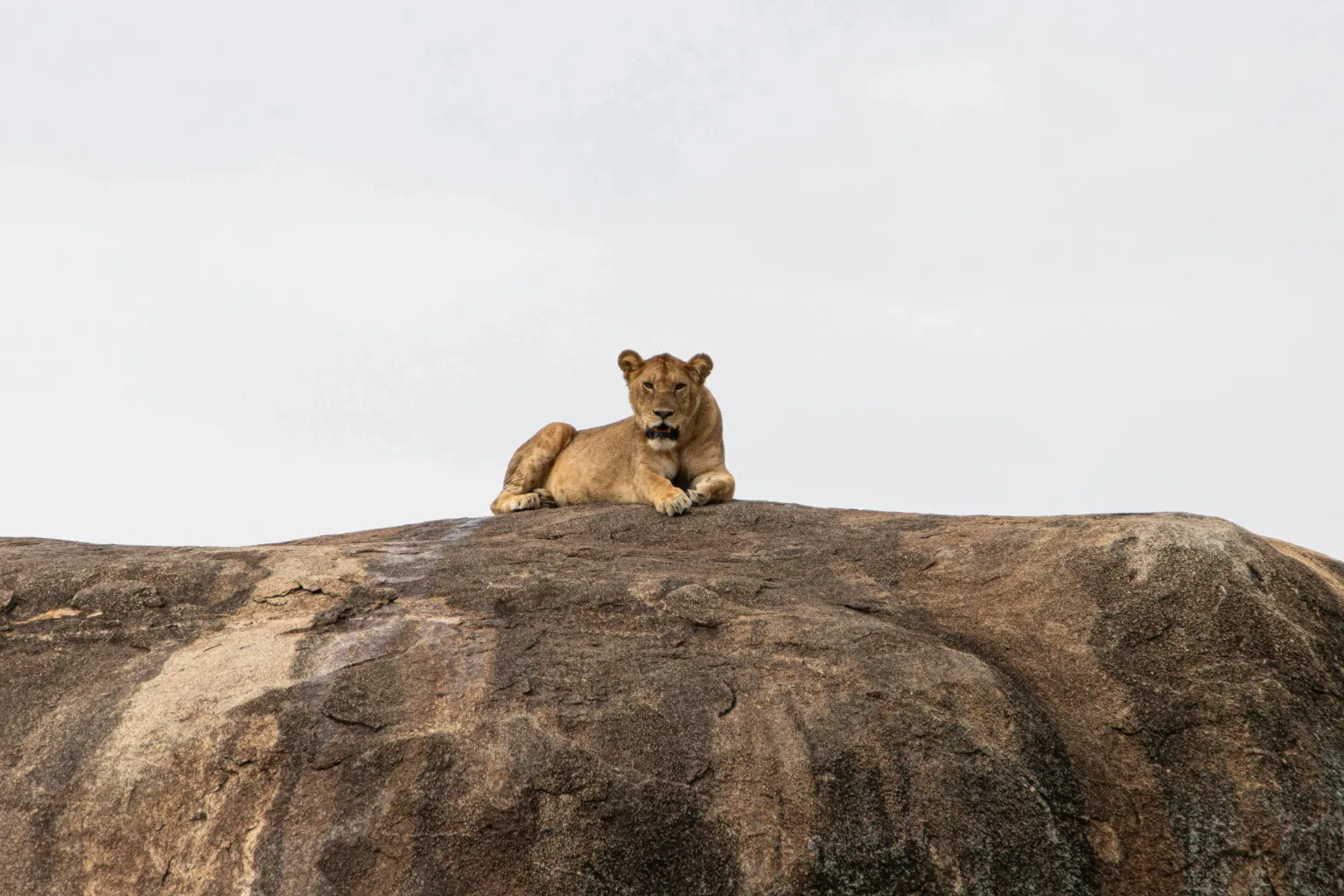
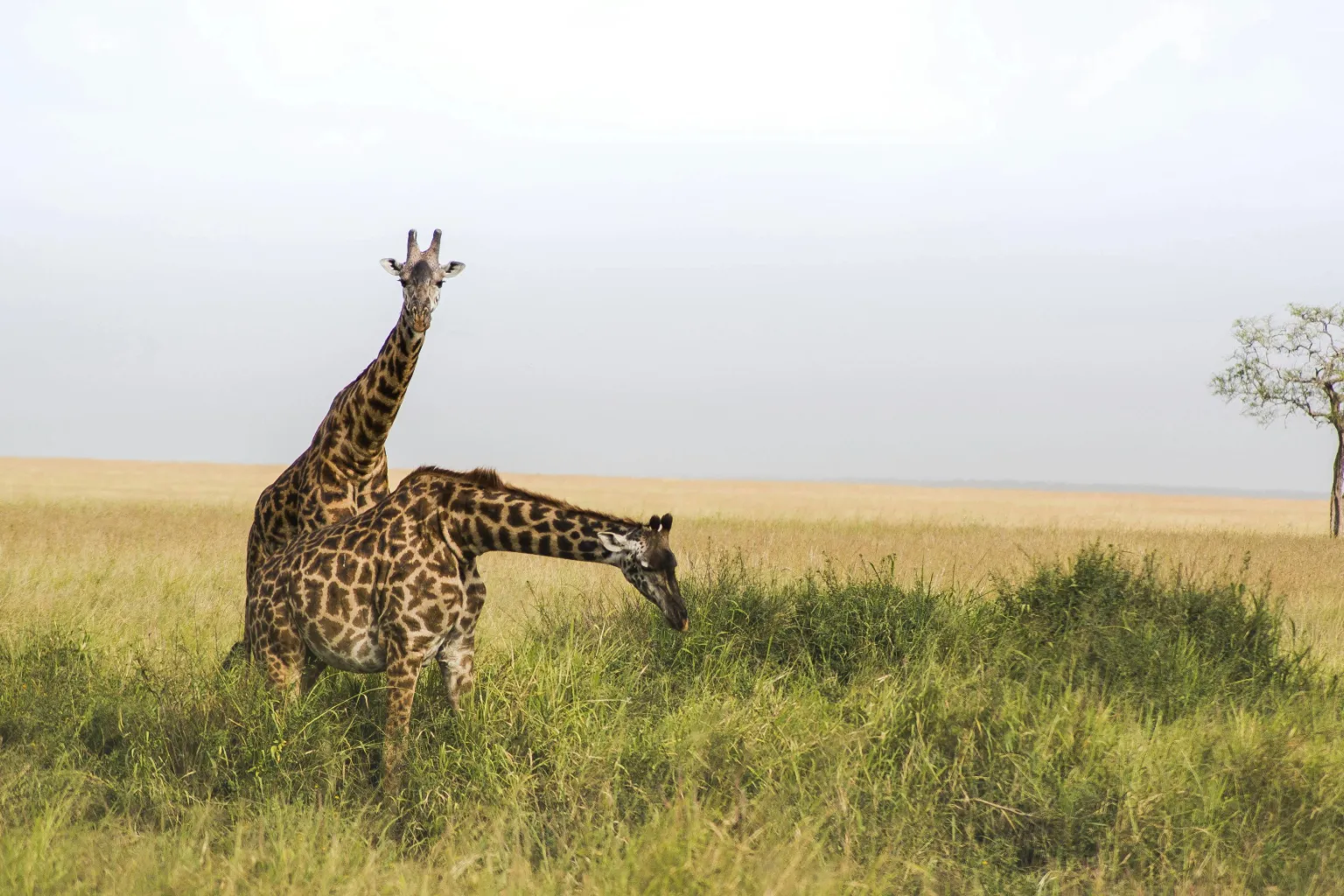
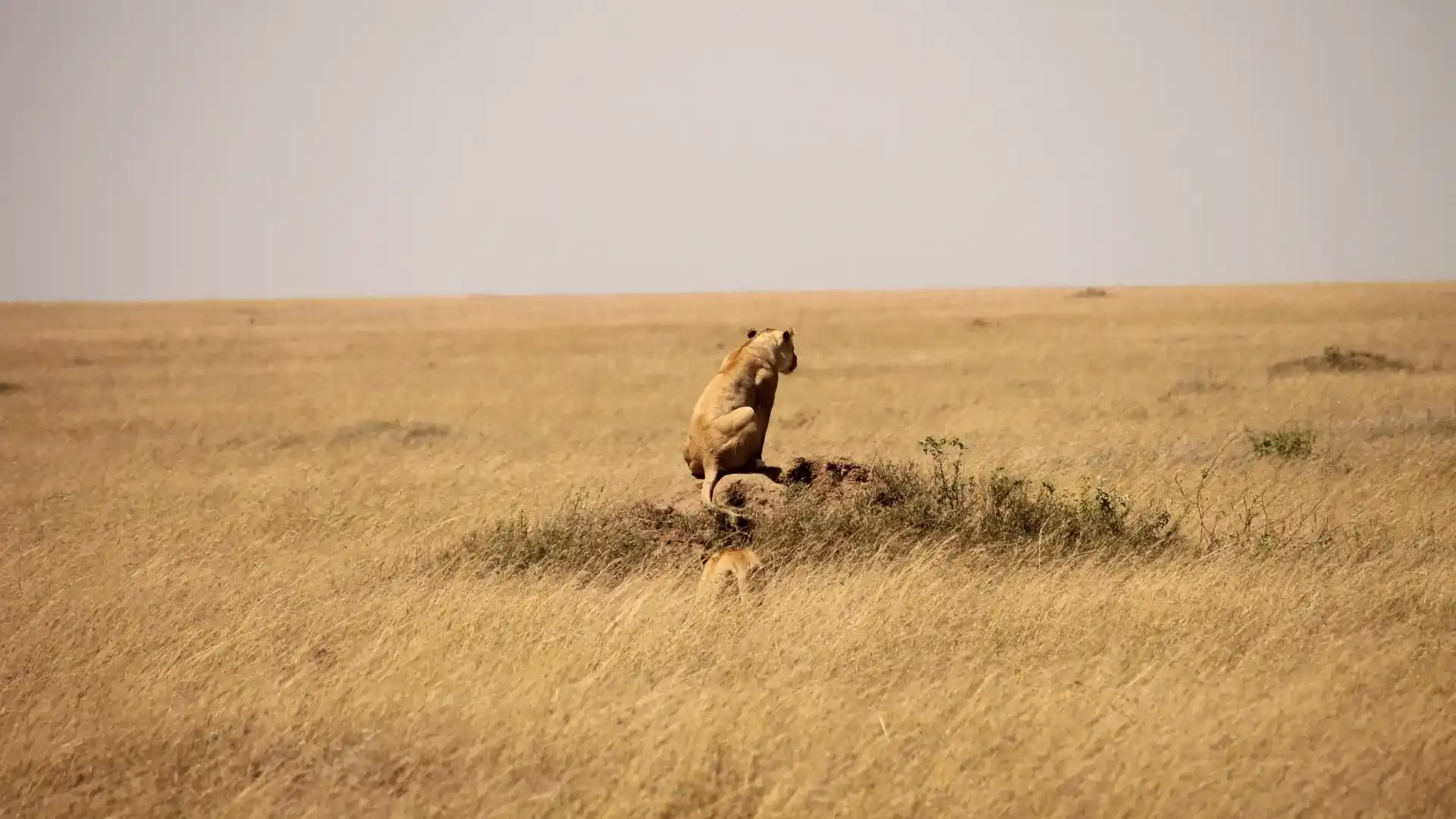
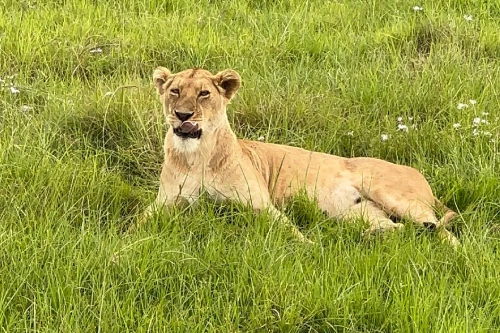
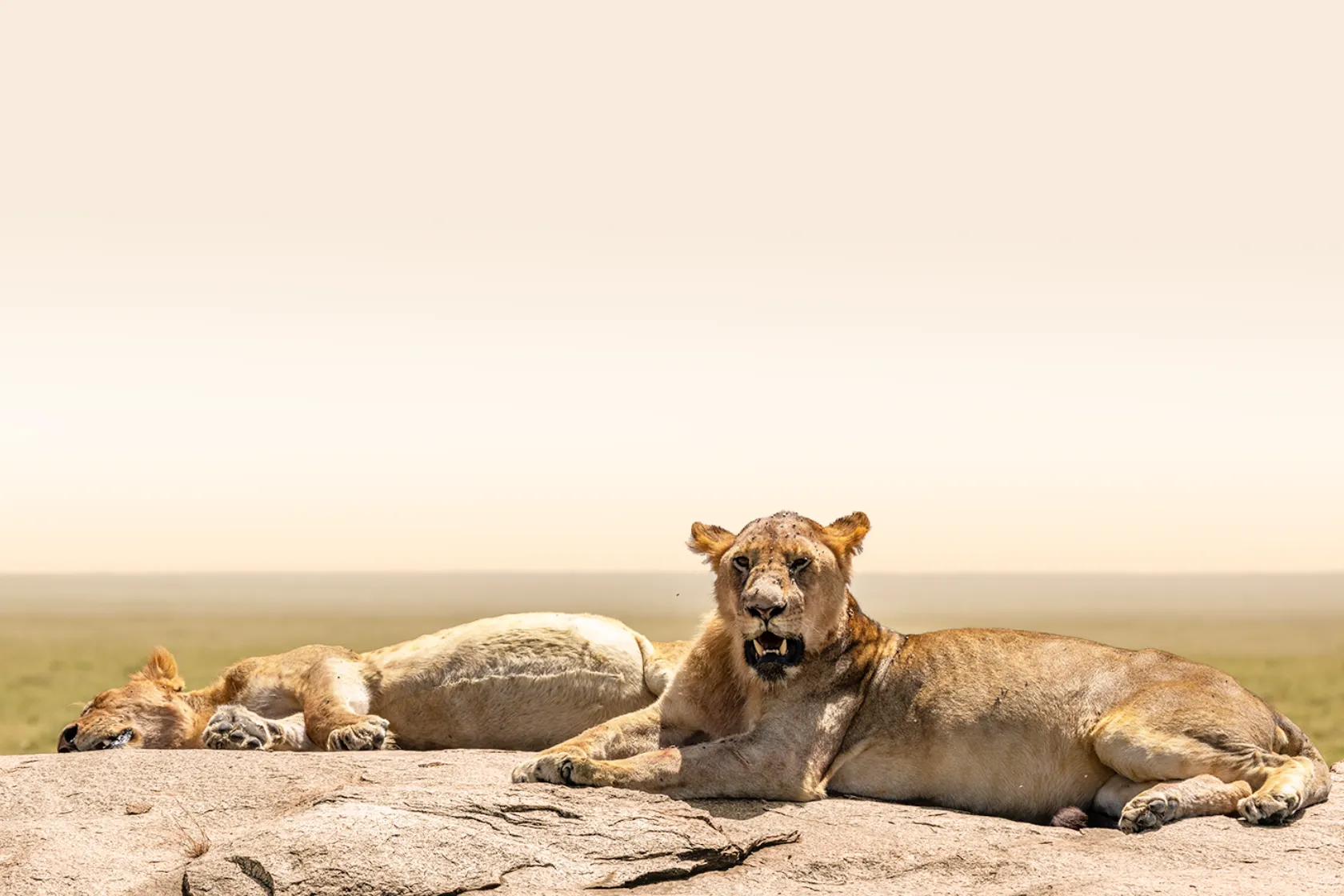
A lion rests on a rocky outcrop while two giraffes stand and graze in open Serengeti grasslands, capturing iconic wildlife behavior across rocky kopjes and vast golden savanna landscapes.
Serengeti Wildlife
The Serengeti supports an enormous range of wildlife. The Big Five are part of the list, though black rhinos are rarely seen here. Lions are a much more realistic hope. Cheetahs are also common enough in the right areas, especially where the land opens out and gives them room. Leopards are harder. They ask for more patience and better luck. Then again, that is part of what makes a leopard sighting count.
You also have the supporting cast, and they really do count:
Giraffe Sightings
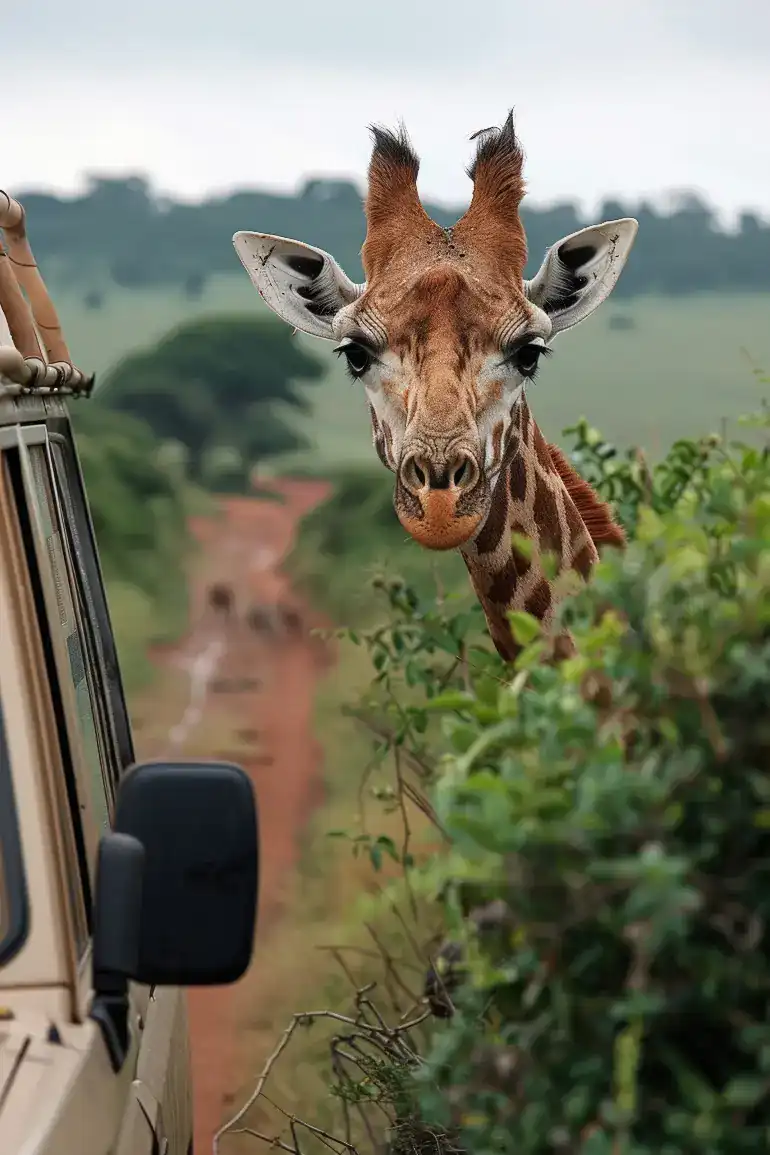
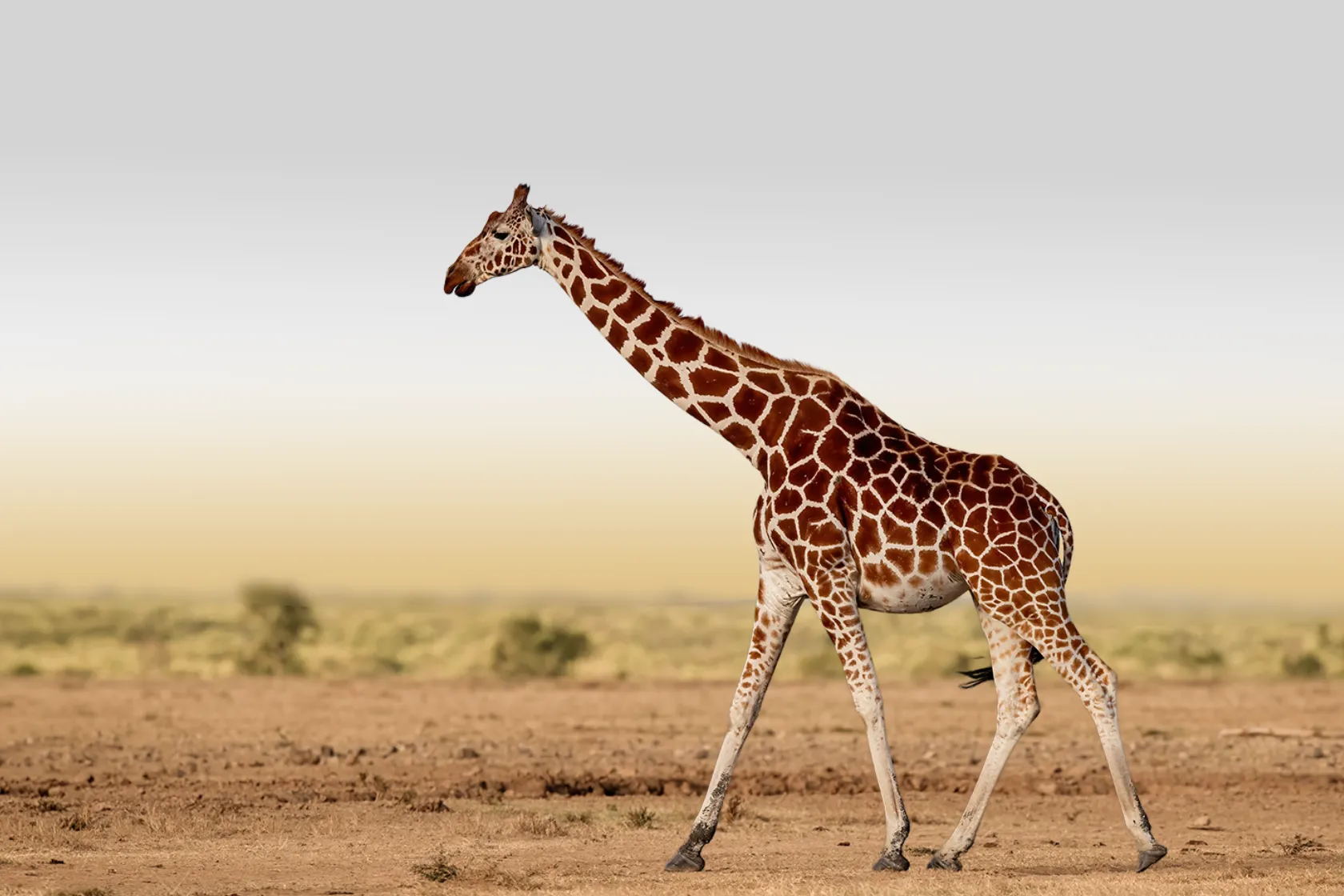
Tall giraffes are often seen browsing trees across open areas
Elephant Herds
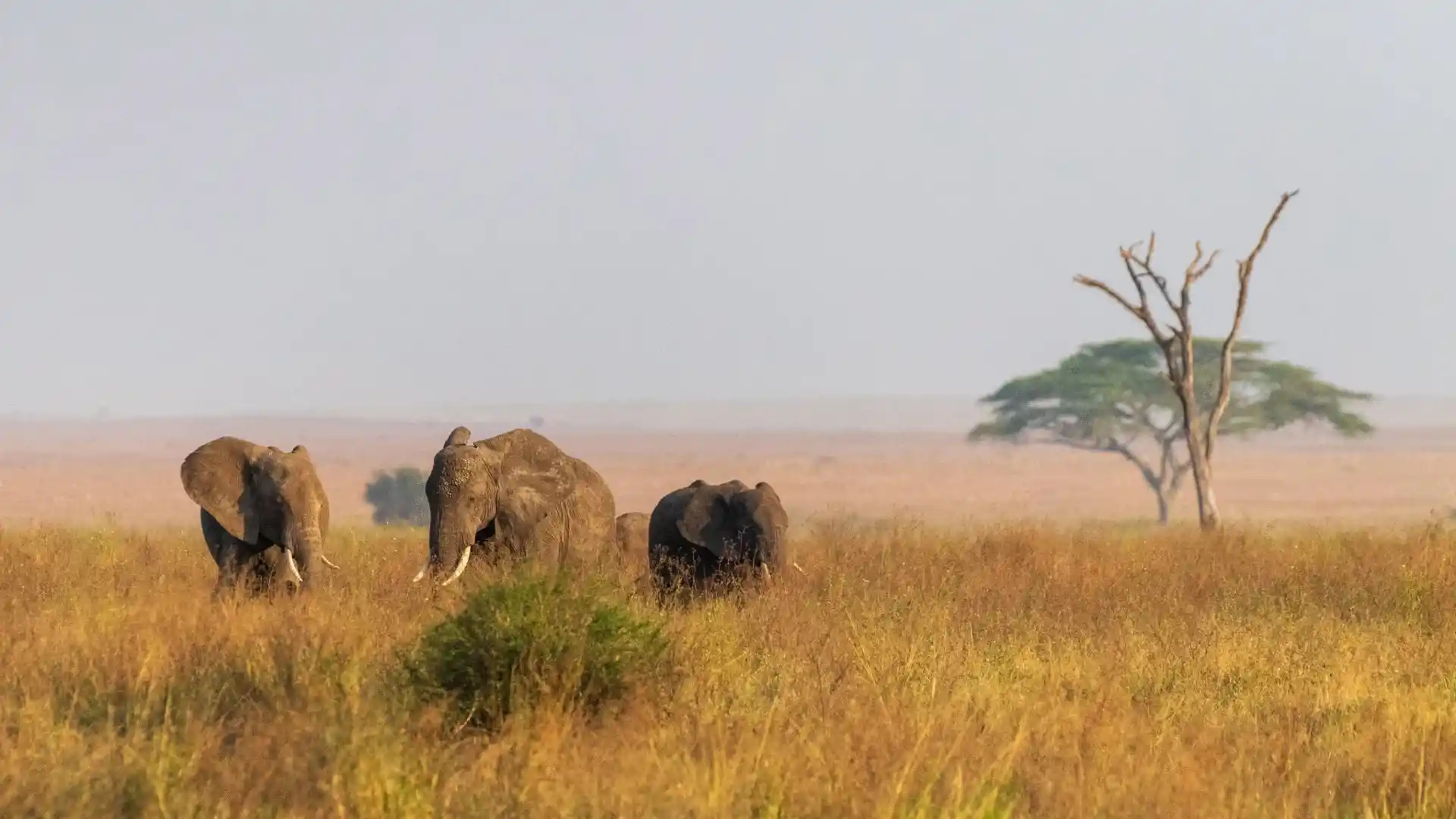
Large elephant groups move slowly through the park landscapes
Buffalo Presence
Buffalo are commonly found grazing in herds across plains
Spotted Hyena
Spotted hyenas are active scavengers, often seen in groups
Black-Backed Jackal
These small predators are alert and move quickly across terrain
Warthog Encounters
Warthogs are frequently spotted grazing or running with tails raised
Gazelles & Antelope
Thomson’s gazelles and other antelope species are widely seen
River Wildlife
Hippos and crocodiles are found in major rivers and water bodies
The Grumeti and Mara Rivers deserve special mention. They are not just water on the map. They hold heavy hippo pods and very large crocodiles, and in migration season, they become some of the most closely watched places in the ecosystem. A lot of tension gathers around those rivers. You feel it in the vehicle before anything happens.
Still, not every good wildlife moment has to be dramatic. That is one thing people sometimes forget. A line of giraffes moving through the distance can stay with you. So can elephants feed quietly with no hurry at all. The Serengeti has room for both kinds of moments, and that is part of why it feels so full.
Special Mention on the Great Wildebeest Migration
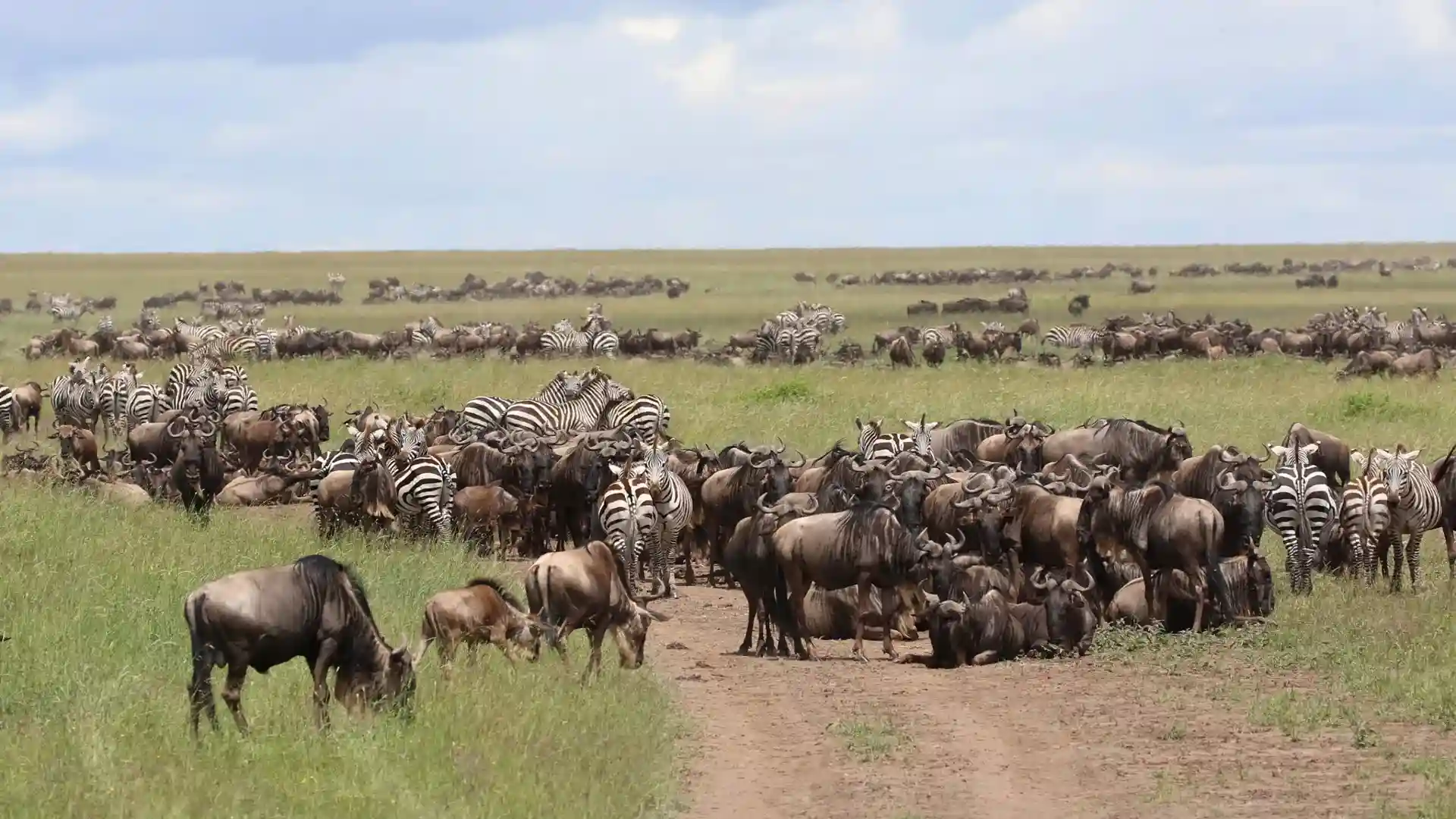
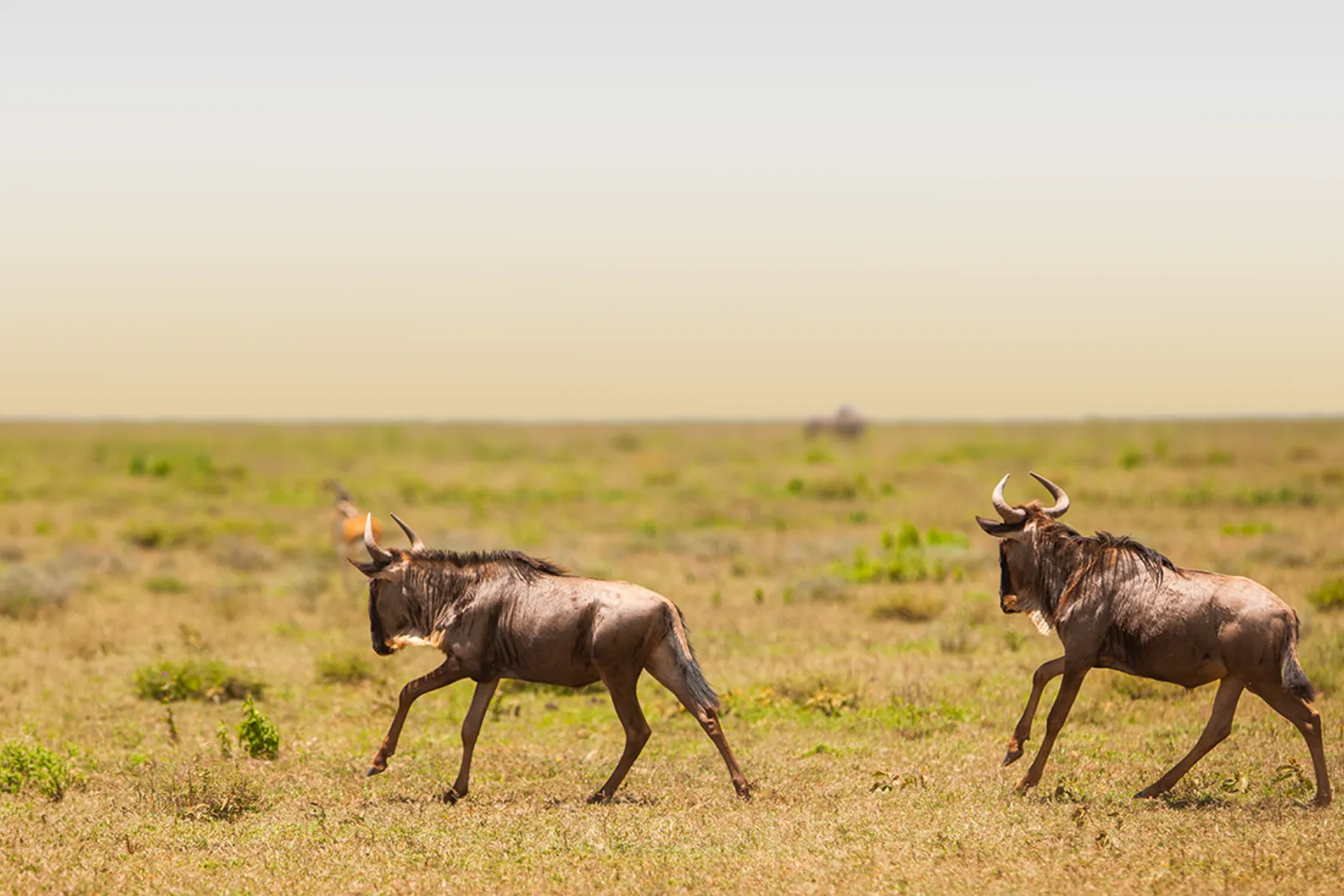
The Serengeti is best known for the Great Migration. More than 1.5 million wildebeest, around 200,000 zebra, and about 300,000 Thomson’s gazelles move through the ecosystem following grazing and rain. The numbers are impressive, yes, but what really changes the experience is the movement itself. It gives the land a different kind of energy.
Predators follow that movement, so migration periods can bring especially good cat action, too.
Wildlife highlights include:
Great Migration Event
Witness the annual wildebeest migration, one of nature’s most spectacular wildlife movements
Lion Sightings
Strong chances of spotting lions across many regions of the park
Cheetah Encounters
Cheetahs are often seen hunting in the wide open plains
Leopard Habitats
Leopards appear in selected river systems and wooded areas
River Wildlife Activity
Hippo pools and crocodile-filled rivers offer dramatic viewing scenes
Year-Round Wildlife
Central Serengeti has good resident wildlife throughout most of the year
A Serengeti big cats safari experience is one of the main reasons travelers place this park at the center of their trip.
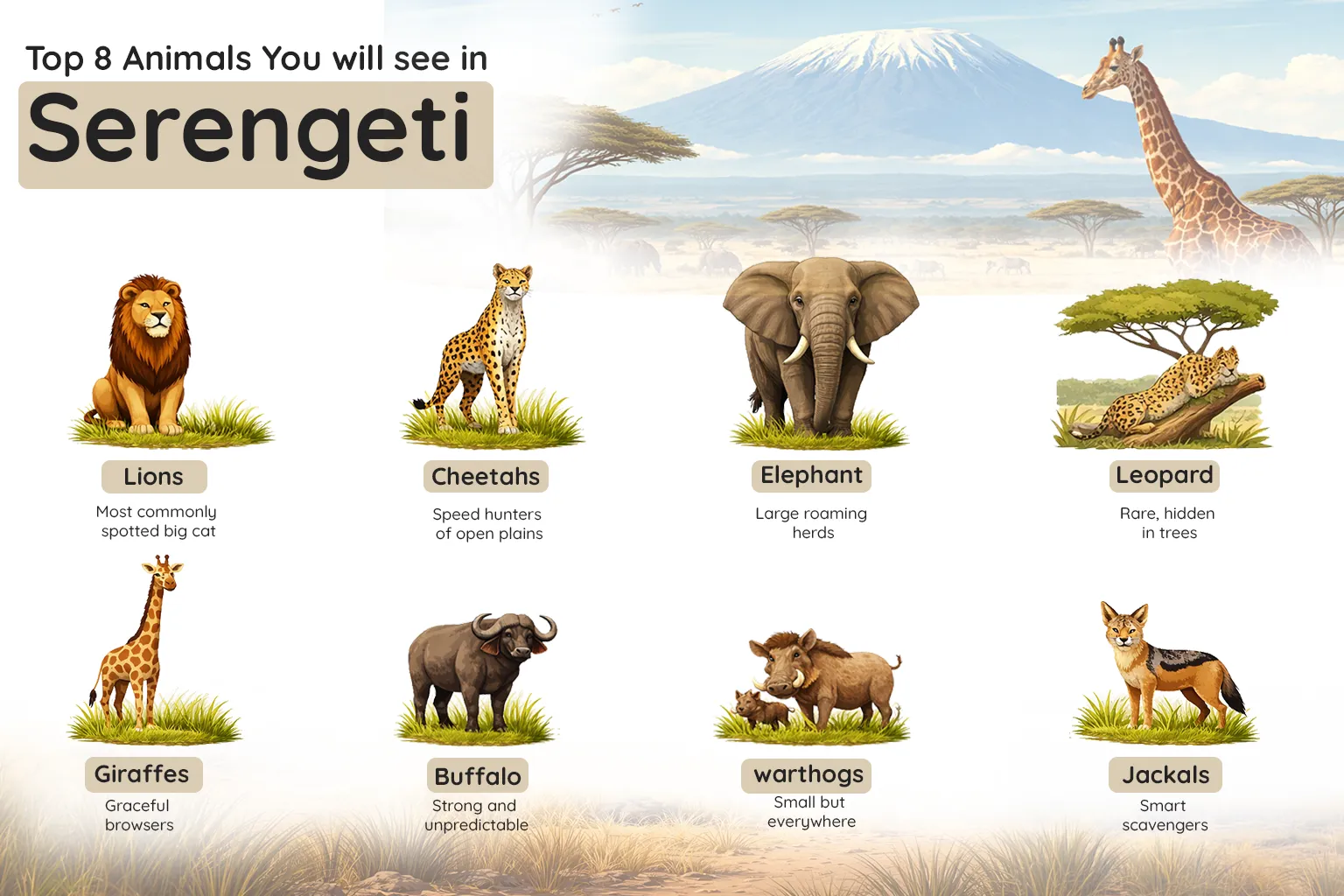
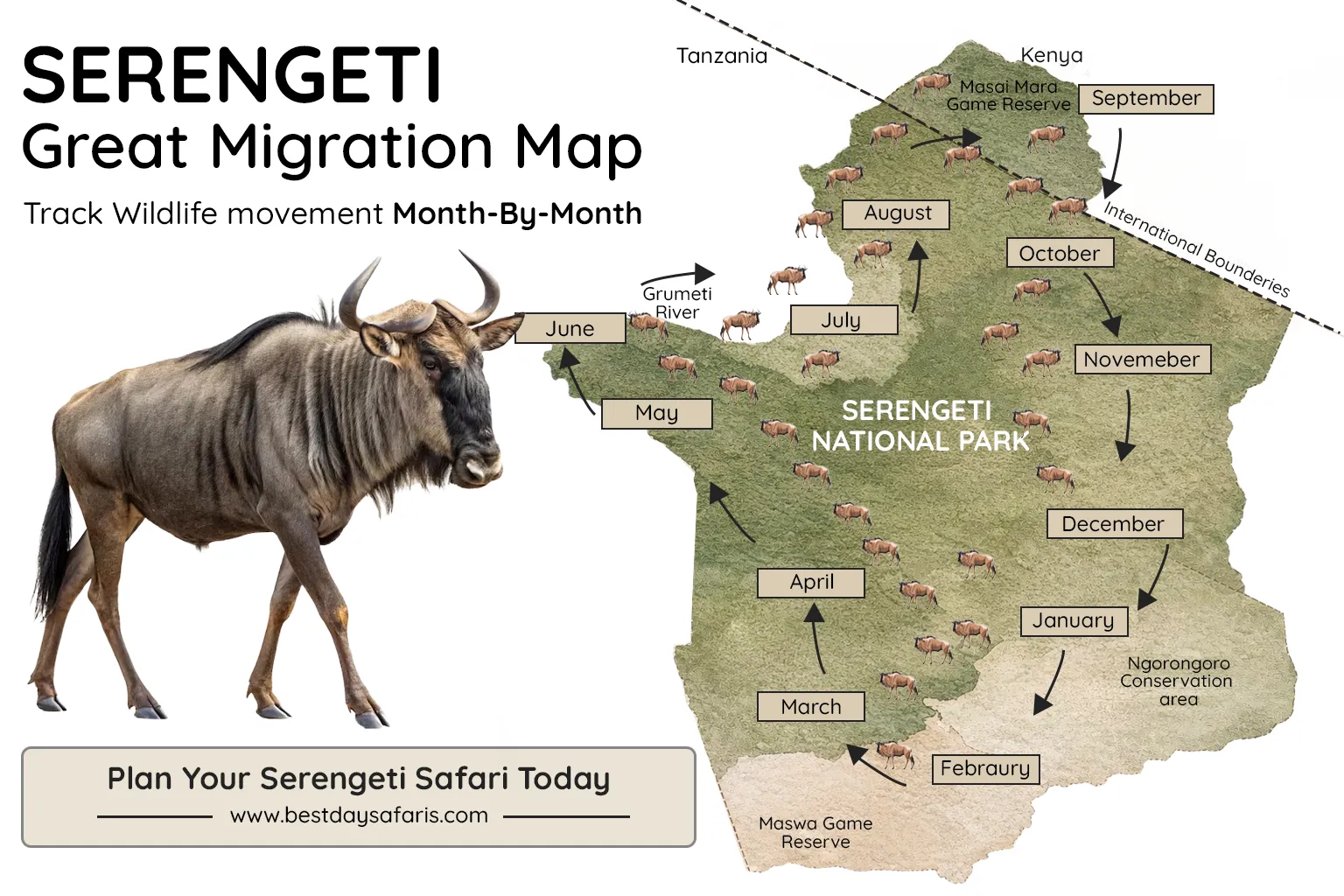
Illustrated Serengeti guide combining top wildlife and Great Migration map, featuring lions, cheetahs, elephants, leopards, giraffes, buffalo, warthogs, jackals, and wildebeest movements across Tanzania and Kenya month by month.
What activities can you do on Serengeti Safaris?
Game drives are the main part of the Serengeti Experience. Sometimes the day is broken into a morning drive and a later afternoon drive. Sometimes it runs as one long day in the park with lunch packed for you. That usually depends on where you are staying, how far you need to go, and how the day is unfolding.
Other activities may also be possible, depending on your camp and your budget. These may include:
Hot-Air Balloon Safari
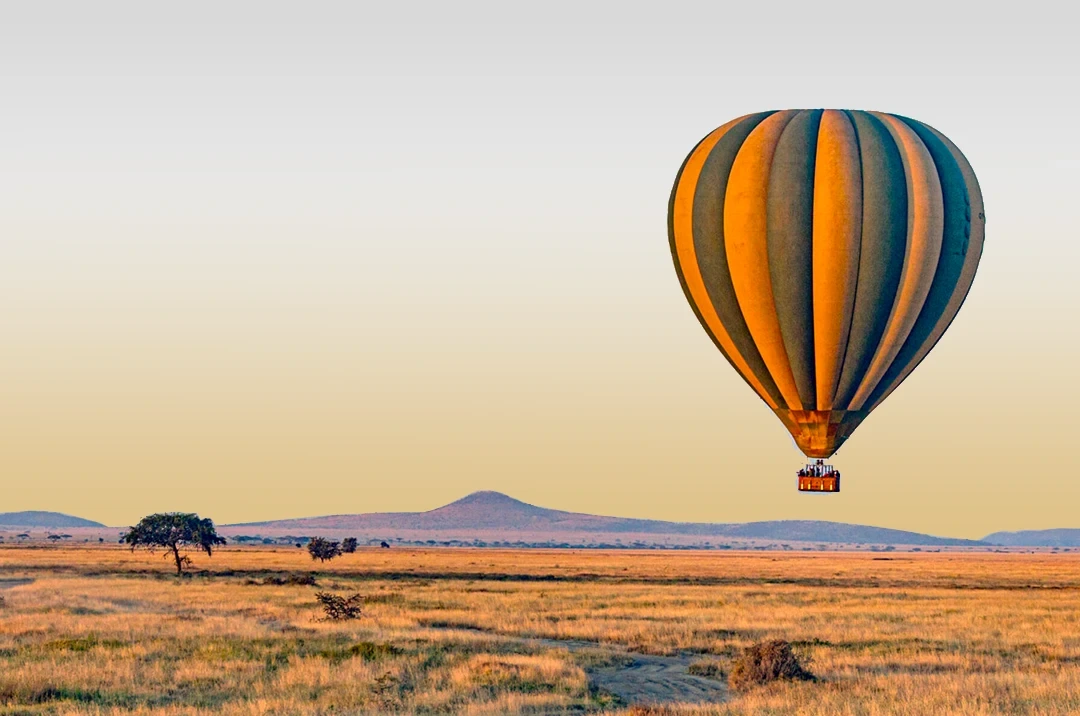
Experience a sunrise flight over the plains with stunning aerial wildlife views
Guided Bush Walks
Explore selected areas on foot with expert guides for a closer nature experience
Night Game Drives
Enjoy wildlife viewing after dark in specific camps or private conservancies
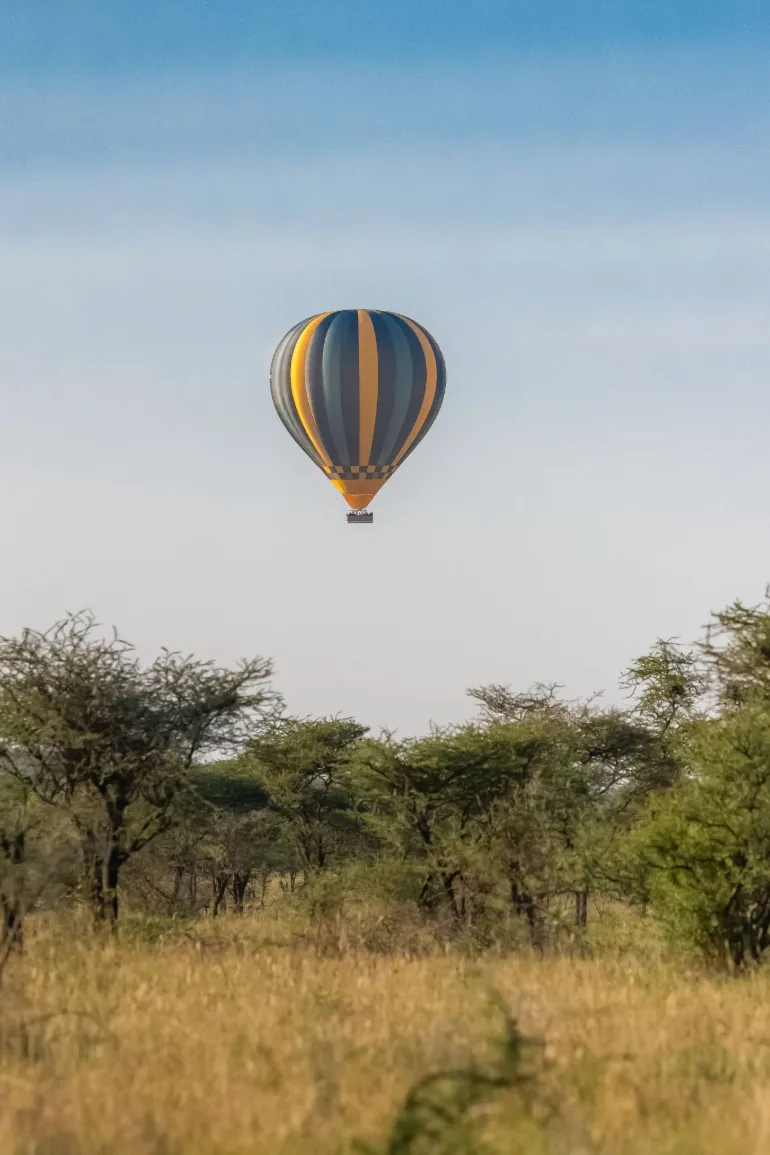
The Hot Air Balloon Safari is probably the add-on people ask about most. It costs more, yes, but the experience feels very different from a game drive. Once you’re up there, the scale of Serengeti becomes much clearer. The plains stretch farther than they seemed from the vehicle, animal movement is easier to follow, and the whole landscape starts to connect in your mind.
Bush walks and night drives are less common, but they can be a good change of pace for travellers who want more than time in a safari vehicle.
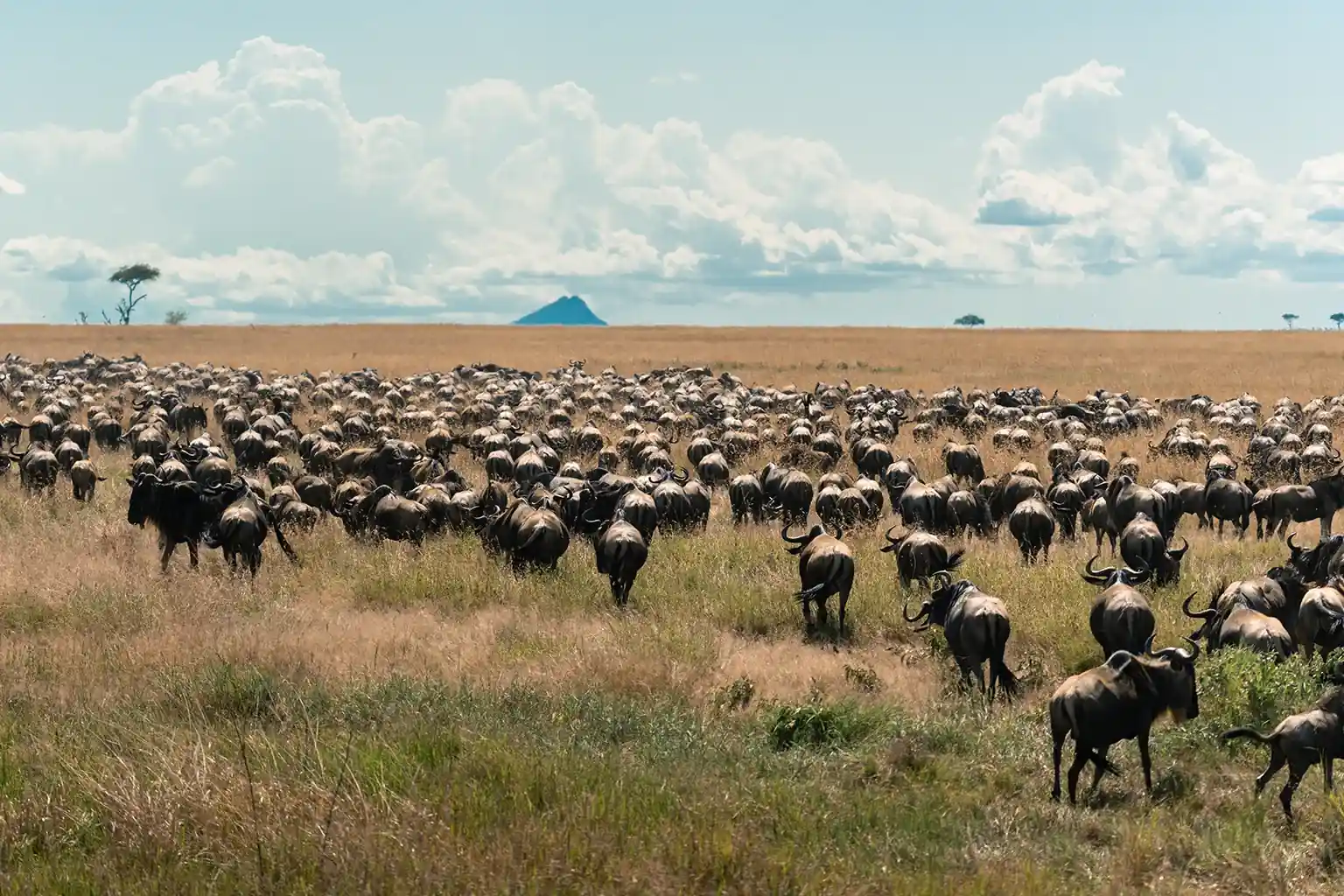
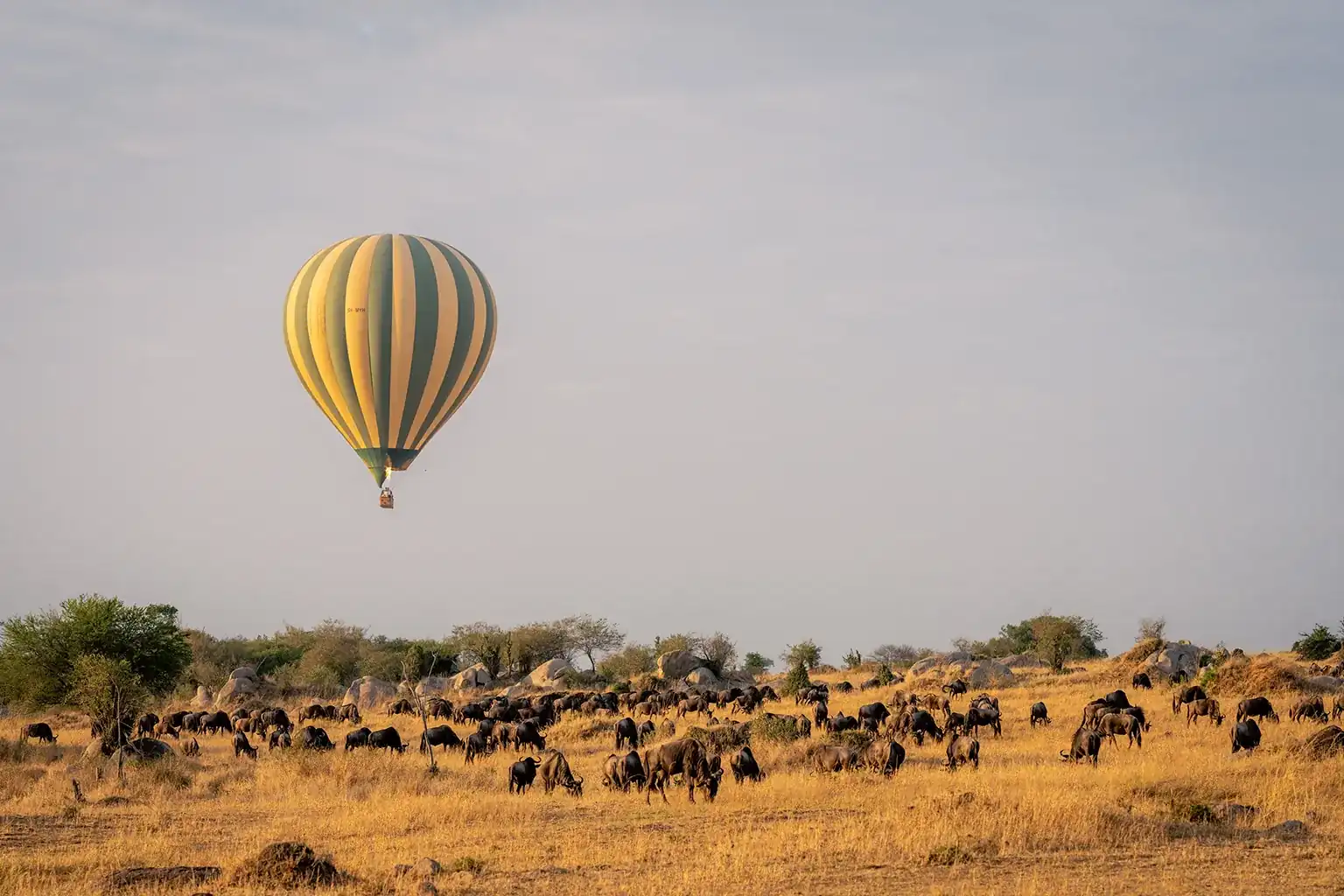
These paired scenes reveal Serengeti drama from two angles: vast columns of wildebeest sweeping across the plains, and a balloon safari floating above scattered herds in golden stillness.
When Is the Best Time for Serengeti Safaris?
Wildlife viewing in the Serengeti is good year-round, but the experience varies with the season and the part of the park you use as your base. That is what counts most. There is no single perfect month for everyone.
If migration is the main goal, then timing becomes more important. A simple guide for experiencing the Great Migration Serengeti looks like this:
Calving Season (Jan–Feb)
Best time in the south and Ndutu for newborn wildlife and predator action
Western Corridor Movement (Jun–Jul)
Migration passes through the Western Corridor with dramatic river activity
Northern Crossing Season (Aug–Sep)
Northern areas offer chances to witness Mara River crossings
Year-Round Wildlife Viewing
Central Serengeti provides strong resident wildlife throughout the year
One thing should be said clearly: migration timing is never exact. It follows the rain, not a fixed calendar. General patterns are reliable, but assuming that you can have an exact date to watch the migration is not.
So good planning is really about putting yourself in the most likely right place, not expecting certainty.
Crowds also track the best-known migration stages. So, if you want a quieter safari, it can make sense to focus on resident game instead of chasing the busiest movement periods.
For travelers asking about the Best time to visit Serengeti for wildlife, the answer depends on what they want most. Is it the River crossings, the calving, the predator action, the lower rates, or fewer vehicles? All of this doesn’t happen at one single time.
This is where the broader Best Time to Visit Tanzania guide becomes useful, especially if Serengeti is only one part of your northern route.
Where Can You Stay Near the Serengeti National Park?
Where you stay in Serengeti can influence the whole trip more than people first realize. Many travelers look first at the room, the tent, and the view from the deck. Those things count, but location usually counts more. A beautiful camp in the wrong region for your travel dates can leave you spending too much time driving. A simpler camp in the right place can make the safari much stronger.
Your stay should usually be chosen around:
Travel Month Choice
Your travel month determines weather, wildlife movement, and overall experience
Right Region Selection
Choosing the right region ensures you match wildlife activity with your travel timing
Budget Consideration
Your budget affects accommodation level, travel style, and overall safari options
Safari Focus Preference
Decide between migration highlights or general wildlife viewing experiences
Central Serengeti is often the most practical base for first-time visitors because wildlife is strong there through much of the year. Northern camps make more sense when the focus is on Mara River crossings. Southern and Ndutu-based camps are better suited to the calving season. Western camps become more useful when movement shifts toward the Grumeti side.
The accommodations in and around the Serengeti National Park fall into three categories. There are budget, midrange, and luxury accommodation options available. Depending on your budget, you can choose to stay in any of these. Obviously, the accommodation located in the right place at the site action will cost more.
What Is a Serengeti Safari Experience Like?
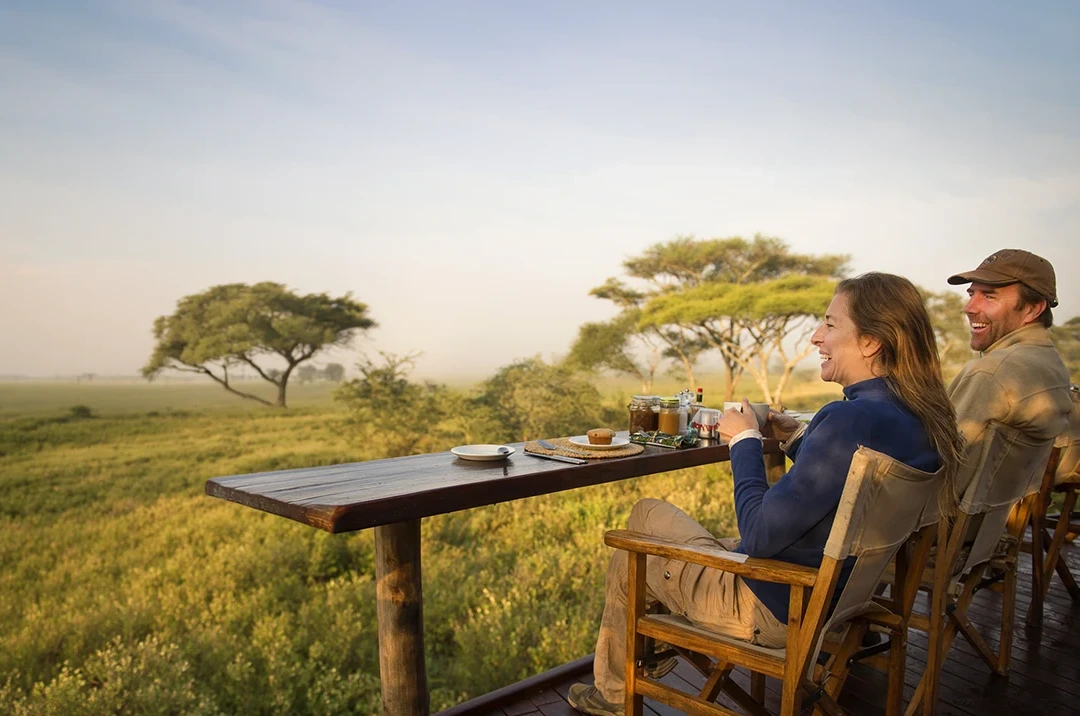
Most Safaris in Serengeti are built around guided game drives, with camp life filling the hours in between. The structure is usually simple.
Early start, morning drive, food, and rest, depending on the plan. Then out again later. Good camps make this feel easy, which counts, because safari days can be long and distances are not always short.
Self-driving is possible, but for most travelers, the experience is stronger with a local guide or a full Tanzania safari package. A guide is not only there to spot animals. A guide helps you gain knowledge and experience so that the day makes sense. Once you spend time in the central grasslands, that explanation feels accurate enough.
Besides game drives, some camps and selected areas do offer:
Short Bush Walks
Enjoy brief guided walks to explore nature up close
Ranger-Led Walks
Walk with trained rangers in quieter, less crowded areas
Multi-Day Walking Safaris
Extended walking safaris with special arrangements and deeper wilderness experience
These can be a good addition for travelers who want a slower, more detailed look at the bush, but they remain an extra layer rather than the heart of the trip.
Other than that, if you want to experience the vastness of the plains of the Serengeti from the sky, you can always add a hot air balloon safari to your itinerary.
What to Expect from the Great Migration in Serengeti?
The Great Migration is a cyclical event that moves throughout the year. Wildebeest, zebras, and gazelles move through the Mara-Serengeti ecosystem in response to rainfall and grazing, and each phase has its own feel.
Many travelers arrive thinking mainly about river crossings. But the migration is much bigger than that. Calving season in the south has its own intensity. The long movement through open plains has its own feeling too. So, a good Migration Safari is not only about being at the right river. It is about understanding the wider cycle.
The full movement involves more than 2 million animals traveling through an 800 km / 500 mi loop, most of which lies within the Serengeti.
A simple view of the cycle looks like this:
December to March
The herds are mainly in the south and the Ndutu area, where calving takes place
April to May
The movement begins northwest as the grazing shifts
June to July
Many herds move through the Western Corridor toward the Grumeti River
August to October
The migration pushes north, where Mara River crossings may happen
November
The herds begin moving south again with the short rains
Migration maps are useful, but they are still guides, not guarantees. Rain has the final say and determines the herds' position. A good Serengeti Safari Package accepts that uncertainty and plans around likely movement rather than fixed promises.
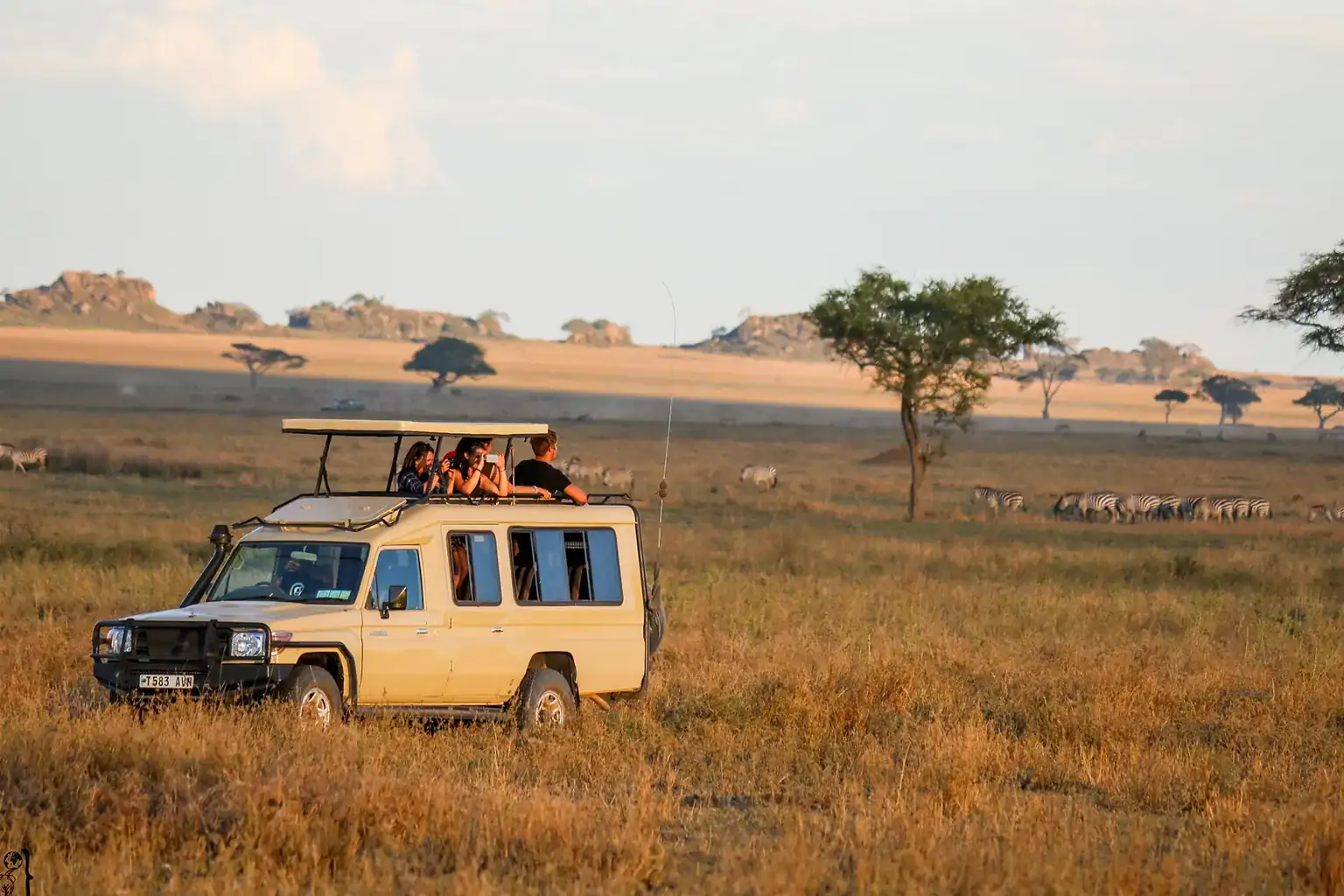
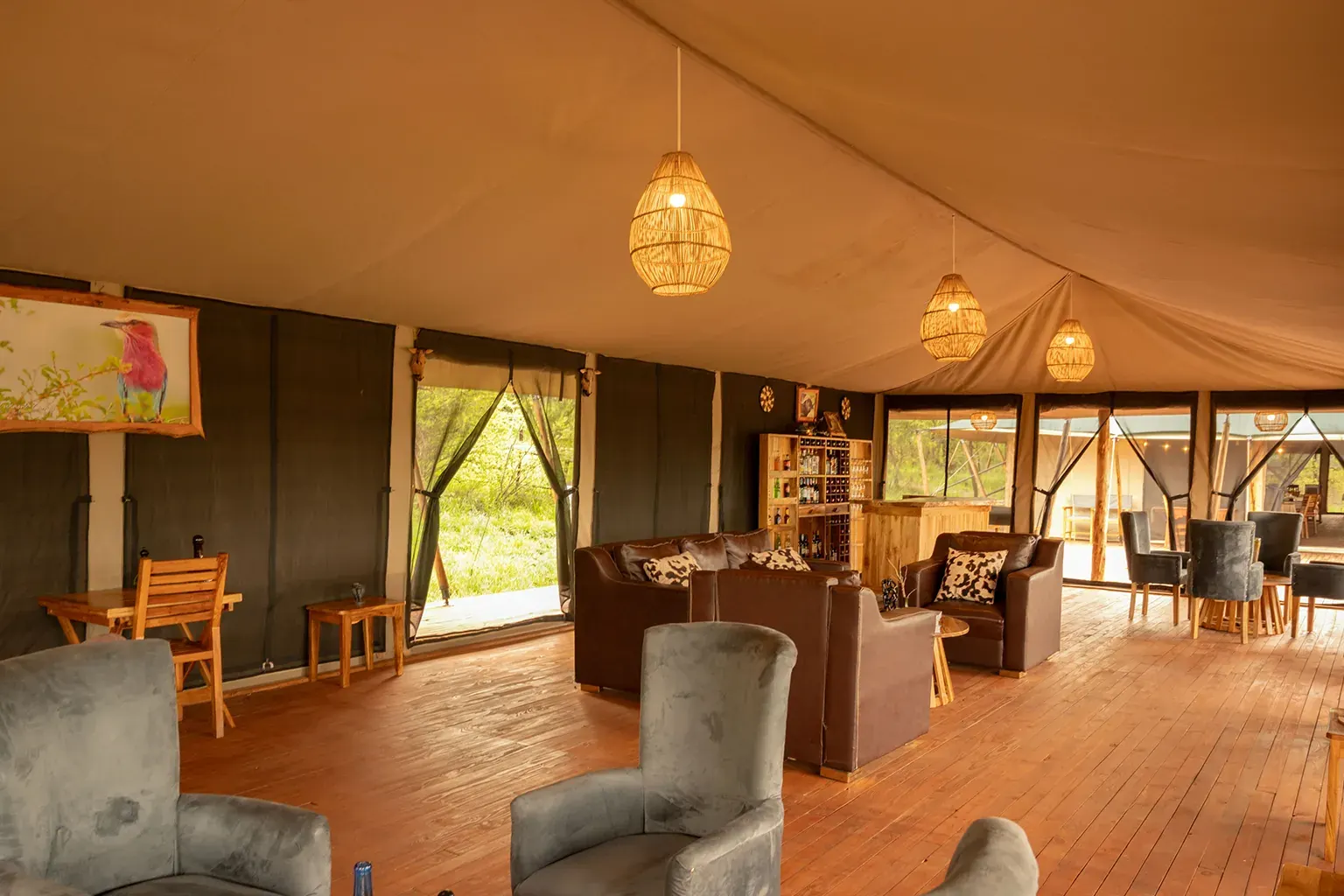
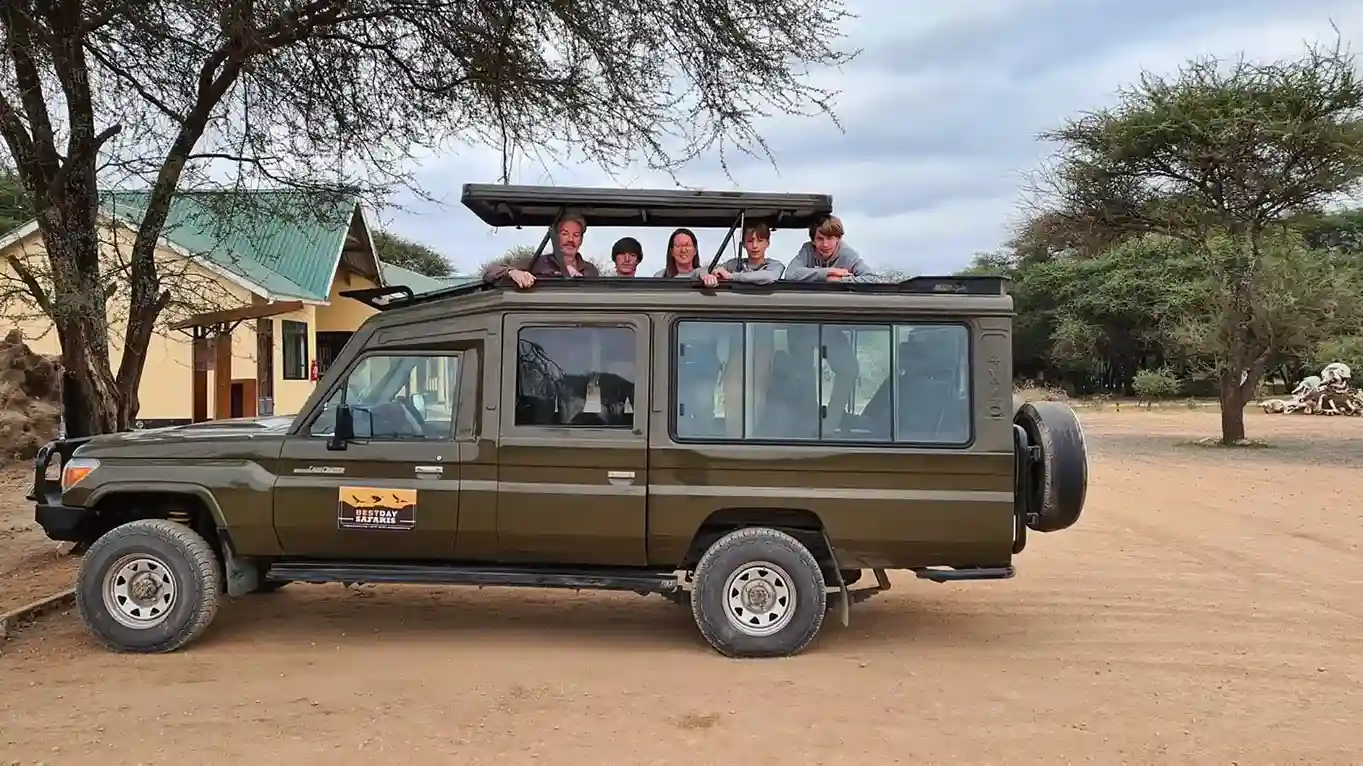
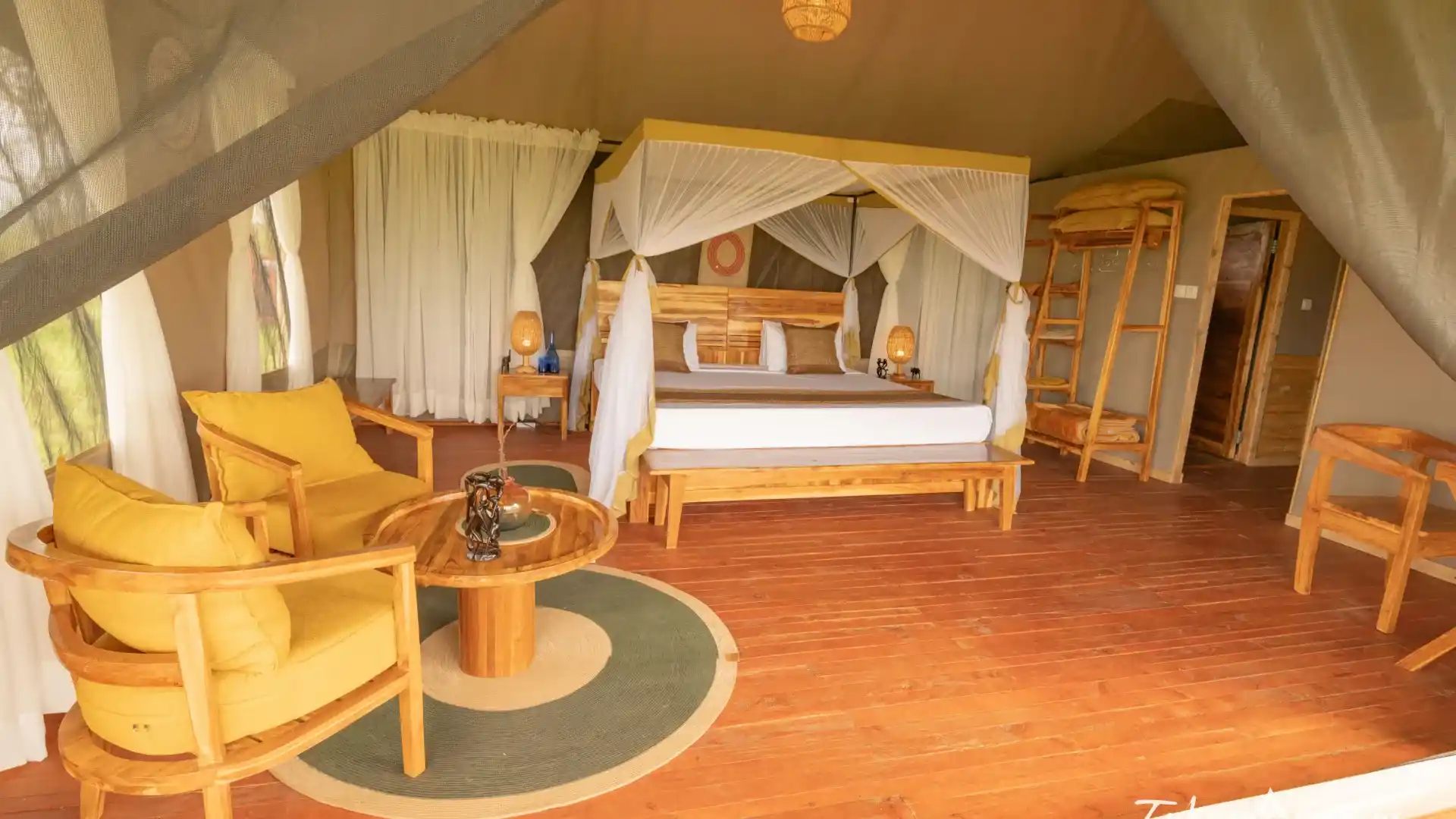
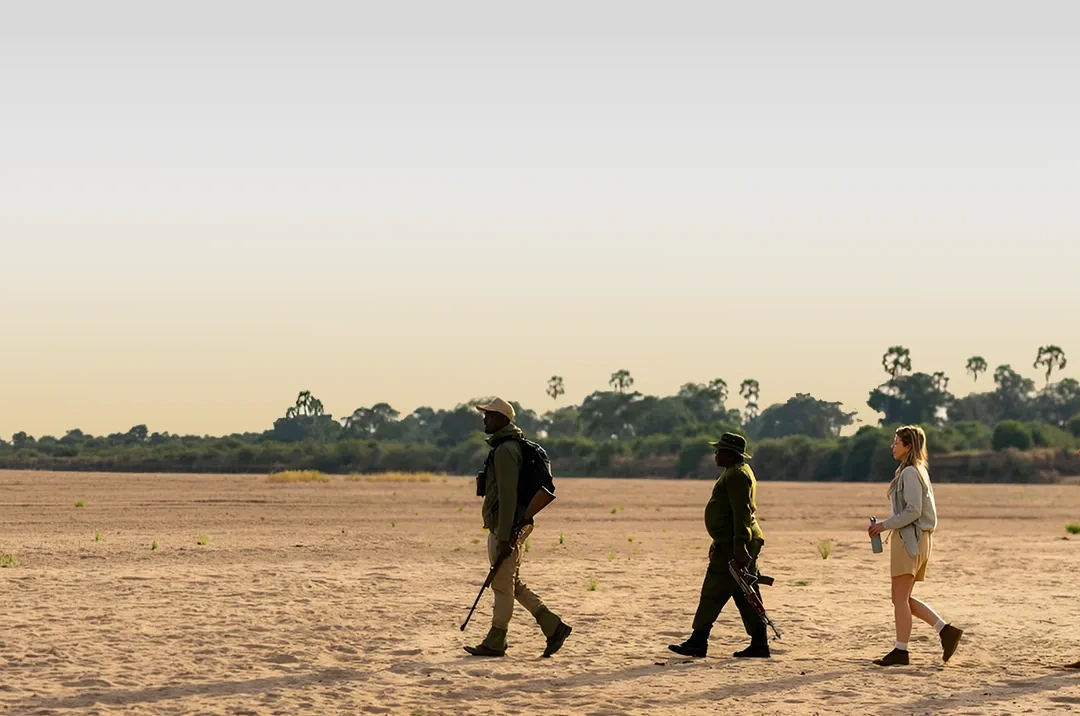
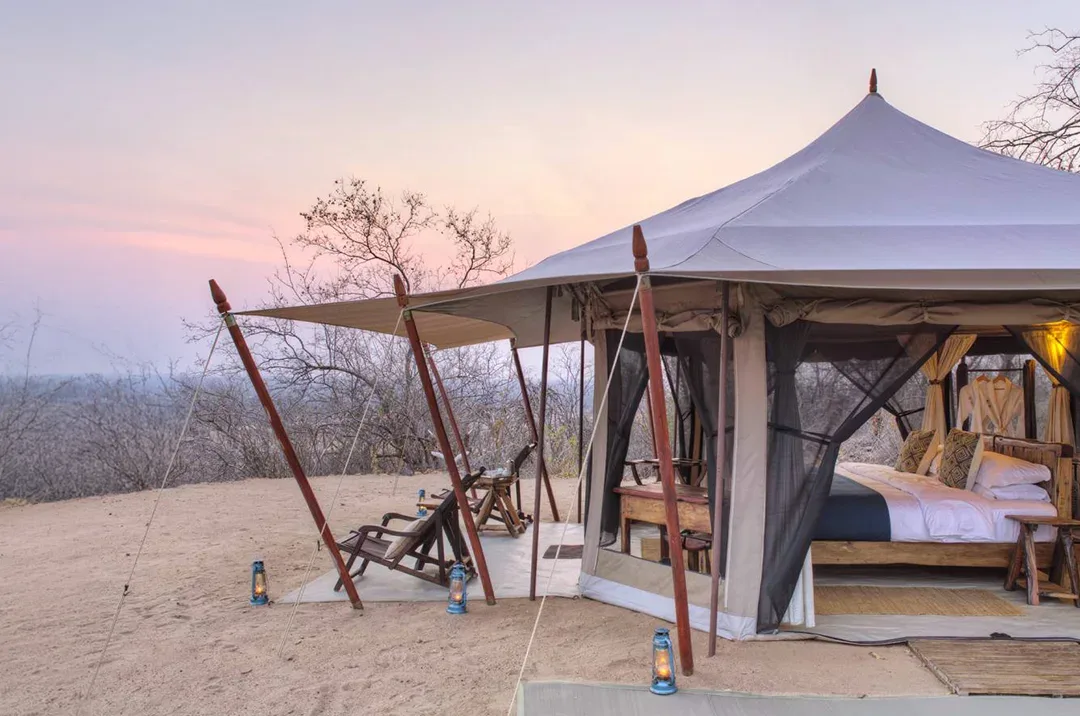
Two contrasting moments define the safari experience: one captures travellers crossing the plains on a game drive, while the other presents a warm, elegant camp interior made for rest.
How Much Does a Serengeti Safari Cost?
A Serengeti safari usually ranges from $350 to $1,000+ per person per day. This price varies depending on the season, the camp, the group size, and the style of travel.
A private five-day mid-range safari typically ranges from $1,750 to $3,000 per person. Luxury trips can exceed $700 per person per day, especially if they include domestic flights or top-end camps.
The range is wide because Serengeti can be done in very different ways. A simple breakdown looks like this:
Budget $150 to $300
Mostly camping, shared transport, and fewer extras
Mid-range $350 to $600
Comfortable lodges or tented camps, often with a private vehicle, smoother overall flow
Luxury $700+
High-end camps, better-positioned properties, stronger service, sometimes fly-in options
The price usually shifts because of a few familiar things:
Season
June to October is usually the most expensive period. April and May are often lower.
Park fees
Adults generally pay around $70-$83 (during peak season) per day, plus VAT, though many safari rates already include it.
Group size
Private safaris cost more per person than shared arrangements.
Activities
Balloon safaris are usually extra and often cost around $600 per person.
The easiest ways to keep the budget under control are not especially glamorous, just practical:
You usually move through these zones in order:
Group Travel Advantage
Traveling in a group of four to six helps reduce overall safari costs per person
Shoulder Season Savings
Visiting during shoulder seasons can offer lower prices with fewer crowds
Tented Camp Option
Choosing tented camps instead of luxury lodges helps manage your budget
Multi-Park Combination
Combining Serengeti with nearby parks gives better value than a short single-stop trip
This is where broader planning for Tanzania Safari Costs becomes useful. Serengeti is often one of the largest parts of the budget, but also one of the travelers' biggest concerns to get right.
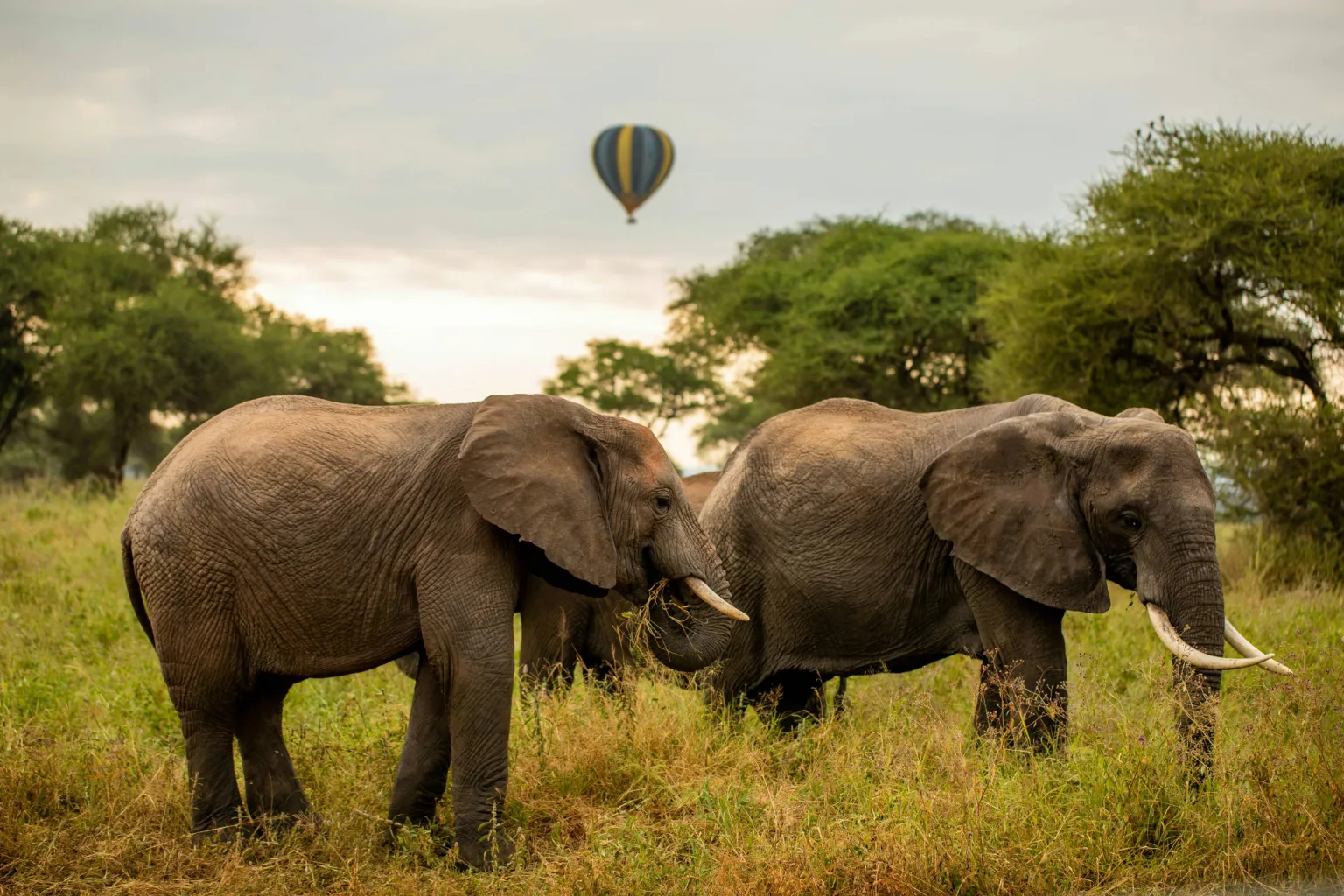
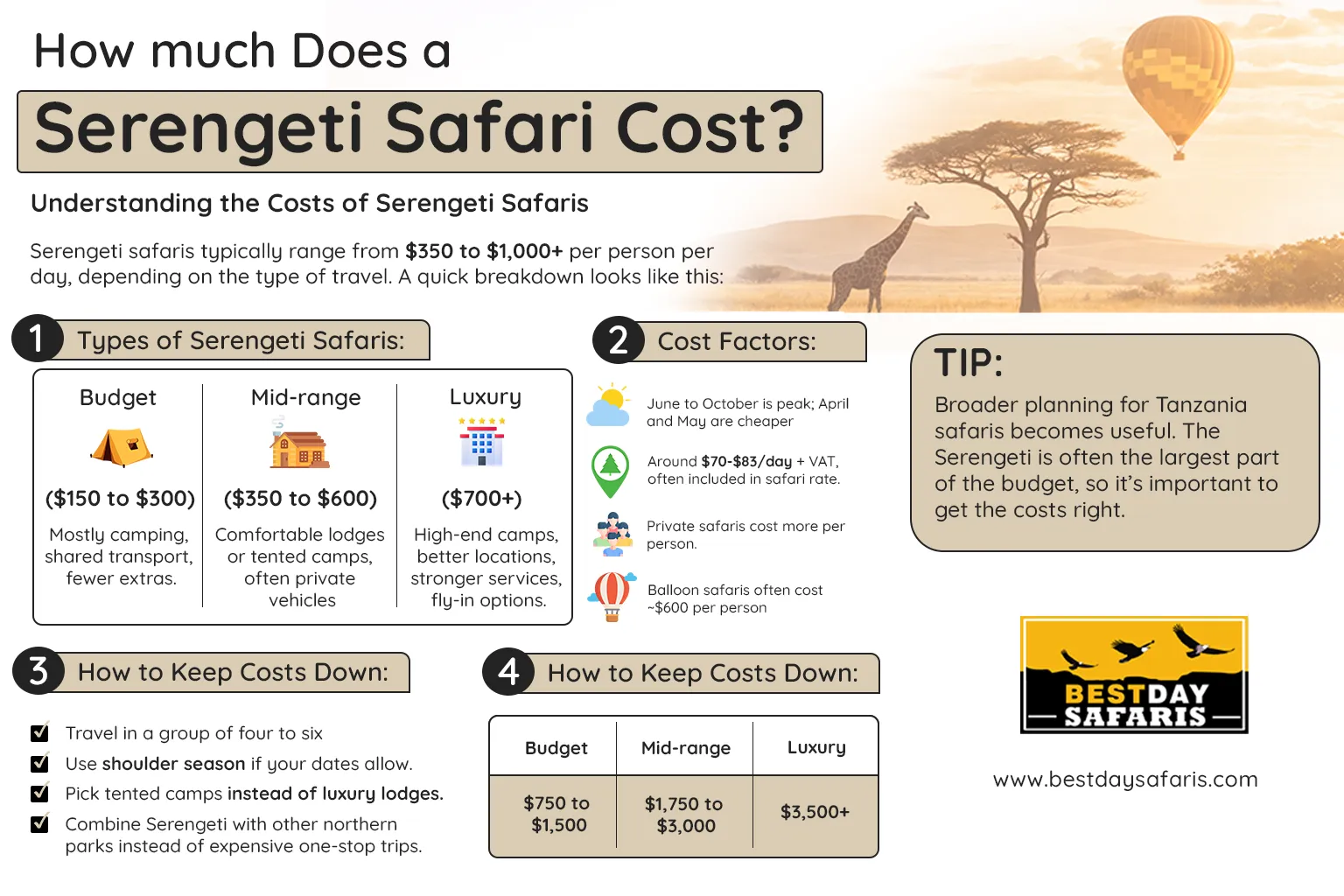
An informative Serengeti safari cost guide infographic outlining budget, mid-range, and luxury pricing, paired with a wildlife scene of two elephants grazing in grasslands beneath a hot air balloon in the African savanna.
Combining the Serengeti Safari with other parks
Serengeti is strong enough on its own, but for many travelers it works even better as part of the northern circuit.
Bestday Safaris can combine all four northern Tanzania national parks, depending on how much time you have and the kind of safari you want.
Other popular parks are:
Ngorongoro Crater Experience
Ngorongoro Crater offers dense wildlife viewing within a unique, contained natural setting
Tarangire Wildlife & Landscapes
Tarangire National Park is known for large elephant herds and iconic baobab-filled scenery
Lake Manyara Safari Option
Lake Manyara National Park is ideal for a shorter safari with forests, groundwater habitats, and diverse wildlife
What counts most is not how many park names fit in the itinerary. It is whether the route gives each place enough time to count once you are actually there.
Travel Tips for Visiting Serengeti National Park
The Serengeti is easier to enjoy when you plan for its practical side. The days begin early. Mornings can feel cold enough for a fleece. Afternoons get hot and dusty. None of this is difficult to manage, but knowing the small details will always help.
Useful basics include:
Layered Clothing
Wear layers to stay comfortable through changing temperatures
Binoculars Ready
Keep binoculars within easy reach for quick wildlife spotting
Sun & Dust Protection
Carry sunscreen, lip balm, and protection against dust
Soft Travel Bag
Use a soft duffel bag if your trip includes domestic flights
Stay Hydrated
Drink water regularly to stay refreshed during the safari
Follow Guide Advice
Always follow your guide’s instructions for safety and best experience
A simple Serengeti safari packing list usually includes:
Fleece or warm outer layer
Light rain jacket
Hat and sunglasses
Insect repellent
Power bank
Camera lens cloth
Reusable water bottle
These are the most basic items, but for a detailed list, refer to our Tanzania Safari Packing List.
Safety in the park is mostly straightforward. Stay seated in the vehicle unless your guide tells you otherwise. Respect the distance around wildlife. Use seatbelts where needed. These are basic but important Serengeti safari safety tips.
How Can You Plan Your Serengeti National Park Safari?
Planning Serengeti properly comes down to a few early decisions. Which region fits your dates? How many nights can you really give the park? Are you coming mainly for migration, or do you want a broader wildlife trip? Will Serengeti be your main focus, or one part of a northern circuit?
These questions hold significance because the Serengeti is too large to treat casually.
At Bestday Safaris, we help travelers build the trip around those practical choices. With the right timing and the right route, we can turn that into a Tanzania Safari that feels well-built, personal, and worth the time you gave it.
Plan your Serengeti safari with expert guides today!
Traveling in Tanzania is one of the best decisions you can make because it offers a wide range of experiences. You see wildlife, move through very different landscapes, come closer to local culture, and experience things that do not all feel the same. And that is really what stays with people for years to come.

Founder & Director, Bestday Safaris