Tanzania Weather
The weather in Tanzania varies by region. The weather in coastal areas is hot and humid, while the North and highlands of Tanzania are cool due to the high altitude. The temperature in these regions ranges from 22°C to 31°C throughout the year. The night temperature in Tanzania also ranges between 10°C and 22°C. Then, Tanzania's coastal regions have a tropical climate because they are close to the equator.
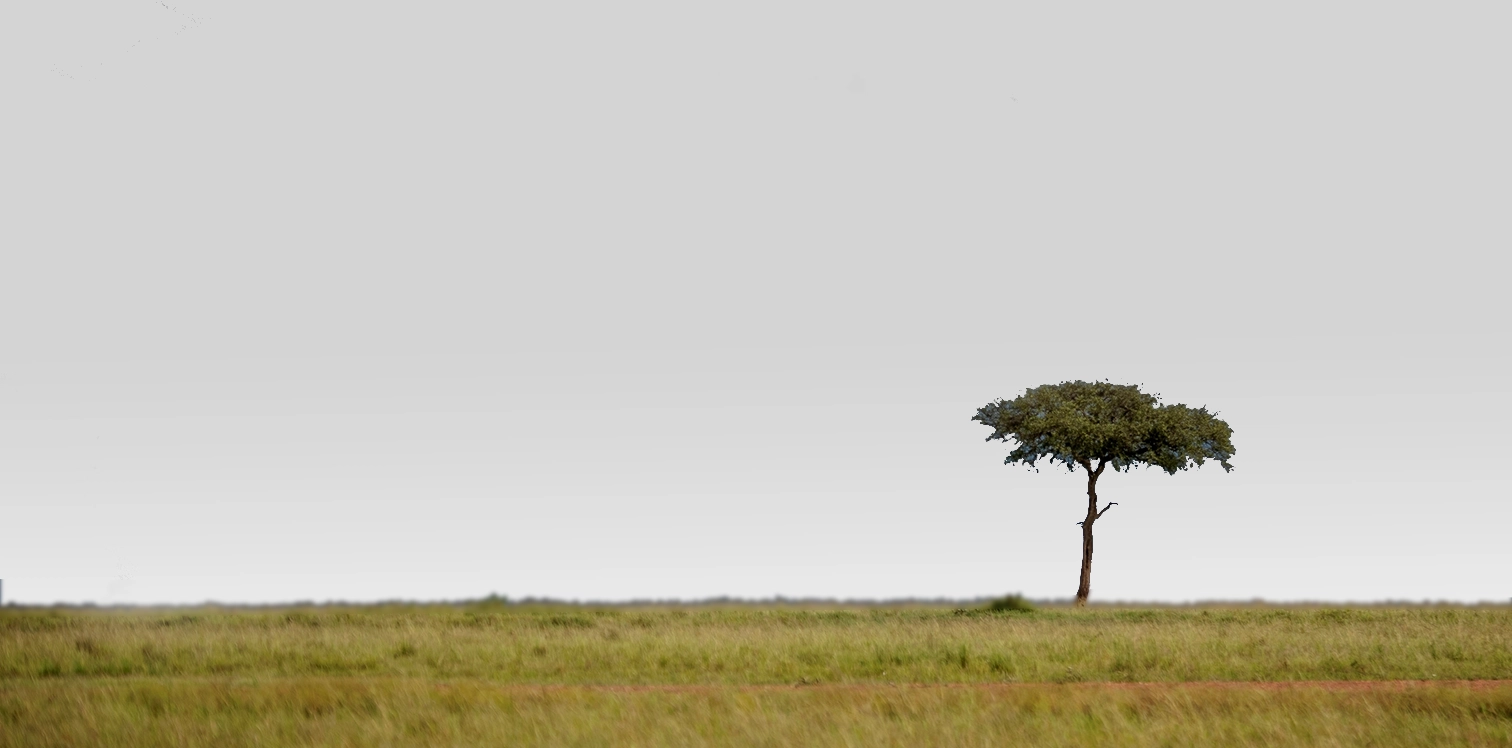
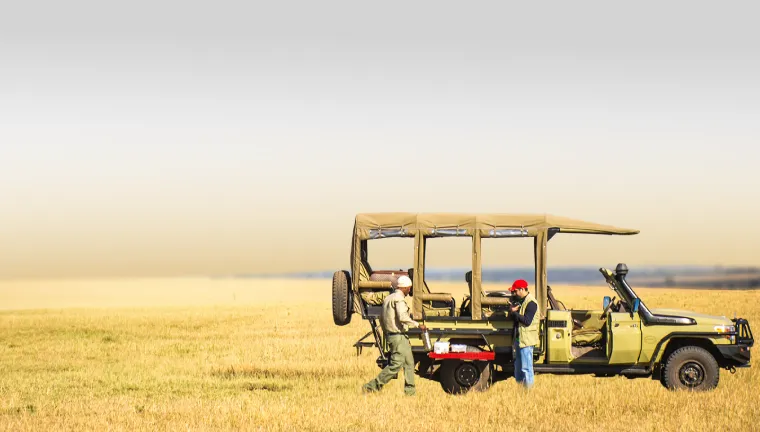
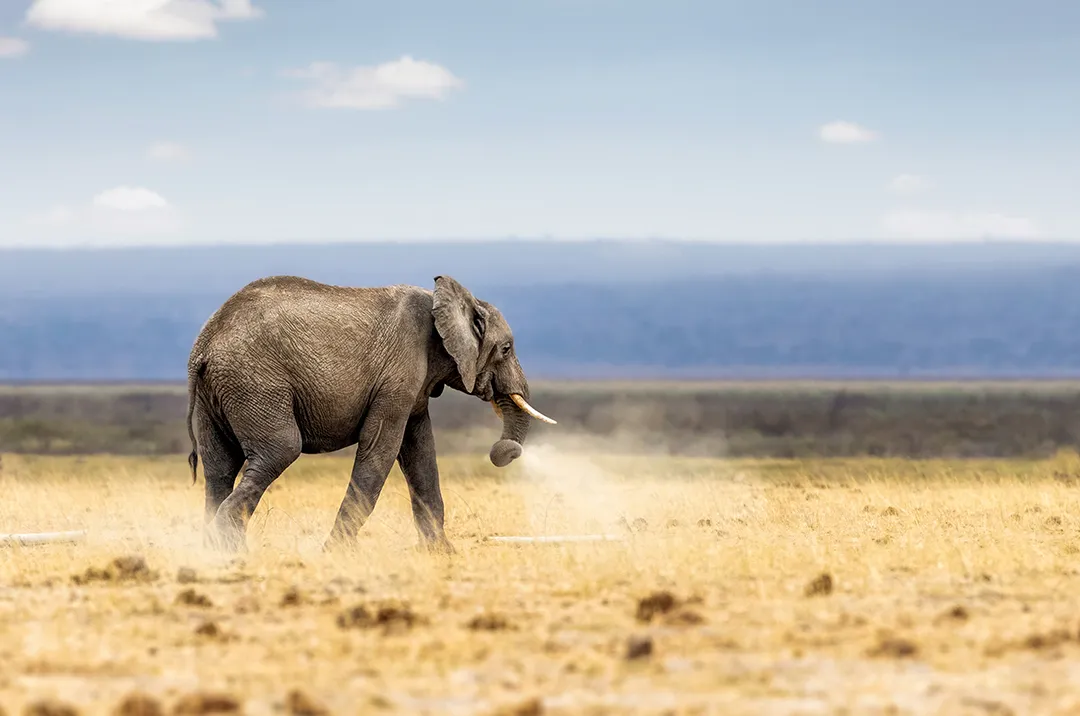
Open grassland beneath a wide, clear sky suggests Tanzania’s dry weather conditions, where bright days, sparse clouds, and exposed landscapes often define the atmosphere across the plains.
What Weather Should You Expect in Tanzania?
Tanzania's weather is warm, mild, and comfortable most of the year, but it can change with elevation. The coast and Zanzibar feel hotter and more humid. Arusha and the Ngorongoro highlands feel cooler because of the altitude, especially at sunrise. The country runs on two main Tanzania weather seasons: a Tanzania dry season (June–October) and a Tanzania rainy season, split into long rains Tanzania (March–May) and short rains Tanzania (November–December).
After going through this page, knowing what each month really feels like on the ground. You’ll know when mornings get cold on safari, when tracks turn muddy, when the air is clear for views, and how to pick the Best Time to Visit Tanzania based on what you want most.
At Bestday Safaris, we plan using live travel details such as drive times, road conditions, camp openings, and how a day actually unfolds in the bush. That’s how we keep your Tanzania Safari Experience steady across all important destinations, plus calmer add-ons like cultural tours.
- 1.Tanzania Weather in General
- 2.Different Climate Zones and Their Features
- 3.Quick Details on Tanzania Weather
- 4.Monthly Weather of Tanzania – Temperature and Rainfall
- 5.Travel Recommendation by Months
- 6.Is Safari During Rains possible in Tanzania
- 7.How does the weather affect wildlife
- 8.How to travel to Tanzania during the best weather
- 9.Frequently Asked Questions
Tanzania Weather in General
Tanzania is big. The coastline has that warm, salty air that sticks to the skin. The crater rim can feel so cold that you might hug your coffee cup. And, the Serengeti in the dry season gets very dusty.
The Temperature In Tanzania doesn’t shift rapidly throughout the year. It stays mostly warm. The bigger variation is in rain: when it arrives, how heavy it gets, and how long it lasts.
When the rains arrive in Tanzania, the land suddenly transforms to green. One week, it’s dry grass and pale tracks, and then, suddenly, it’s fresh green with little pools you didn’t see before.
But during the dry season, skies stay clear, and travel feels more hassle-free. The roads are clear, and wildlife sightings are great.
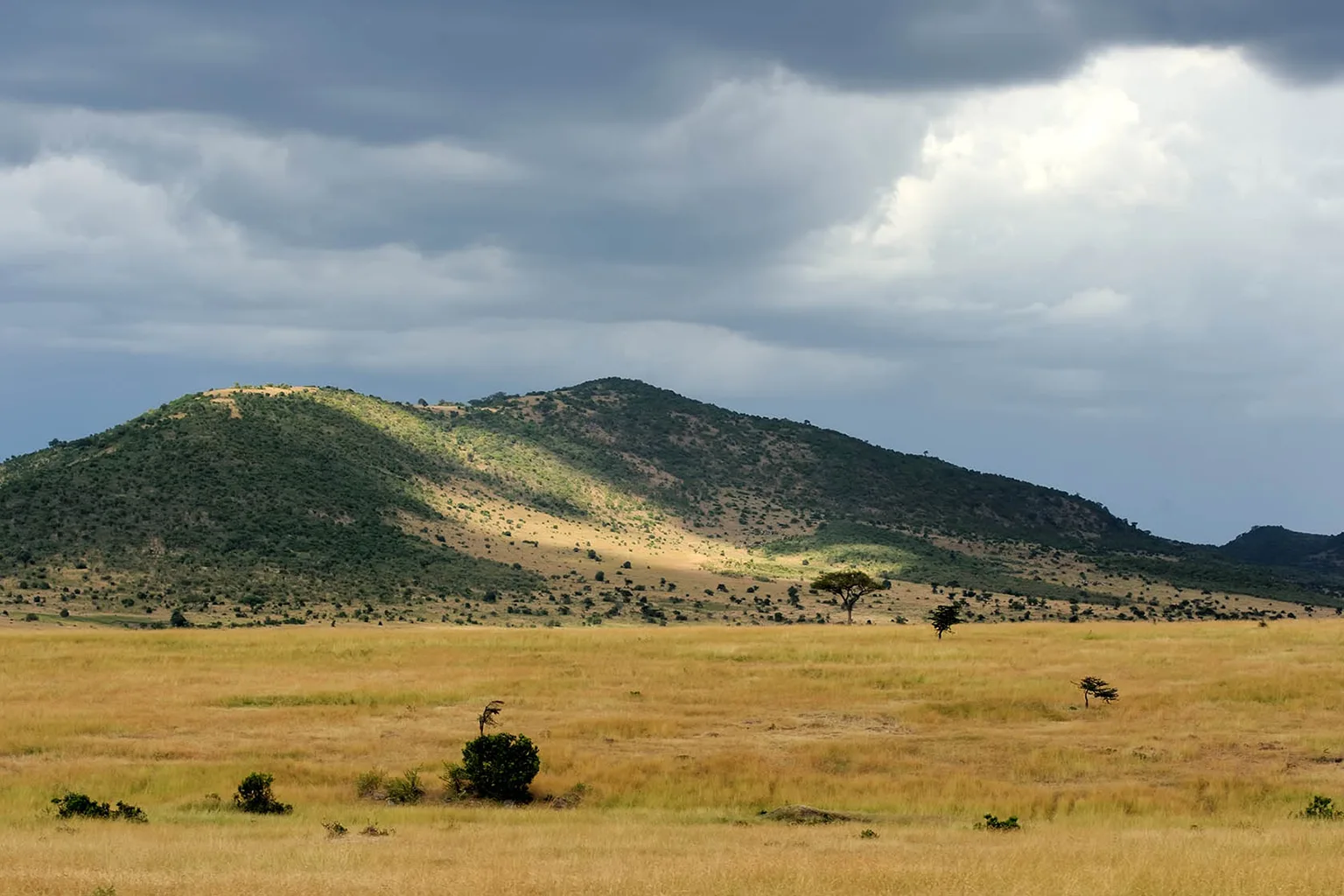
Dark clouds gathering above open plains illustrate Tanzania’s changing weather patterns, where sunshine, shade, and incoming rain can appear within the same landscape during transitional seasons.
Different Climate Zones and Their Features
The average weather conditions found in the region over a long period of time determine the climate of the place. When it comes to the Tanzania Climate, it is varied as per the geographical location. You’ll find 3 types of Climate Zones Across Tanzania. They are:
Tropical Savanna Climate
Many safari lowlands sit in this zone. Warm days, cooler nights. Dry months feel bright and open, and game drives run most days smoothly.
Tropical Mountain Climate
Higher areas like Arusha and the Ngorongoro rim feel mild, and mornings can be chilly. It catches people off guard. You step out early and think, “Oh… I should’ve packed that fleece.”
Tropical Marine Climate
Zanzibar and the coast stay warmer and more humid. The sea breeze helps, but it still feels tropical, especially in the afternoons.
Quick Details on Tanzania Weather
- Average Temperature: Often around 19 - 29°C (66.2 - 84.2°F)
- Warmest Months: February & March| 21 - 31°C (69.8 - 87.8°F)
- Coolest Months: July - August| 17 - 29°C (62.6 - 84.2°F)
- Long Rains: March to May (wettest stretch)
- Short Rains: November to December (lighter)
- Rainiest Month: April: 113 mm
- Driest Month: July: 15 mm
Tanzania's weather can change quickly between parks, towns, and mountain areas. Knowing the seasons helps travelers pack well, plan wisely, and enjoy each part of the journey.
Peter Charles
Monthly Weather of Tanzania – Temperature and Rainfall
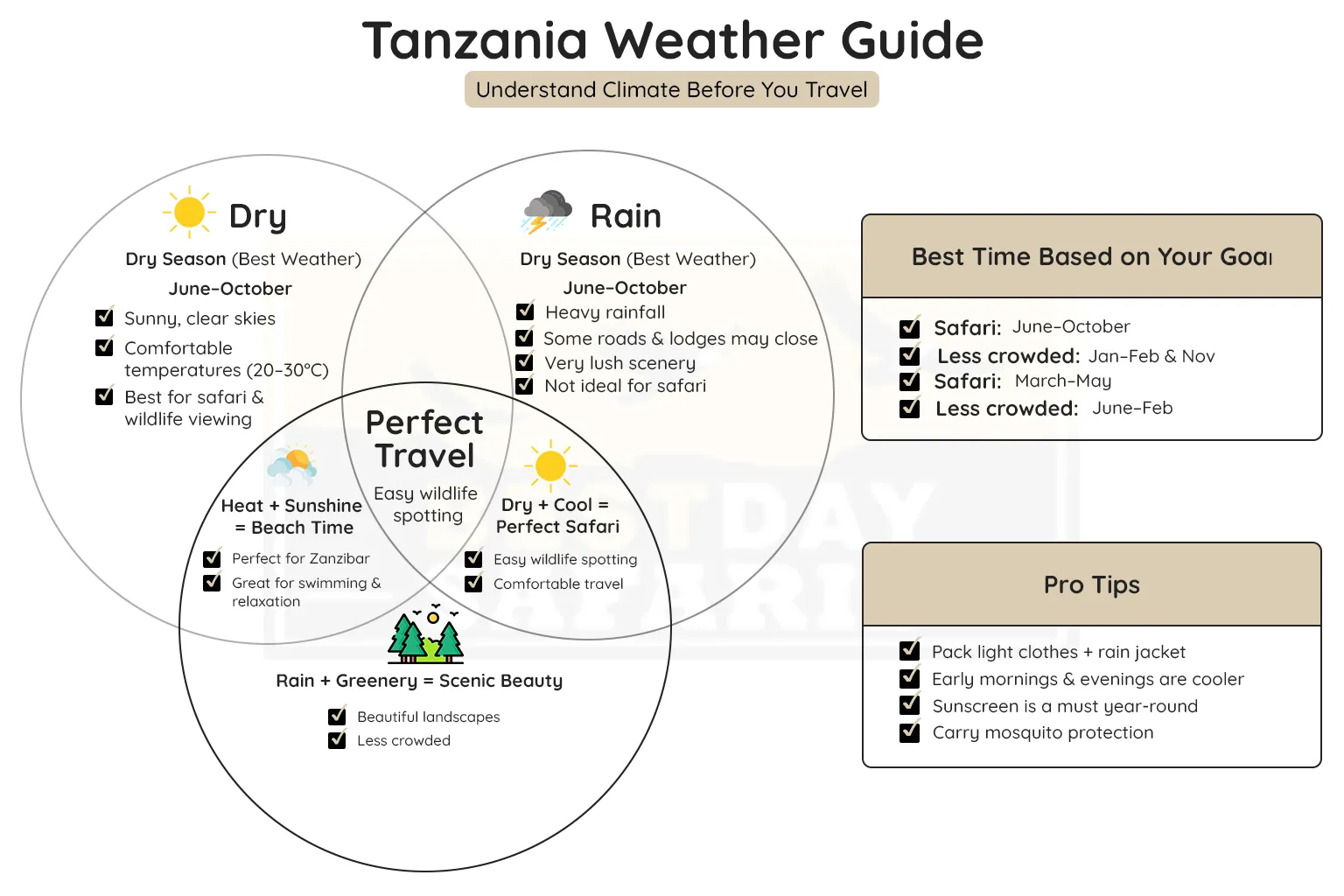
A Tanzania weather guide infographic explaining dry and rainy seasons, ideal travel periods, and safari conditions, with tips on best months for wildlife viewing, beach time, and comfortable travel experiences.
January
January feels warm, with a fresher look in many places. Showers occur, but it’s not usually day after day rain. The Tanzania Northern Safari Circuit can look especially green, making photos feel richer. Nights cool down in Arusha and around Ngorongoro, so a light layer is essential for early starts. It’s a comfortable month to mix a Tanzania Safari Experience with slower days and local stops.
February
February runs hotter. The sun feels direct, and afternoons in the lowlands can push into the low 30s°C. Rain is often lighter than in later months, so roads usually hold up better. In the southern Serengeti, this month is often linked to the calving season, which can bring busy wildlife scenes. It’s a popular month for booking calving season safaris, so planning early helps.
March
March starts hinting at change. It’s still warm, but clouds show up more often, and the long rains in Tanzania begin to build. Many days still start clear, then rain arrives later. Some tracks get softer, and driving can slow down inside parks. The upside is fewer crowds and greener views. If you’re watching Tanzania Safari Cost, March can be a smart time to visit; just don’t plan a rushed route.
April
The wettest-feeling month is April. Rain can be heavier and more frequent, and humidity rises in many areas. Park roads can get muddy, and a day’s driving might take longer than you expect. But the land looks alive with thick grass, fresh leaves, and flowers in places like Ngorongoro and the Serengeti. If you like quiet parks and don’t mind wet boots, April can still work.
May
May is still part of the rainy stretch, but it often eases later in the month. You might get long showers, then calm gaps of clear sky. The landscape stays green, and birdlife can be active around Lake Manyara. Some camps in very wet zones may close, so this is a month where smart park choices matter. It suits travellers who want fewer vehicles and don’t need perfect blue skies.
June
June is when the Tanzania dry season starts feeling steady. Skies open up, humidity drops, and mornings can feel cool on game drives. Roads improve fast, and travel becomes easier day by day. Wildlife viewing often gets more predictable as animals spend more time around water. It’s a strong month for Tanzania Safari Packages, especially if you want comfortable temperatures and fewer weather surprises.
July
July is dry and clear, and the early hours can feel cold in an open vehicle. You’ll notice it right away with hands tucked in, jacket zipped up, waiting for the first sighting. Daytime is comfortable, and roads are usually in good condition. Wildlife viewing can be excellent because water sources matter more now. This month suits classic northern itineraries and also works well for Tanzania Camping Safari styles.
August
August is usually dry and pleasant, with daytime highs in the upper 70s°F and morning and evening lows in the mid-50s°F. The dry weather is perfect for safaris since animals are easy to see around drinking holes. Be ready for chilly mornings, but the afternoons are warm and comfortable, so it's a fantastic time to visit Tanzania's National Parks styles.
September
September stays dry, but it starts warming up again. Days are sunny, and popular parks can feel busier during prime safari time. It’s great for long drives in the Serengeti and strong for big wildlife days in the north. If you’ve been thinking about Hot Air Balloon Safaris, stable, dry-season mornings help. Nights are still cool, especially around Arusha and Ngorongoro, so keep a light jacket handy.
October
October is the late dry season. It’s warmer, and dust becomes more noticeable on tracks. Water sources can shrink, which often pulls animals closer to rivers and remaining pools. It is good for sightings, especially on a focused Tanzania Big Five Safari. It can feel hot in the lowlands, while highland evenings still cool off. Coastal areas can feel pleasant too, with sea breeze and fewer heavy rain days than later months.
November
November is when short rains in Tanzania often start. Usually it’s not constant rain but more like quick showers, then sun again. The landscape begins turning green, and the air feels fresher after rainfall. Temperatures stay warm, and humidity can rise a bit. This month fits travelers who want fewer crowds and a calmer feel. It also works well if you’re mixing parks with Tanzania Cultural Tours and Arusha time.
December
December is warm and a bit changeable. Short rains may continue, but sunshine returns quickly. Zanzibar and the coast can feel hot and humid, while Arusha and Ngorongoro stay cooler at night. Safari still runs well in the northern parks, and greener scenery can look great in photos. Packing is simple here: layers, hat, sunscreen, insect repellent, power bank, and a soft bag. It keeps travel easier.
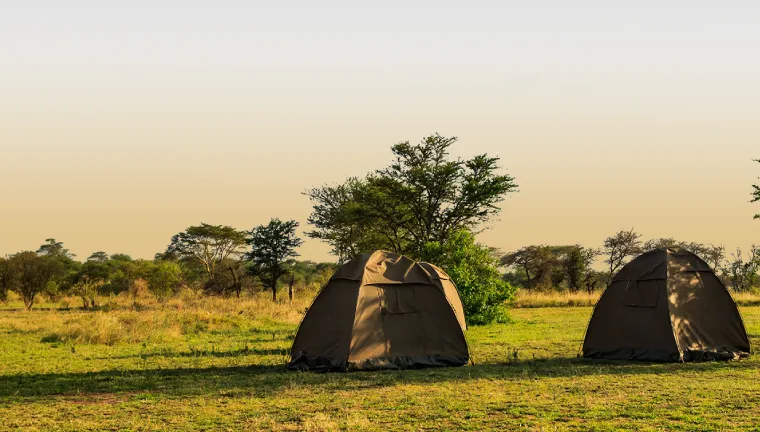
Travel Recommendation by Months
If you want the simple Tanzania Safari Planning view, refer to the following table. We highlight the attractions for every month and simultaneously discuss the prevailing weather conditions.
| Months | Weather Conditions | Highlights |
|---|---|---|
| Jan – Feb | Pleasant and Drizzly |
|
| Mar – May | Hot and High rainfall |
|
| Jun – Oct | Mild and Sunny |
|
| Nov – Dec | Short rains, Drizzly |
|
Note: For many first-time visitors, the Best Time to Travel to Tanzania is still June to October. But if you want quieter parks and softer prices, the green months can be the right call. Want to learn more about the most favourable time to travel to Tanzania? Refer to our Best Time to Visit Tanzania page for more information.
Understand Tanzania weather before you choose the best travel season.
Plan your trip better
Is Safari During Rains possible in Tanzania?
Yes. You can. Rain doesn’t cancel a Tanzania Safari.
Some people actually prefer it because the Tanzania National Parks feel less crowded, the light can be softer for photos, and prices can drop. That said, wet tracks can slow you down. A few camps close for part of the wet season. And some southern parks can be harder when roads get waterlogged.
If you’re traveling in the rain, planning the route properly matters more than the month you're traveling in. If you want to see this luscious green side of Tanzania, book Tanzania Safari Packages with us. We are experts in handling the logistics in the rain.
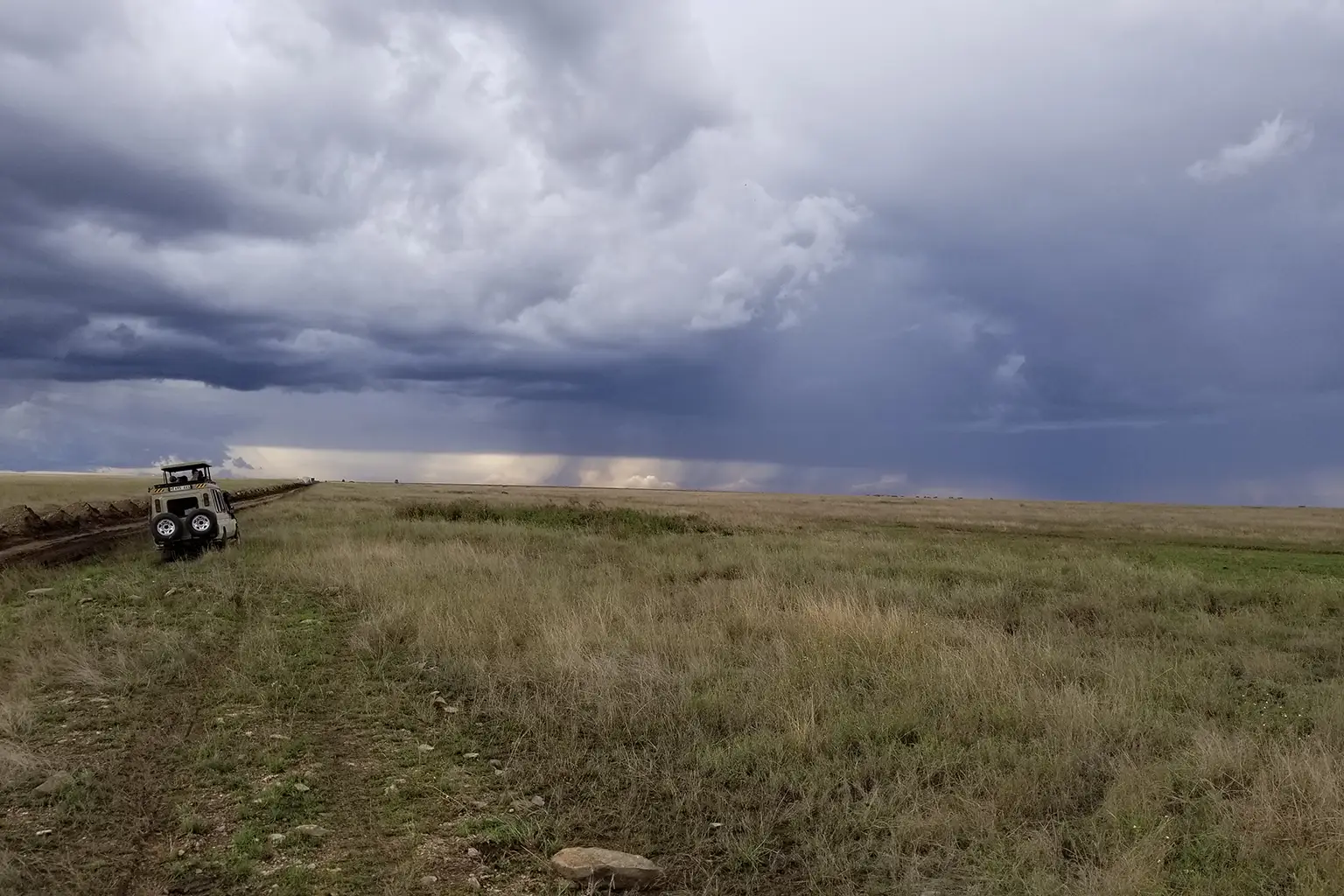
Heavy clouds gathering above the plains reflect Tanzania’s wet weather patterns, and the vehicle on the rough track hints that safari remains possible during rainy periods with the right timing.
How does the weather affect wildlife?
In the dry season, water pulls animals in. You often see wildlife gathering near rivers, pools, and permanent water points. Vegetation is thinner too, so spotting is easier.
In the rainy season, food and water are spread out. Animals roam wider, but the bush feels busy with fresh grazing, more birdlife, and greener backdrops. Many travellers say the rainy months feel more private, simply because there are fewer Tanzania Safari Vehicles on the road.
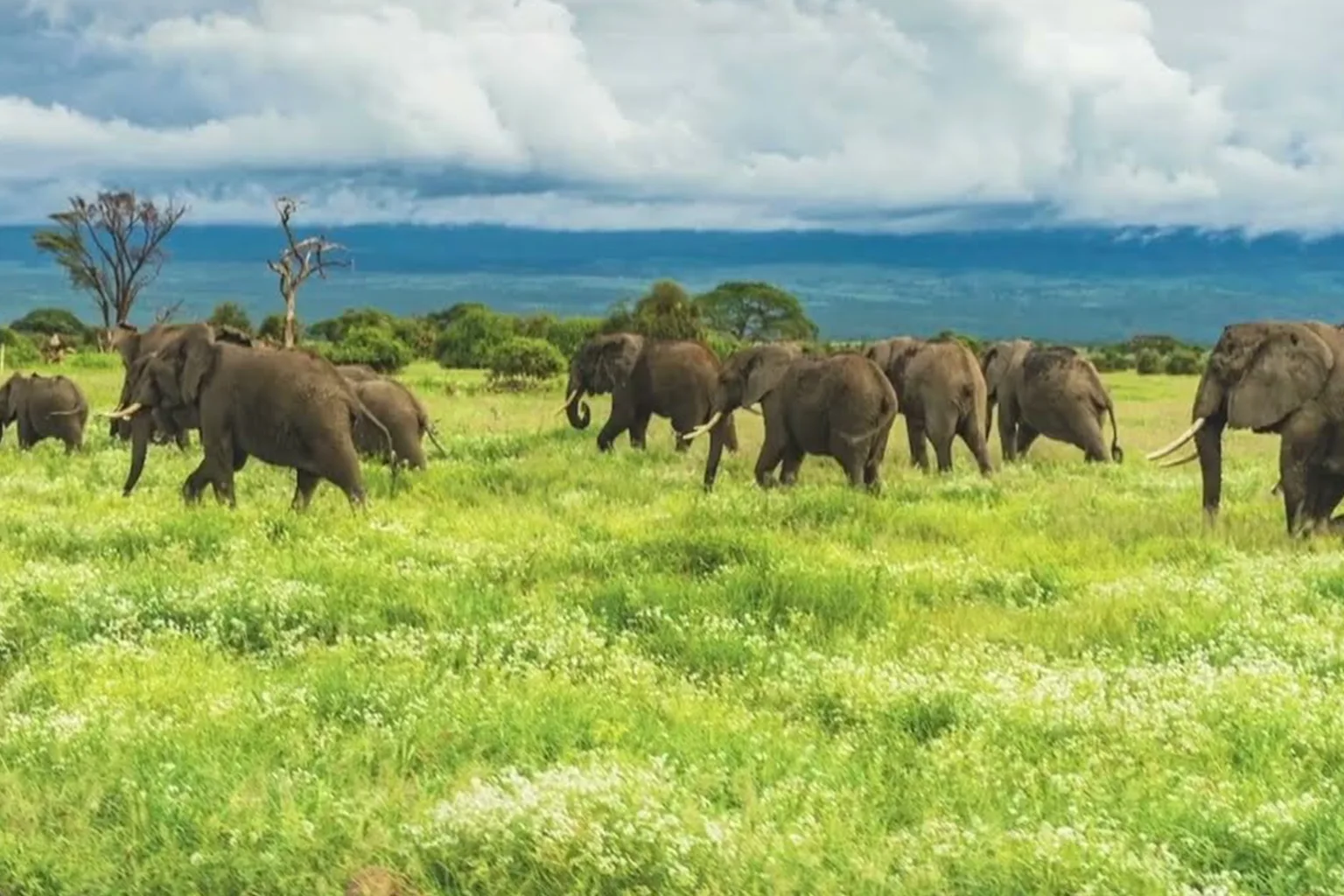
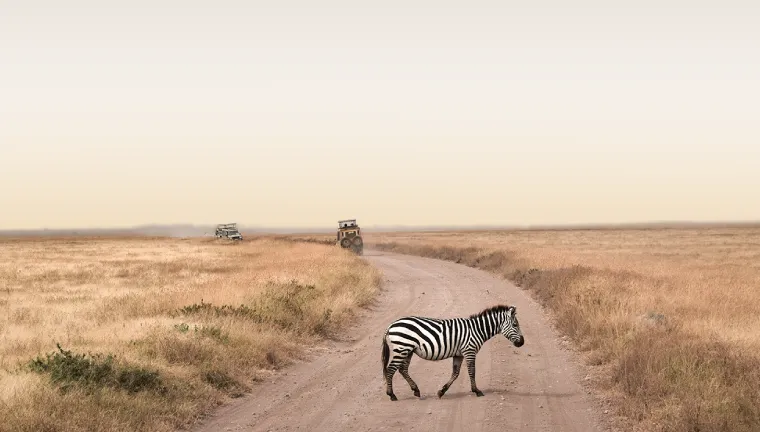
Fresh green plains and dramatic cloud cover show how Tanzania’s weather can quickly transform the landscape, bringing cooler skies, renewed vegetation, and lively wildlife movement after seasonal rains.
How to travel to Tanzania during the best weather?
If you plan a Tanzania Safari, start by picking the month you can actually travel, then match that month to the parks that behave well in it. Having a good knowledge of Tanzania’s Weather is always going to help you plan better.After that, you can get in touch with your tour operator, who can arrange the best kind of safaris with you.
Bestday Safaris can put together Tanzania Safari Packages that fit your season, anything from a Tanzania Luxury Safari to a classic Tanzania Big Five Safari, plus lighter days like walking safari moments, where conditions allow. We also help you line up the practical details that sit beside weather planning with our Tanzania Travel Guides, so you don’t land and realize you missed something small but important.
Frequently Asked Questions
Tanzania stays warm for most of the year, so you’re not packing for a “winter” in the usual sense. The tricky part is that it doesn’t feel the same everywhere. Zanzibar can be humid in that clingy way where you start looking for shade without thinking. Then you get to Arusha and suddenly the morning air feels crisp, like you could actually use a light jacket. So when you plan around Tanzania Weather, think location first, month second.
If you want the kind of Tanzania Safari Trip where the roads behave, and the sky doesn’t keep you guessing, June to October is the safe zone. That’s when the Tanzania dry season is doing its job: clearer days, less mud, and easier game drives. You’ll still feel cold at sunrise sometimes (especially in the north), but by lunchtime it’s back to warm. For most people, that’s the Best Time to visit Tanzania.
The long rains in Tanzania usually show up between March and May. And yes, it can get properly wet. Tracks inside parks can turn slow, and a “short drive” can start feeling longer than it should. But it’s not a ruined trip. The grass turns green almost overnight, the air feels fresh after rain, and you often get quieter sightings because there are fewer vehicles around. If you can handle a little unpredictability, it can be a beautiful time to be out there.
Not really. Zanzibar is coastal, so it’s warmer and more humid most days. The Serengeti feels drier, and Ngorongoro is a different story—nights can get genuinely cold up on the rim. It’s that classic situation where you’re barefoot at the beach in the afternoon, then the next morning you’re on safari wishing you’d packed one extra warm layer. It’s easier if you plan by Tanzania Destinations, because one forecast won’t cover all of it.
Pack like you’re going to wake up in two different temperatures, because you are going to do that eventually. Early drives can be chilly in an open vehicle, then a few hours later, you’re squinting in bright sun. Light layers help more than anything. Add a hat, sunscreen, insect repellent, a power bank, and a soft bag (it fits better in safari vehicles and small planes). A clear Tanzania Safari Packing List saves you from that “I wish I brought…” feeling.
Related Safari Experiences

Plan a Trip to Tanzania
We offer different tour types. You can also chat with a local travel specialist if you want a customized tour to Tanzania.


Recommended by



Tanzania Travel Essentials
Your Trusted Guide for Every Safari Detail
Our travel guide is made to save you time. It points you to the best time, cost, safety aspects, and activities, while sharing tips only locals know. Your dream Tanzania trip starts with the right information, and we’ve put it all together for you, so planning feels clearer, easier, and far less overwhelming from the very beginning.
Guestbook Moments
Real Stories from Safari Guests
A good safari often lives on through the words guests bring back. Here, Bestday Safaris travelers share notes on the people, pace, small comforts, wildlife moments, and honest care that became part of their journey. Their reviews help future travelers see beyond the itinerary and understand how each safari feels on the ground.
Excellent

4.9 out of 5
753 Reviews
Lorena T

We had an amazing experience with BestDays Safaris. Our driver Muro was very knowledgeable, took us away from crowds to spot animals and was an excellent guide. The camping accommodation that BestDay Safaris
Mar 2026
Annabella R
Climbing Mount Kilimanjaro was one of the most intense and beautiful experiences of my life, and a huge part of that is thanks to our guide, Boni. From day one, Boni set the tone for...
Mar 2026
Александр Е
Finally went to fulfill his long-held dream of climbing Kilimanjaro. The journey exceeded all my expectations. I enjoyed nature, met new people, experienced mountain sickness and overcoming myself again...
Mar 2026
Alejandra Q
We just finished an incredible safari as our honeymoon on a private safari tour for us two with Best Day Safaris in Tanzania and the whole experience exceeded our expectations.During the trip we explored Tarangire...
Mar 2026

Gabriel R
Our safari in Tanzania was honestly better than we ever imagined, easily the best trip we’ve ever taken. We visited Tarangire National Park, the incredible Serengeti National Park, and the breathtaking and the breathtaking...
Mar 2026
Rustam K
In February 2026, we took the Lemosho route to Kilimanjaro with this wonderful team. Everything was perfectly organized, from the first meeting to the climb. And frankly, I don't want to call these guys just...
Feb 2026
Start planning your safari. Get matched with a local adventure specialist.
David
Jackson Mollel
 Stephen
 Faraj
Faraj
 Abel
Abel