What Is the Best Time to Climb Mount Kilimanjaro?
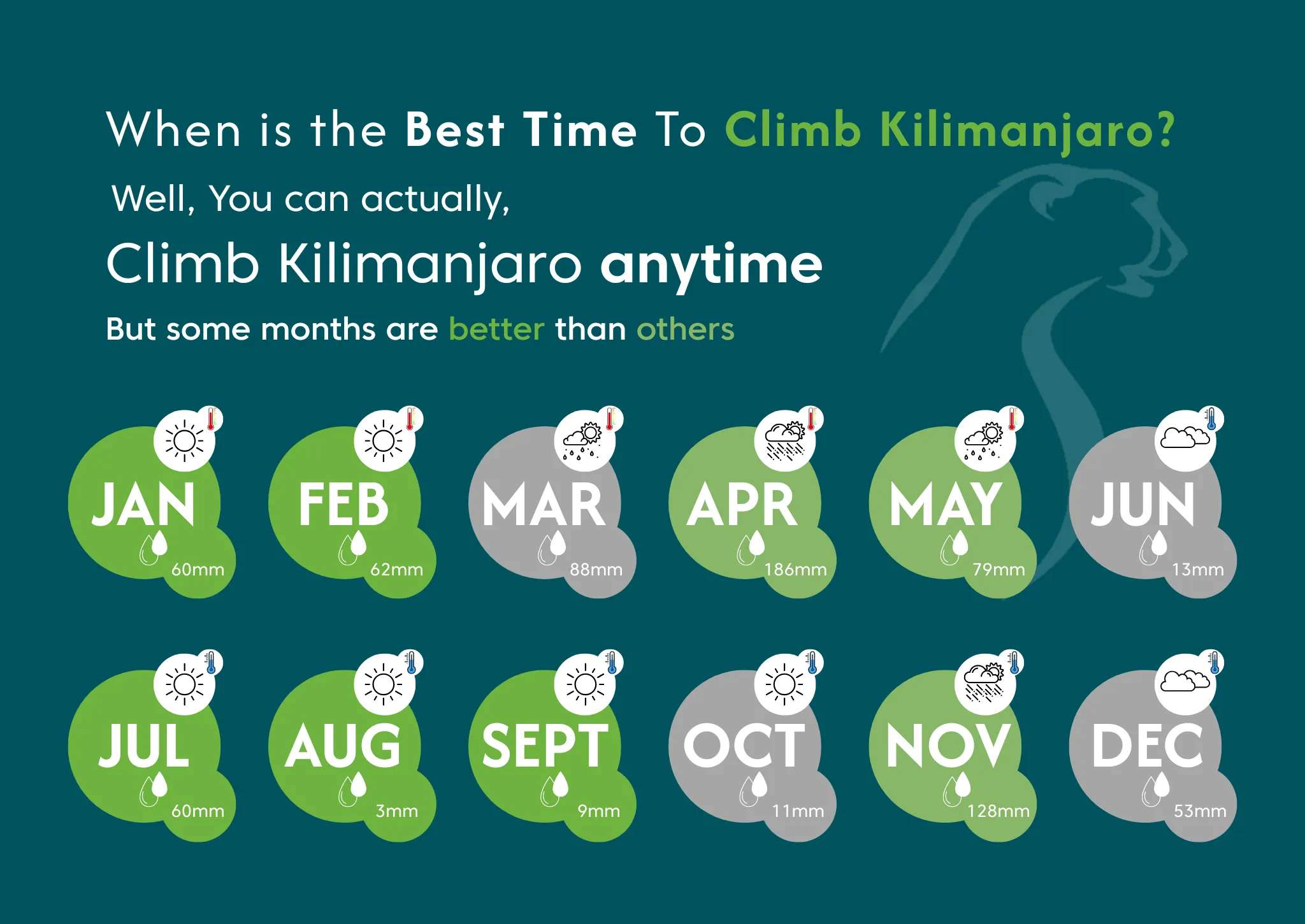
The Best Time to Climb Mount Kilimanjaro is from June to March. These months offer optimal weather conditions, including clear skies, minimal rain, and abundant sunshine, enhancing the Mount Kilimanjaro Climbing experience. But do remember that these weather patterns can shift unexpectedly, regardless of the season.
Technically, Kilimanjaro is accessible year-round. There are different Kilimanjaro Routes that can be used in the Rainy Season that make it more accessible and provide favourable conditions for the climb. Therefore, our trek experts at African Scenic Safaris recommend hiking all year round. Try and avoid the primary rainy seasons, April and May are wise due to potentially hazardous trail conditions.
Climbing Kilimanjaro Monthwise
Climbing Kilimanjaro In January
January is a fantastic month to undertake a Mount Kilimanjaro Climbing expedition. The weather during this month is generally dry, clear, and warm, thus offering excellent visibility for climbers. Kilimanjaro Temperature January is slightly higher, making it ideal for beginners.
- Good trekking opportunities with dry and clear days
- Great visibility and photo opportunities.
- Occasional showers
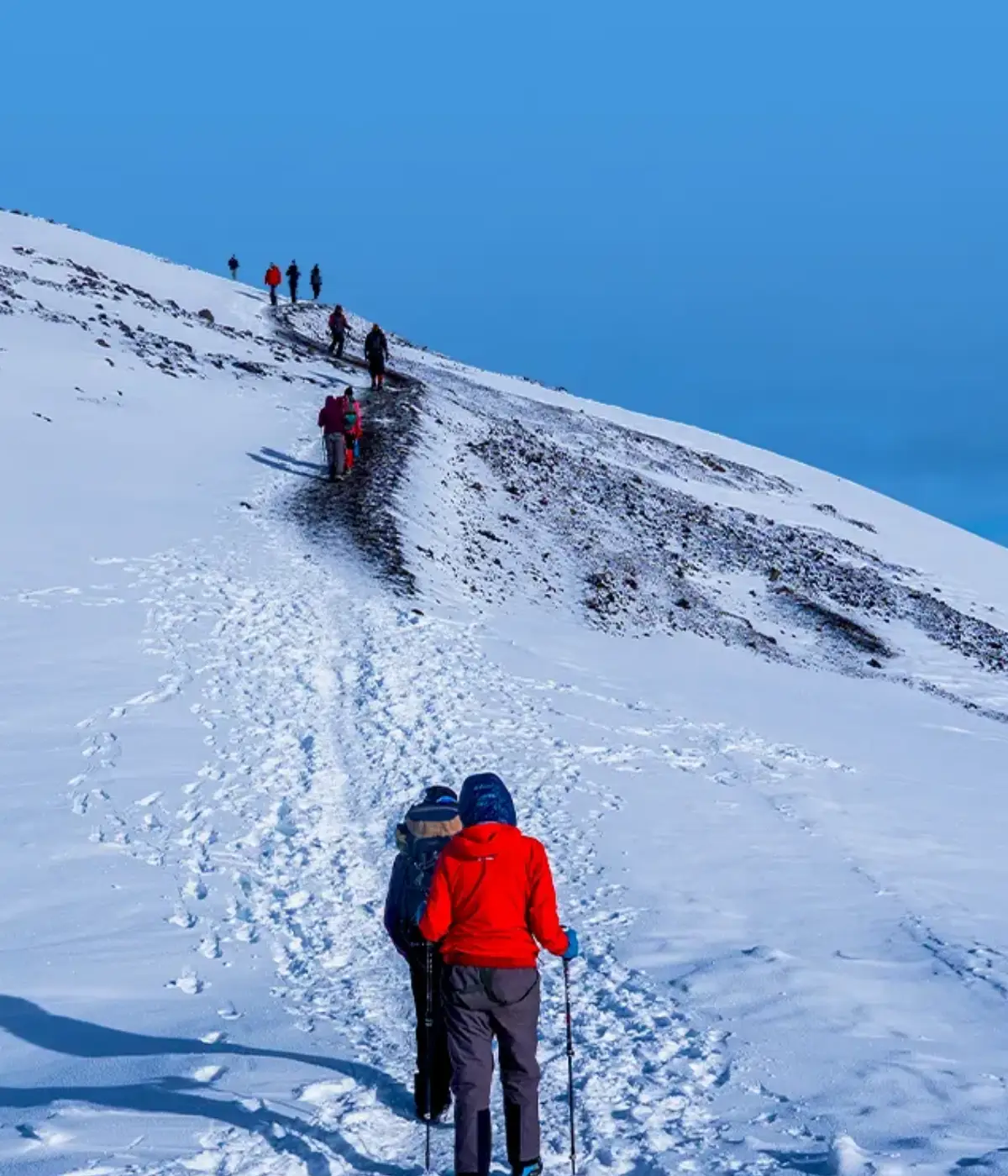
- High chance to witness snowfall above 14,000ft.
- Lesser crowds on the Kilimanjaro Routes, offering a more peaceful climb.
- January is considered the Best Time to Hike Mt Kilimanjarodue to warmer weather and less rain.
Our Overview
A good time to visit
Climbing Kilimanjaro In February
February is also considered one of the Best Time to Climb Mount Kilimanjaro. The weather is mostly warm and dry with less cloud cover. However, hot weather can make camps and paths dry and full of dust, so people who climb should get ready for this.
- Predominantly dry weather with clear skies and scenic views.
- Occasional rains may happen
- Perfectly balanced season; neither too wet nor too cold.
- Potential snowfall above 14,000ft.
- Dusty trails due to dry weather.
- Kilimanjaro Climbs are organised until the end of the month.
Our Overview
A good time to visit
Weather in February
Cloud
Climbing Kilimanjaro In March
While not typically recognized as the Best Time to Climb Mount Kilimanjaro, March can still provide a unique and rewarding experience for intrepid climbers.
The Mount Kilimanjaro Weather this month is unpredictable, with a higher likelihood of rain and snow compared to January or February. This means that the Kilimanjaro Temperature in March is often cooler, and visibility can be reduced due to cloud cover.
- Ideal for experienced trekkers who can handle unpredictable weather.
- Kilimanjaro Climbing Routeson the northern side are recommended as they are in better shape.
- More likely to rain or snow later in the month, making paths muddier and the hike tougher.
- Fewer crowds due to off-peak season make for a peaceful experience.
Our Overview
A good time to visit
Climbing Kilimanjaro In April
April is the wettest month on Kilimanjaro, making it a challenging time to climb. But, if the clouds are clear, climbers can enjoy some amazing views this month. Experienced climbers who seek adventure often consider April a good time to climb Kilimanjaro. Rongai Route which starts from the northern side of the mountain, is often a great choice to climb Kilimanjaro in the month of April.
- It is monsoon in Kilimanjaro in April.
- Prepare yourself for wet weather and poor visibility.
- Low cloud cover limits the views and hence, photo opportunities.
- Enjoy a quiet and calm atmosphere both while climbing and at the campsites
- Tackle the rain and snow on the mountains with the best possible gear. Read our Kilimanjaro Packing Listhere to learn more about all the gear you would ever require on your dream adventure.
Our Overview
A good time to visit
Climbing Kilimanjaro In May
May is traditionally one of the wetter months. Experienced hikers might enjoy the challenge of hiking through wet trails in the month of May. However, in recent years, it has been a little drier than normal.
Because of the thick growth, seeing wildlife is less common, but the park's beauty can't be beat.
Also, Rongai Route Kilimanjaro, the driest route on Mount Kilimanjaro is a great option for climbing in the month of May.
- Rainy season with decreasing rainfall towards the end of the month.
- Challenging climbing conditions due to rain.
- Fewer crowds on the trail and hiking prices are low too.
- Snow covered mountain top serves as a major attraction for expert hikers or anyone seeking these conditions.
Our Overview
A good time to visit
Climbing Kilimanjaro In June
June marks the start of the dry season, the Best Season to Climb Kilimanjaro. The weather begins to dry up, attracting climbers with the promise of good trekking conditions.
On the Mount Kilimanjaro Temperature scale, June might be a bit chillier, especially above 5,000m/16,400 feet, but the views are nothing short of breathtaking.
- Dryer conditions with less rainfall.
- A higher volume of climbers, but less crowded than February, August, and September.
- Stunning views of the sunrise and sunset from Shira Camp 2, Baranco Camp, and Karanga Camp.
- Nights are cold with temperatures dropping below freezing from the second night, depending on the Kilimanjaro Climbing Route.
Our Overview
A good time to visit
Climbing Kilimanjaro In July
July, being part of the dry season, is considered the Best Time to Climb Mount Kilimanjaro for many climbers. Despite colder temperatures at higher altitudes, the month boasts predominantly dry conditions, providing excellent climbing conditions and mountain views.
- Increased number of climbers due to school vacations in the northern hemisphere and better weather conditions.
- Occasional showers, mainly in the forest regions.
- Excellent weather and Kilimanjaro Mountain Temperaturesconducive to climbing.
- Busier trails, especially during the full moon, mainly on the Machame routes.
Our Overview
A good time to visit
Climbing Kilimanjaro In August
August continues to be a busy month on Kilimanjaro with dry conditions. It aligns with summer vacations in the US and Europe, making it one of the Best Time to Climb Mount Kilimanjaro.
- Optimal climbing conditions with dry and clear days.
- Dry and dusty trails that give a unique experience.
- Increased crowds, especially along the popular Routes Up Kilimanjaro.
- Less cloud cover allowing unobstructed views of the mountain.
- Warmer month on the mountain, with slightly colder temperatures on the western side.
- Experience Shira Plateau and Volcano in relatively warmer conditions in August.
Our Overview
A good time to visit
Climbing Kilimanjaro In September
With an ideal setting for hiking adventures, September is often considered the Best Time of Year to Climb Mount Kilimanjaro. The weather in September is generally warmer, particularly at elevations above 5,000m/ 17,000 feet. This makes climbing enjoyable, despite it being one of the busier times on Kilimanjaro.
- Warmer weather conditions at higher elevations, makes it the Best Month to Climb Mount Kilimanjarofor many.
- Clear skies and fantastic mountain views, add to the overall experience.
- Drier conditions make for a comfortable trek.
- Slightly busier time, but well-paced acclimatization helps climbers manage better.
Our Overview
A good time to visit
Weather in September
Cloud
Climbing Kilimanjaro In October
October is a transitional month that sees the start of the short rainy season and the end of the dry season. The trails are not excessively muddy and the weather is comfortably warm which makes it a good setting for Mount Kilimanjaro Climbing.
- Warmer weather higher up, enhancing the trekking experience.
- Mix of rain and clear skies for dramatic vistas.
- Fewer crowds on Kilimanjaro Routes for a serene climb.
- Clear skies in the morning with potential cloud cover later in the day.
Our Overview
A good time to visit
Climbing Kilimanjaro In November
November marks the beginning of the short rainy season. Still, this time has a unique appeal. The weather patterns are less stable, and you can anticipate daily rains, often during the afternoon.
- Rainy afternoons, poor visibility, and more snow higher up can disrupt your trekking experience.
- There is a drop in temperature and the mountain is covered by the mists.
- These weather conditions make the climb a little risky and challenging.
- Despite that, the mountain offers amazing photo opportunities with the mist-covered snowy peak.
- The Rongai route and Northern circuit route are preferable due to their more sheltered nature and less overall rainfall.
Our Overview
A good time to visit
Weather in November
Cloud
Climbing Kilimanjaro In December
Mount Kilimanjaro in December presents a warm and inviting climate, making it a sought-after time for enthusiasts seeking the Best Time of Year to Climb Mount Kilimanjaro.
Even though Kilimanjaro’s Temperature in December is generally warm, climbers should keep in mind that snowfall at the summit can occur at any time, more commonly between November and March.
- Warmest months to undertake a Kilimanjaro Climbing
- Clear skies and excellent visibility offer amazing photo opportunities.
- Lesser crowds on the Kilimanjaro Routes.
- Organized climbs to suit the Christmas vacation period.
- Early December can see increased rainfall.
Our Overview
A good time to visit
Weather in December
Cloud
All You Need To Know Before Climbing Kilimanjaro
Before booking the Kilimanjaro Climbing Package, you should understand that achieving this massive feat of climbing the mountain, needs both bravery and information about its changing climatic conditions. Hence, let’s give you the essential information about Kilimanjaro's weather that can help you pick the Best time to Climb Kilimanjaro.
Kilimanjaro Weather: What To Expect
The weather on Kilimanjaro changes a lot, due to its high altitude and its location near the equator. Temperatures can change a lot from the warm bottom to the freezing summit. This is why, trekkers may experience both extreme heat and cold.
Best Time To Climb Kilimanjaro
Temperature
The Mount Kilimanjaro Temperature changes as you climb higher and as the seasons change. The summit zone is in an "Arctic" climate, meaning it's below freezing all year round.
The coldest months are usually December to March and June after the rainy season. During these times, you're likely to see snow at the summit. Fewer people visit during these colder months compared to the busy period of July through August.
Understanding the nuances of Mount Kilimanjaro Weather and the Mount Kilimanjaro average temperature for each month will definitely help you pick the Best Month to Climb Mount Kilimanjaro.
Mount Kilimanjaro Weather
Kilimanjaro doesn’t experience the traditional four seasons as other temperate parts of the world. Instead, the mountain cycles around dry seasons and wet seasons, each impacting the terrain differently.
- The Best Time of the Year to Climb Kilimanjarotypically spans from June to March. These are the driest times of the year that attract numerous climbing enthusiasts from far and wide.
- During these periods, you will find clear skies and sunny weather that not only make great hiking conditions but provide immense photo opportunities.
Wet & Dry Seasons On Kilimanjaro
Kilimanjaro Climate is divided into two main seasons - wet and dry. The wet season includes long rains from March to May and short rains in November and December. The dry season includes the months from June to October and a shorter dry period from December to mid-March.
Our Kilimanjaro Climbs are mostly scheduled in the dry season.
Long Dry season
The dry season runs from mid-June to the end of October. During this period, temperatures on the mountain are slightly lower, but conditions are typically drier.
Short Dry Season
From December to mid-March, the weather is relatively warm, with clear mornings and nights. Although the days might see cloud cover and occasional rain showers.
Long Rains
From late March until early June, the rainy season persists. Climbing during this time is not recommended unless you are a seasoned trekker familiar with similar conditions. Expect wet conditions and possibly low visibility due to thick cloud cover. This time is less crowded though.
Short Rains
The short rainy season extends from early November to early December. Rainfall usually occurs in the afternoons, but mornings and evenings often have clear skies.
Kilimanjaro Altitude & Climate Zones
Kilimanjaro's weather is also affected by its unique altitude zones. You will pass through four distinct Mount Kilimanjaro Climate Zones as you climb: The Rainforest Zone, Low Alpine Area, High Alpine Area, and Glacial Zone.
These climatic zones bring their unique challenges and conditions, greatly impacting the overall hiking experience and temperature.
1-The Rainforest Zone (~800m-3,000m)
It is a warm and moist place, with lots of rain, especially in the wet season. Here, at about 2,870m, the average temperature is typically between 12-15°C.
3-The High Alpine Zone (4,200m-5,000m)
It resembles a desert landscape with very cold weather. Here, temperatures usually sit around the freezing mark at 4,970m.
2-The Low Alpine Area (~3,000m-4,200m)
This zone has less rain and is somewhat dry. And, the average temperature usually stays between 5-10°C at a height of 3,630m.
4-The Glacial Zone (above 5000 m)
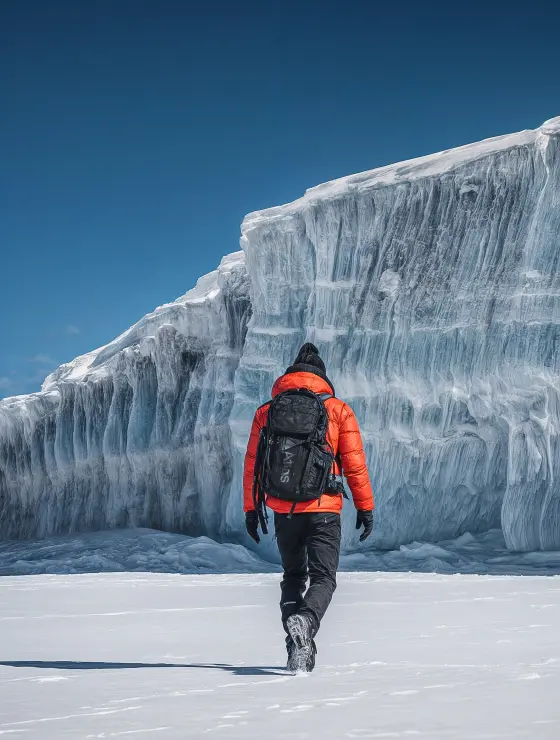
This zone encapsulates the summit region and is very cold with an average temperature of about -6°C.
Keep in Mind – At the Kilimanjaro summit, temperatures may seem manageable, but wind and altitude intensify the cold. High winds increase the chill factor, while thin air at high altitudes makes your body feel colder due to vasoconstriction. So, the actual Kilimanjaro Summit Temperature of -6 degrees Celsius could feel more like -20 degrees! A chart showing the average monthly temperatures at different heights will help you know what weather to expect when climbing during different times of the year.
Summiting During A Full-Moon
Trekking to Uhuru Peak under a full moon's glow is an unforgettable experience. As the lunar light illuminates the mountain's peaks and sprawling glaciers, climbers are treated to an amazing sight.
Many mountaineers purposely align their expedition dates to coincide with the full moon's appearance, which graces the sky once each month. Seasoned hikers often consider summiting during a full moon as the Best Time to Climb Mount Kilimanjaro.
Why Kilimanjaro Full-Moon Climbs Are Good?
Besides the natural spectacle, Kilimanjaro Full Moon Climbs have a practical advantage too. The moonlight, when paired with a cloudless sky, enhances the visibility during the climb, which can be especially useful during the final push to the summit.
Key Highlights
- Start your 7-day trek 5 days before the full moon to maximize the advantage of this celestial light.
- It's not necessary to reach the summit exactly on the full moon date; a day before or after still provides substantial lunar illumination.
Kilimanjaro Full Moon Dates
| Month |
2023 |
2024 |
2025 |
| January |
7 |
25 |
14 |
| February |
5 |
24 |
12 |
| March |
7 |
25 |
14 |
| April |
6 |
24 |
13 |
| May |
5 |
23 |
12 |
| June |
4 |
22 |
11 |
| July |
3 |
21 |
10 |
| August |
1, 31 |
19 |
9 |
| September |
29 |
18 |
7 |
| October |
28 |
17 |
7 |
| November |
27 |
16 |
5 |
| December |
27 |
15 |
5 |
Crowds: Number Of Climbers On Kilimanjaro
More and more people are choosing to climb Mount Kilimanjaro, especially when the Mount Kilimanjaro weather is good, from mid-December to March and from mid-June to October. This makes the mountain busy.
Among the four Kilimanjaro Routes that we offer, the Machame Route is usually the busiest. But you can choose quieter routes like the Northern Circuits, Rongai, or Lemosho if you want fewer people around.
The table below shows the crowd distribution across different months on Mt. Kilimanjaro. Our trek experts at African Scenic Safaris have considered all the factors and given their verdict on recommended and non-recommended months to go to Kilimanjaro. Take a look and find your Best Time to Climb Mount Kilimanjaro!
Kilimanjaro Full Moon Dates
| Month |
Crowd |
Recommendation |
| January |
High |
Highly Recommended |
| February |
High |
Highly Recommended |
| March |
Low |
Can consider visiting |
| April |
Low |
Only Rongai Route Recommended |
| May |
Low |
Only Rongai Route Recommended |
| June |
Medium |
Recommended |
| July |
High |
Highly Recommended |
| August |
High |
Highly Recommended |
| September |
High |
Highly Recommended |
| October |
Medium |
Highly Recommended |
| November |
Low |
Only Rongai Route Recommended |
| December |
Medium |
Recommended |
What If You Want To Climb Kilimanjaro Without The Crowds?
If you want a more tranquil experience and not be a part of hustle-bustle, consider the following points-
- Set out on Kilimanjaro Hiking expeditions just before and after the rainy seasons (December and June) as these are less busy times and the Best Time to Hike Mt Kilimanjaro with fewer crowds around.
- If you are an experienced hiker and want to climb in the rainy months without crowds, choosing the right routes is the key. We recommend Kilimanjaro Routes from the northern side of the mountain which usually have less rain and offers more protection from the weather. The Rongai Route Kilimanjarois a great choice!
- Though full moon climbs can be a magical experience, we suggest avoiding scheduling your ascent during the full moon for a quieter climb.
Take your adventure to new heights with our expert-guided Kilimanjaro Climb. Discover the majesty of the summit in optimal conditions - your journey to the “Roof of Africa” begins here!
Kilimanjaro Routes & Weather
Trail conditions on Kilimanjaro significantly shape your travel schedule, playing a pivotal role in determining the Best Time to Climb Mount Kilimanjaro. Let's explore each trail, understanding how their unique offerings vary across different seasons.
Typically, the Machame Route and Lemosho Route situated on the western side are the recommended routes for Climbing Kilimanjaro during the dry season. The rainy season can render these routes quite challenging due to significant rainfall, resulting in a less-than-pleasant camping experience.
On the contrary, the Rongai Route is a suitable choice for the wet season. This trail is located on the mountain’s northern side and is less exposed to rainfall compared to the western routes. This makes Rongai Route a more manageable option during rainier months.
Approaching Kilimanjaro from the northern side, the Northern Circuit Route is one of the longest paths and provides a high acclimatization rate. Also, because of its length and difficulty, the Northern Circuit Route sees fewer climbers and can be a good choice for those seeking a more solitary climb experience.
For more comprehensive information about all the climbing routes, read the Kilimanjaro Climbing Routes comparison.
Choose The Right Time For Your Kilimanjaro Climb
In the adventure of Mount Kilimanjaro Climbing, choosing the Best Time to Climb Mount Kilimanjaro is as crucial as your preparedness for the trek. The joy of scaling the 'Roof of Africa' is a constant, regardless of the month. African Scenic Safaris is dedicated to accompanying you on this journey, guaranteeing a successful and memorable climb. So, no more waiting; it's time to seize the opportunity and scale to the majestic heights of Kilimanjaro
Kilimanjaro Packing List PDF
Download our free Arusha National Park PDF for expert safari tips and top recommendations from African Scenic Safaris experts.
Explore Kilimanjaro Travel Guide
Find essential topics below to help you plan, prepare, and enjoy your Kilimanjaro travel experience fully.
Climb Kilimanjaro With Us
Get ready for a mountain adventure with real advice, smiling guides, and simple help that actually works. We’re with you from start to summit.
Frequently Asked Questions
The Best Months for Climbing Kilimanjaro are during the dry seasons, specifically from mid-December to March and mid-June to October. These months offer more predictable weather, making the ascent relatively smoother.
The Kilimanjaro Summit Temperature can dramatically vary from -7°C (20°F) to -29°C (-20°F). The temperature can depend on factors such as the time of year, weather conditions, and time of day.
April, May, and November are often the wettest months on Kilimanjaro. Climbers during these months should be prepared for rain and potentially more difficult trekking conditions.
April and November are the wettest months and should be typically avoided for Climbing Kilimanjaro. And, if you still want to climb Kilimanjaro during these times, you should be prepared for rain and equipped for more difficult trekking conditions.
Climbing is possible during the non-dry months, but it does pose extra challenges due to wetter conditions. Proper preparation and equipment are essential for such climbs.
The Kilimanjaro Routes you choose can impact the best time to climb due to differing crowd levels, scenery, and acclimatization profiles. Some routes might also be less traversable during the rainy season.
Weather greatly impacts visibility and summit success rates. Clear, dry weather offers better visibility and relatively easier trekking conditions, thereby increasing the chances of a successful summit.
Yes, definitely you can Climb Kilimanjaro during a full moon. Many travellers align their tour dates with the full moon dates for a unique experience on the mountain.
Yes, September is widely regarded as a great time to climb Kilimanjaro. It falls within the dry season and provides relatively predictable and favourable weather for climbing.
Yes, you can expect snowfall while summiting Kilimanjaro due to the mountain’s high altitude. This could add an extra challenge but also provide a unique experience to your climb.
July is a popular month for Climbing Kilimanjaro due to favourable weather conditions. However, the mountain tends to be busier due to school holidays, so climbers should expect more crowds during the ascent.
Simbo Natai, a Germany-based travel consultant, spent seven years living in Tanzania before returning to snowy Schleswig
About the author





 African Scenic Safaris #1 on TripAdvisor