How Much Does It Cost to Climb Kilimanjaro?
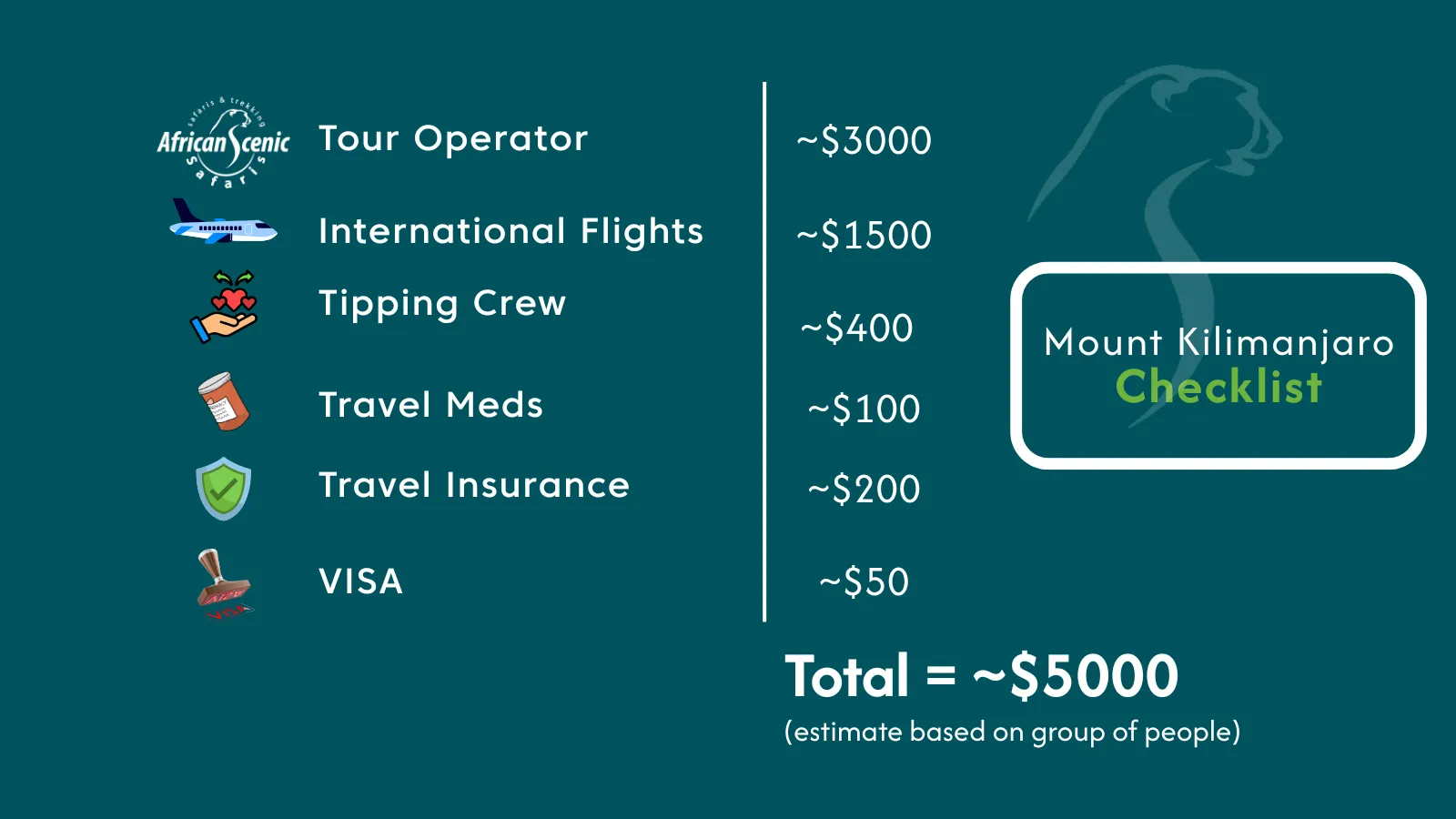
On average, the Kilimanjaro Climbing Cost is around $2,700 per person, though prices can vary between $2,000 and $6,000 based on several factors. The total cost depends on your group size, the chosen route, the number of days spent on the mountain, and the level of service you select.
At African Scenic Safaris, we offer two carefully crafted Kilimanjaro Climbing Packages to match different needs:
- Classic Climbing Packages – A cost-effective option with essential services for a safe and rewarding climb.
- Luxury Climbing Packages – A premium experience with top-tier accommodations, personal touches, and added comforts.
Every climb with us is professionally guided, prioritizes safety, and supports ethical porter treatment. In this guide, we’ll explore all the key factors that shape the Kilimanjaro Climb Cost, helping you plan your trek with confidence.
Cost Analysis of Climbing Kilimanjaro
Many climbers ask us, "Why does climbing Kilimanjaro cost so much?" At African Scenic Safaris, we believe in being upfront about where your money goes.
A Mount Kilimanjaro Climbing experience isn’t just a simple hike—it’s a well-planned adventure that requires expert guides, high-quality equipment, nutritious meals, and a strong support team.
Every climb involves park fees, fair wages for porters, transportation, and safety measures to ensure a smooth and ethical experience. We don’t cut corners or take risks with your safety.
Instead, we focus on providing a well-organized, responsible, and successful climb.
Here’s what goes into the Kilimanjaro Climbing Cost and why choosing the right tour operator matters.
- Kilimanjaro National Park Fees
- Safety & Kilimanjaro Rescue Services
- Mountain Team Wages
- Quality Equipment & Kilimanjaro Tents
- Fresh Food & Clean Water
- Transportation & Getting to Kilimanjaro
- Taxes & Government Fees
Important Note - One of the primary reasons for the high costs of Kilimanjaro climbs is the 18% Value Added Tax (VAT) imposed on all Tanzania Tour Operators since 2016. This tax automatically increases the total price of a climb.
However, some small companies avoid paying VAT by operating for a short period without registering with the tax office or the Ministry of Tourism.
As a traveler, avoid unregistered operators that skip legal requirements. Choose a compliant company that ensures safety, fair wages, and ethical treatment of guides and porters for a responsible Kilimanjaro Climb.
What’s Included in our Kilimanjaro Climbing Package
Our Kilimanjaro Climbing Package takes care of all the necessary expenses, so your trekking trip is organized and trouble-free. Everything from park fees to lodging, food, and expert guides is covered. Climbers may plan their budgets more wisely and enjoy a stress-free experience climbing Mount Kilimanjaro when they know what's included.
Kilimanjaro National Park Fees
Every climber must pay mandatory Kilimanjaro National Park fees, which cover access to the park, conservation efforts, rescue services, and camping or hut accommodations. These fees are set by the Kilimanjaro National Park Authority and are included in the total cost of Kilimanjaro Climbing Tours.
In 2025, the total park fees for a seven-day Mount Kilimanjaro Climb amount to approximately $1,000 per person. The fees are reviewed every two to three years and usually increase by 10-15%.
Breakdown of Kilimanjaro Park Fees (2025)
| Fee Type |
Regular Travelers (USD) |
Tanzanian Residents (USD) |
| Ecological Fee (per day) |
$70 |
$35 |
| Camping Fee (per night) |
$50 |
$50 |
| Hut Fee (Marangu Route) |
$60 |
$60 |
| Rescue Service Fee (one-time) |
$20 |
$20 |
| Guide Escort Fee (per guide) |
$20 |
$20 |
| Team Fee (one-time per participant for the entire tour) |
5000 TZS |
5000 TZS |
The Kilimanjaro Rescue Fee covers evacuation by a park rescue vehicle from some lower camps but does not include helicopter evacuation or medical treatment. Therefore, having Kilimanjaro Travel Insurance is strongly recommended which covers immediate medical assistance and helicopter evacuation services.
Vital Information - As of July 1, 2024, all park fees must be paid in Tanzanian shillings, although they are still calculated based on the US dollar.
Accommodation costs before and after your Climb
Accommodation before and after your Mount Kilimanjaro Climb plays a big role in the total cost of your expedition. Climbers can choose between standard 3-star hotels or luxury 5-star lodges, depending on their budget and comfort preferences. The choice of accommodation significantly affects the final price of Kilimanjaro Climbing Tours.
| Accommodation Type |
Room Type |
Price Per Night (USD) |
| Standard 3-Star Hotels |
Double Room |
$90 - $120 |
| Luxury 5-Star Lodges |
Double Room |
$1,200+ |
When choosing the accommodation, give preference to the location. Staying closer to Kilimanjaro Airport or the mountain gates can help with easy transfers and better rest before the climb.
Mountain Team Wages
A significant part of the Kilimanjaro Climbing Cost goes to paying the mountain team, which includes guides, porters, cooks, and camp staff.
Every climber requires 3-4 support crew members, while luxury climbs need 5-6 per climber for additional services. The wages for these team members are regulated, ensuring fair pay.
Mountain Team Wages for a 7-Day Expedition
| Team Position |
Salary for 7 Days (USD) |
| Lead Guide |
$240 |
| Assistant Guide |
$185 |
| Cook |
$135 |
| Camp Master |
$105 |
| Porter |
$70 |
More climbers mean more Kilimanjaro Porters and Kilimanjaro Climbing Guides are needed for the climb. As a result, the overall cost is increased. Remember, each Kilimanjaro Porter can carry a maximum of 20 kg, so multiple porters are needed to transport food, tents, and supplies.
These wages account for 25% of the total expedition cost, plus an 18% VAT paid by your operators.
Meals on the Mountain
A significant part of the Kilimanjaro Climbing Cost goes toward providing fresh, high-energy meals for both climbers and the support team. On a Mount Kilimanjaro Hike, food must be carefully planned and transported to ensure quality and nutrition at high altitudes.
Daily Food & Water Cost on Kilimanjaro (Per Climber)
| Expense Type |
Cost Per Day (USD) |
| Food for Climbers & Staff |
$10 - $20 |
For a seven-day expedition, meal costs range between $10 to $20 per climber per day, covering breakfast, lunch, and dinner for both trekkers and crew members.
Since fresh ingredients like fruits, vegetables, and meat cannot be stored long-term on the mountain, additional Kilimanjaro Porters transport fresh supplies to the Kilimanjaro Camp on the third or fourth day. These costs are included in the total price of Kilimanjaro Climbing Tours.
Equipment Costs for a Kilimanjaro Climb
A well-organized Mount Kilimanjaro Climb requires high-quality gear. Some essential items like Kilimanjaro Tents, dining equipment, oxygen systems, and safety tools must be regularly updated and well-maintained.
Most of this equipment is imported, and high import duties, VAT, and other fees increase the total cost. Taxes alone can add 60% to the final price. Using old or worn-out gear is risky—leaky tents in rainy weather or malfunctioning oxygen systems can lead to serious problems.
Cost Breakdown for Kilimanjaro Climbing Gear
| Expense Type |
Estimated Cost (USD) |
| Expedition Equipment (Tents, Dining Setup, Safety Gear, Radios, First Aid) |
Included in Climb Price |
| Personal Gear (Hiking Boots, Sleeping Bag, Poles, Clothing, Duffel Bag, Daypack, Insulated Water Bottles, etc.) |
$300 - $600 |
A note for Seasoned Climbers - If you already own essential gear like hiking boots, sleeping bags, and layered clothing, your personal Kilimanjaro Packing List costs will be lower. However, budgeting at least $300 for missing gear is recommended.
Transport and Fuel Costs in a Kilimanjaro Expedition
Transportation is included in all Kilimanjaro Climbing Packages, covering airport transfers and travel to and from the park entrance.
However, high fuel prices in Tanzania contribute to the overall cost. As of 2025, fuel costs 3,650 TZS ($1.32) per liter, making transportation one of the unavoidable expenses.
All transfers are fully insured, ensuring a safe and reliable journey.
Essential Medical and Safety Gear
All our Kilimanjaro Climbing Packages include necessary safety equipment to ensure a secure trekking experience. Emergency oxygen, medical kits, and monitoring tools are provided to handle altitude-related risks.
- Emergency Oxygen – Available for climbers in case of altitude sickness.
- Comprehensive Medical Kits – Stocked with essential medications, regularly checked and updated.
- Oximeters – Used to monitor oxygen levels and assess acclimatization.
- Rescue Stretchers – Ensuring quick evacuation in emergencies.
All these are regularly maintained and replaced as needed to guarantee reliability during the Mount Kilimanjaro Climb.
What's Excluded in our Kilimanjaro Climbing Package
While our Kilimanjaro Climbing Package covers all essential expenses for a smooth and well-organized trek, some costs are not included. These are personal expenses that climbers should budget for separately. Knowing what’s excluded helps in planning wisely for a stress-free Mount Kilimanjaro Climb.
International Flight Costs to Kilimanjaro
Flights to Kilimanjaro Airport vary in price depending on the departure country. While our package covers essential trekking costs, international airfare is not included. Below is an estimate of average flight costs from different countries.
Average Flight Costs to Kilimanjaro (2025)
| Country |
$1,200 |
| United Kingdom |
$900 |
| Germany |
$1,100 |
| Australia |
$1,500 |
| South Africa |
$800 |
Flight prices fluctuate based on the season, airline, and booking time. Hence, planning and booking early can help reduce costs when Getting To Kilimanjaro for your trekking adventure.
Tanzania Visa Cost
A single-entry Tanzania visa valid for 90 days costs $50. The visa allows you to travel between mainland Tanzania and Zanzibar. The cost is a little different for US travellers, i.e. $100.
The price is the result of a special travel agreement between the countries. The tourist visa is valid for one year and allows for multiple 90-day entries.
Handy Tip - To get your visa you will need a passport that’s valid for six months from the date of arrival in Tanzania. So, it’s best to renew it if your passport isn’t up to date.
Medical Checkups and Vaccinations (From $100 onwards)
If you are traveling from a country that has a risk of Yellow Fever transmission, then you’ll need a vaccination certificate. The cost starts from $100 onwards.
- The risk of contracting malaria is relatively low on the mountain as mosquitoes are not found at higher altitudes (over 1,800 meters).
- So, the risk will only be before and after your hike. For this, we suggest bringing some anti-malarial tablets.
Moreover, having a medical checkup before your Mount Kilimanjaro Climbing adventure comes highly recommended by us.
Travel Insurance Cost
Travel Insurance is mandatory for hiking up to an elevation of 6,000 meters. It’ll cover you for high-altitude trekking, any accidents, thefts, lost/damaged luggage, delayed/interrupted travel, and off-mountain illnesses. The cost ranges from $50 to $100.
Tips for your Crew (Around $90 per day)
There’s a tipping ceremony at the end of every Kilimanjaro Climb. This is when every climber pools in their tips for the staff on the mountain. Here is the tipping cost for each crew member:
Recommended Tipping Amounts (Per Day, Per Crew Member)
| Crew Member |
Tip Amount (USD) |
| Porters |
$10 |
| Cooks |
$15 |
| Lead Guide |
$20 |
| Assistant Guide |
$15 |
Point to Remember - The following tipping are based on the minimum recommended tips for a 7-day climb and may vary depending on the crew member's role and the duration of the climb.
Cash to Spend
On either side of your climbing expedition (i.e. before or after), you may like to have some cash in hand for small purchases like snacks, drinks, and souvenirs. The local currency is the Tanzanian Shilling (TSH). They come in TSH 500, TSH 1,000, TSH 5,000, and TSH 10,000 notes.
Coins are also in use, including TSH 20, TSH 50, TSH 100, and TSH 200. An important thing to remember is that you can’t get Tanzanian Shillings outside the country.
Buying a Local SIM Card
A local SIM card costs around $2. The five network providers in Tanzania include:
- Vodacom
- Airtel
- Zantel
- Tigo
- Halotel
We advise going with either Airtel or Vodacom as these offer the widest network coverage. You can buy a local SIM card at the airport as soon as you land in Tanzania. You can learn about the exact SIM card plans here - https://africanscenicsafaris.com/tanzania-safari-cost
Special Mention- Climbers with African Scenic Safaris have the option to include additional services beyond the standard package. These extras include portable camping toilets, hot showers, satellite phone access, and single occupancy in tents and hotels. For more details on these optional upgrades, feel free to reach out to our team.

 African Scenic Safaris #1 on TripAdvisor