Explore our Tanzania safari tours in one place. Experience exciting game drives, relaxing lodge stays, and rich wildlife across Serengeti, Ngorongoro, and Tarangire. Tours are designed for families, couples, and solo travellers with varied interests.
Discover Kilimanjaro climbing tours with expert tips, detailed itineraries, and route comparisons. Choose scenic or challenging paths and prepare confidently with trusted guides, reliable support, and summit-ready advice.
Packing for Mount Kilimanjaro means preparing for changing weather and altitude. This list covers essential gear, clothing, and personal items to help you stay safe, comfortable, and fully prepared for your mountain trekking adventure.
Discover the many ways to enjoy Tanzania through safaris, mountain hikes, cultural journeys, and beach escapes. Each trip is carefully planned to connect you with the country’s wildlife, landscapes, and welcoming communities.
Find a variety of cultural activities, nature outings, and day trips around Arusha. Walk through markets, visit coffee farms, and explore nearby villages for a genuine look into northern Tanzania’s lifestyle and scenic charm.
Enjoy a variety of enriching activities in and around Moshi. From waterfalls and hot springs to coffee tours and cultural visits, each adds nature, relaxation, and local connection to your Kilimanjaro adventure or stay in town.
Getting ready for a Tanzania safari means packing the right clothing, gear, and personal items. This list helps you stay comfortable and prepared for changing weather, wildlife viewing, and enjoying each moment of your adventure.
Tanzania safari prices vary depending on season, travel style, and itinerary. This guide explains the key factors that affect costs and helps you choose a safari option that matches your budget, comfort level, and travel goals.
Planning a Tanzania safari comes with many questions. This FAQ guide offers clear answers on travel plans, wildlife seasons, park access, safety, and stays, helping you prepare for a smooth and enjoyable safari across Tanzania.
Travel in Tanzania involves key details like visas, transport, and park access, along with understanding local customs and safety practices to ensure a smooth, enjoyable journey through the country’s diverse landscapes and regions.
For 16 years, African Scenic Safaris has crafted personalised Tanzania journeys with expert local teams, combining stunning landscapes, cultural experiences, and responsible travel that supports conservation and uplifts the communities we work with.
A reliable vehicle makes all the difference on safari. Our 4x4 Toyota Land Cruisers are built for Tanzania’s tough terrain. With six window seats and pop-up roofs, they ensure comfort, safety, and excellent wildlife viewing throughout your journey.
We create meaningful Tanzania safari experiences that connect people with nature, support conservation, and empower communities through responsible tourism, sustainable practices, and local partnerships, leaving every place better than we found it.
Our team of local experts and storytellers knows Tanzania deeply. More than guides, they craft personalised safaris filled with insight, warmth, and connection to the wildlife, people, and landscapes that make the country special.
African Scenic Safaris started with a dream to create meaningful, authentic journeys through Tanzania. From one guide’s vision grew a passionate team, united by local knowledge, purpose, and a deep respect for nature and community.
Each safari we create is built on care, curiosity, and genuine connection. With a focus on thoughtful details, ethical travel, and immersive moments, our journeys reveal Tanzania’s wild beauty while honouring its people, cultures, and landscapes.
We keep safari planning easy and stress-free. Before your trip, we assist with details, visas, and travel tips. On arrival, our welcoming team ensures smooth guidance, local support, and flexible planning every step of the way.
To confirm your trip, an advance payment is needed with the remaining balance due before travel. We follow general booking, refund, and cancellation policies. Please review the terms for changes or delays.
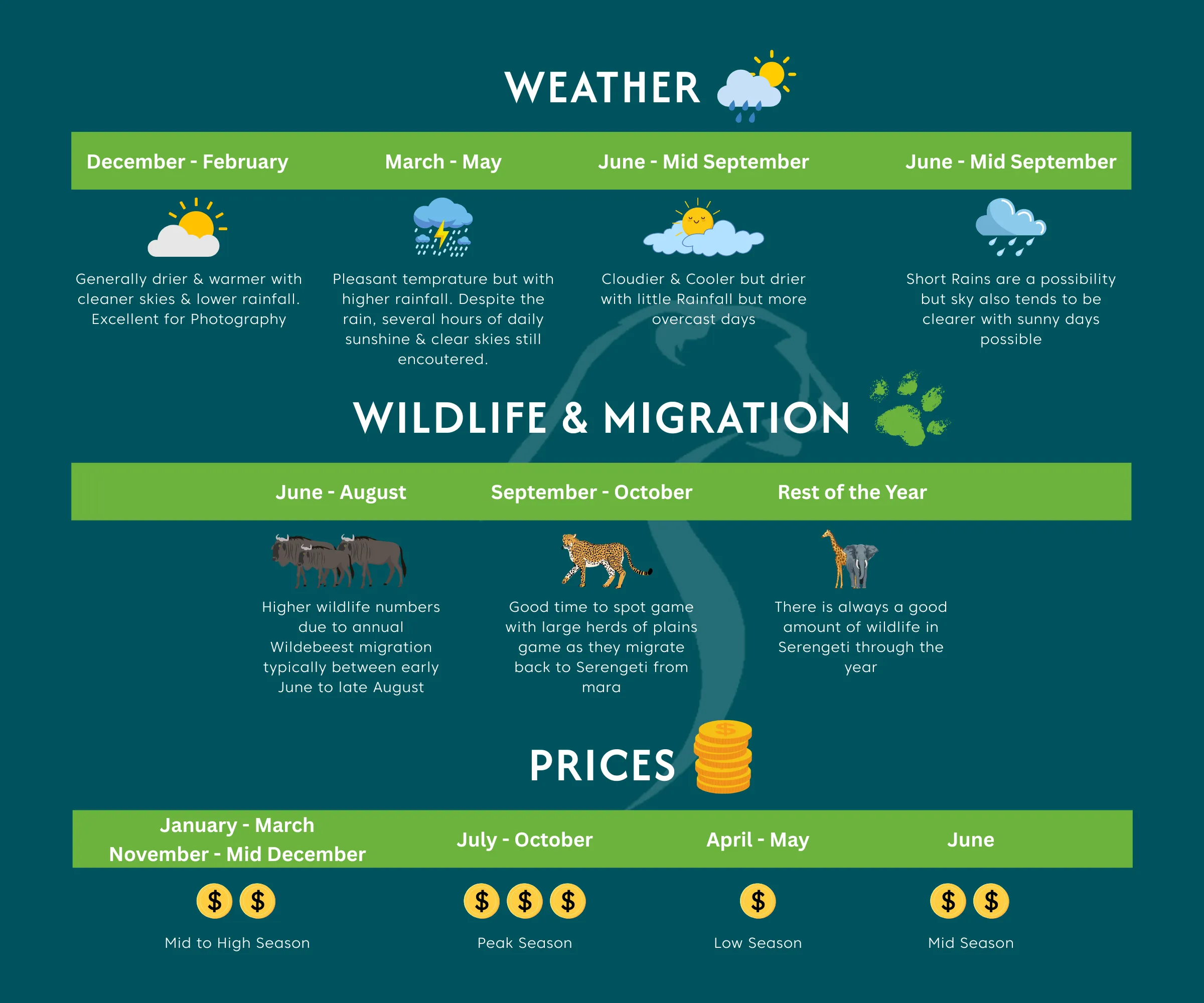
The Best Time to Visit Tanzania for your safaris typically falls between June and October. During these months, the country's weather is notably warm, dry, and predictable, thus providing ideal conditions for wildlife viewing. Moreover, this period also aligns with the exciting 'Great Migration', an extraordinary spectacle for any wildlife enthusiast.
Tanzania has two main safari seasons: the high season and the low season. The high season is ideal for Tanzania Safari Tours and is the peak tourist time as the weather and wildlife viewing is superb. On the flip side, the low season, from March to May, brings rain but fewer crowds. Thus, providing an exclusive safari experience.
Though both seasons have their unique charms, our safari experts at African Scenic Safaris recommend visiting Tanzania in the high season, as this is when Tanzania's wildlife and landscapes shine the brightest.
Month By Month: The Best Time To Visit Tanzania
If your Tanzania Travel Itinerary revolves around observing specific wildlife and visiting some particular natural wonders, you will always find certain months more appealing than others. Hence, determining the Best Month for Tanzania Safari will eventually depend on your interests and desired experiences.
Let’s look at the details of what each month has got in store for you when coming for Tanzania Safari Tours.
Most Ideal
Low Season
January
January is a great time for a beach holiday in Tanzania, especially in Zanzibar. The weather is warm and sunny, perfect for relaxing. In the Serengeti, wildebeest herds arrive in the south to give birth. It’s a calm time in the wild, with new life and peaceful moments all around.
Highlights
Wildebeest calving in Ndutu Plains
Warm weather with few showers
Great time for beach holidays
February
February is hot and humid, marking the peak of calving season. Thousands of wildebeest give birth on the southern Serengeti plains, drawing predators like lions and hyenas. The landscape is full of new life and action. It’s a good month for safari lovers who enjoy watching nature’s raw and real side.
Highlights
Ideal month for Kilimanjaro trekking
Calving season draws predator action
Perfect beach and safari combo
March
Early March is hot and dry, but the long rains may start mid-month. The landscapes turn green and fresh, especially in the Ngorongoro Highlands. Rain falls mostly in the afternoons. It’s still a great month for Kilimanjaro climbs and photography, thanks to clear mornings and dramatic skies later in the day.
Highlights
Migration begins moving westward
Hot weather with occasional rain
Last good month before rains
April
April is the wettest month in Tanzania. Expect heavy rains, cloudy days, and humid weather, especially in the southern and western parks. However, it’s a peaceful time with fewer tourists and lower safari costs. If you don’t mind some rain, April offers lush views and great value for your travel budget.
Highlights
Heavy rains across many regions
Wildlife is harder to spot clearly
Lodges are often closed for the season
May
May starts wet but begins drying toward the end of the month. The Great Migration starts moving from the south to the Serengeti’s western corridor. Parks are still quiet, and prices remain low. The landscapes are green and beautiful, offering a unique and less crowded safari experience for adventurous travellers.
Highlights
Green scenery after heavy rains
Great value with low crowds
Wildlife viewing remains quite limited
June
June brings dry weather and cooler air, starting the high safari season. It’s one of the best times to visit for wildlife viewing and Kilimanjaro climbs. The savannah turns golden, and animals become easier to spot. Wildebeest gather near the Grumeti River, building up before the big crossing begins.
Highlights
Start of dry safari season
Migration moves toward the Grumeti River
Excellent time for bird watching
July
July is peak safari season in Tanzania. The weather is dry and clear, ideal for game drives. Wildebeest herds move into the northern Serengeti, preparing to cross the Mara River. Parks like Serengeti and Ngorongoro are full of wildlife. It’s also a great time for Tanzania safaris.
Highlights
Peak season for Tanzania safaris
Elephants gather in Tarangire Park
Cool and dry weather begins
August
August is still part of peak travel season. The northern parks and Zanzibar get busy with tourists, and wildlife sightings are amazing. The Great Migration may be crossing the Mara River. It’s one of the best months for safaris, beach holidays, and watching large herds of animals in open grasslands.
Highlights
River crossings in the northern Serengeti
Big Five is easier to spot
Flamingos arrive at Lake Natron
September
September is dry, with fewer tourists and less humidity. It’s great for solo travellers and hikers, especially those planning to climb Mount Kilimanjaro. Wildlife viewing remains excellent, and Tarangire National Park is full of elephants. Fishing season also starts in Tanzania’s lakes, making it a good month for mixed adventures.
Highlights
Still dry with fewer crowds
The Great Migration spreads across the Serengeti
Ideal time for Zanzibar beaches
October
October brings the first rains and dramatic skies. Afternoon showers begin, and cloud build-up is common. It’s a great time for chimpanzee trekking in the Mahale Mountains and for visiting Lake Tanganyika. Mount Meru climbs are ideal this month, and nature photographers love the vibrant colours and changing moods of the land.
Highlights
Last month of peak season
Big cats are active in the Serengeti
Possible late-season river crossings
November
November is often overlooked, but it’s a good month for quiet safaris. Light afternoon rain helps cool the land, and fewer tourists mean more peaceful game drives. Northern parks still offer great wildlife experiences. It’s also a good time to explore less-visited destinations and enjoy off-season travel deals in Tanzania.
Highlights
Start of the short rainy season
Lower prices and green landscapes
Whale sharks appear near Zanzibar
December
December sees short rains and growing tourist crowds during Christmas and New Year. Early in the month is quiet. It’s a top month for birdwatching, especially in Tarangire and Nyerere. Wildebeest return to the southern Serengeti to feed before calving. A Serengeti safari in December is both scenic and dramatic.
Highlights
Short rains mostly at night
Migration returns to the southern plains
Busy around Christmas and New Year
Tanzania Safari In January
The Best Time To Visit Tanzania generally runs from June to March. This period offers pleasant weather with warm days and cool evenings, making it ideal for a safari adventure. Also, wildlife sightings can be more exciting and easier as you can spot them around the water sources.
Average Day temperature: Around 26-30°C
Average Night temperature: 20- 23°C
Average Rainfall: 90 mm
January is summer's peak in Tanzania, and it's mostly dry. This means it's perfect for safaris, as the heavy rains don't start until March. Only brief showers happen at night. Plus, there's plenty of sunshine, around 10 hours each day, and the weather is comfortably warm.
Is January A good Time For Safaris In Tanzania?
Yes, the weather in January is a great time to do Safari in Tanzania. The grass is short, and animals can be spotted easily. The lush landscapes and active animal life make for fantastic game viewing, including the calving season of wildebeest and zebras.
Some other benefits of Tanzania Safaris in January are:
It’s the calving season in the Ndutu plains. Visit Tanzania in January to see the wildebeests give birth to young ones.
Avid bird watchers often consider January the Best Month to Visit Tanzania for bird-watching safaris.
Weather is conducive for trekking in areas like Ngorongoro Conservation Area and the Usambara Mountains.
January is a low tourism season and offers a less crowded and more immersive experience.
Immerse yourself in Tanzania culture by visiting the Ngorongoro Festival as it celebrates Maasai tradition with dance, music, and art exhibitions.
Safari spectacles: The calving season for wildebeests and zebra, bird-watching safaris, and wildlife viewing.
Tanzania Safari In February
Average Daytime temperatures- around 29°C
Average Nighttime temperatures- around 26°C
Average Rainfall: 120 mm
As part of the African Summer, February in Tanzania is pleasantly warm and makes for an ideal time to visit. Despite the possibility of occasional rain at night, the conditions remain favourable for exploration.
Is February good for Safaris in Tanzania?
February is a part of the shoulder season. It is nestled between the peak tourist months of December to January and the quieter season from March to May. Hence, February presents an optimal opportunity to discover Tanzania Tourist Attractions.
A few compelling reasons to consider scheduling your Tanzanian adventure in February are as follows:
The spectacle of wildebeest calving in the Serengeti National Park continues into February, offering an impressive sight.
It is often considered the Best Month to Visit Serengeti for watching wildebeest calves giving birth to young ones.
The dry weather, less slippery trails, and clear skies in February are perfect for hiking in Tanzania.
February witnesses less crowded tourist sites. This offers a more personal Tanzania Safari Experience and potentially lower costs for tours.
Safari spectacles: Calving and prey-predator action, safari in northern and southern parks, and bird watching in Lake Manyara.
Go on Safari with Us
Discover Tanzania’s untamed beauty with experts who bring every moment to life. From tracking lions to quiet sunset views, we make each day in the wild truly count.
In the initial days of March, the Weather in Tanzania resembles that of February, characterized by warmth. It is more like the dry and short summer season.
Yet, as we move into mid-March, the 'Masika,' or long rainy season commences, raising daytime humidity and heat levels, with nighttime temperatures dropping by nearly 10 degrees.
The latter half of March often brings heavy rainfall, usually in the mornings, with afternoons turning brighter. This rain settles the dust and enhances visibility.
Is March A Good Month To Visit Tanzania?
For travellers with an appetite for adventure and authenticity, the raw beauty of Tanzania during the rains can be a spectacle.
Here's why considering March for your visit might be a good idea:
If you are seeking less-crowded locations, March is an excellent time for you.
Most camps and lodges offer Tanzania Safaris Packages at discounted rates, thus making your trip more affordable.
As March advances, there is an increase in rainfall. Still, an enjoyable safari experience is achievable with proper planning.
Rainy seasons are prime for photography in Tanzania. The dramatic skies create awe-inspiring backdrops for capturing wildlife and landscapes.
Safari spectacles: Birdwatching experiences and photographic safaris.
African Scenic Suggestions:
Consider visiting Lake Manyara National Park and Tarangire National Park as they are comparatively drier in March. Also, the southern Serengeti during March is an excellent place to observe calving. Opting for Serengeti Safari Tour at this time won’t disappoint you.
Tanzania Safari In April
Average Daytime temperature: Around 25°C
Average Nighttime temperature: Roughly 14°C
Average Rainfall: 240 mm
April in Tanzania is one of the wettest months of the year and is not regarded as the Best Month for Tanzania Safari. It is very rainy and humid, causing some lodges to shut down. Most tourists tend to avoid this season because of the extreme rains.
Can You Visit Tanzania In April?
Yes, you can. Particularly, if you don’t mind mud and have no issues getting drenched often. In that case, you can always Visit Tanzania in April. Several reasons that make April an ideal month for Visiting Tanzania are outlined below:
There are lesser crowds from April to early June. For travellers seeking serene experiences, April is a great time for Tanzania Safari Holidays.
The rainy season (April and May) is great for Tanzania Birding Safaris. Spot a diverse array of avian species in national parks such as Tarangire.
Even if it's hard to see the "big five" animals in April, you can still watch the Great Wildebeest Migration as the herds start moving north and west from southern Serengeti.
Lastly, April is also a cheaper time to visit. Many hotels and lodges offer discounts to save money on your trip.
Safari spectacles: Witness the wildflowers, green vistas, and birds on safaris in Tanzania.
May in Tanzania is generally warm with the level of rain fluctuating throughout. Additionally, this off-peak period might offer more affordable rates for accommodations and Tanzania Safari Tours. Thus, ensuring you get the most out of your Tanzania experience without stretching your budget.
Is May A Good Time To Go To Tanzania?
Coming to Tanzania in May offers a fantastic mix of pleasant weather and enthralling activities, making it a superb time to discover the country's stunning wildlife and vibrant culture.
Below are more reasons why this month could be your perfect moment for an adventure:
In May, Tanzania undergoes a shift from the wet season to the dry season.
It means animals start to flock to dwindling water sources, making this time excellent for game viewing and the Best Month to Visit Tanzania.
The temperate weather in May allows for outdoor activities without discomfort from extreme heat.
Engage in Tanzania's lively culture through local festivals like the Arusha Summer Festival and Ngorongoro Marathon.
May's lower visitor numbers mean a more tranquil travel experience, especially in hotspots like Serengeti and Ngorongoro Crater.
Safari spectacles: Lush green landscapes offer a picturesque setting for an array of engaging outdoor activities.
We thank you for your time and hope that our insights have brought you one step closer to identifying the Best Time to Visit Tanzania. So, why wait? Let your exploration begin!
Tanzania Safari In June
Average Day temperatures: Around 30°C
Average Night temperatures: Approx 20°C
Average Rainfall: 40 mm
June is the onset of winter in Tanzania but it also marks the continuation of the dry season. The winter months in Tanzania stretch from June to October and during this period, the weather remains dry and warm with infrequent rains.
Is June A Good Time To Go To Tanzania?
Yes, June is a very good time to visit Tanzania—especially if you're interested in wildlife and outdoor activities.
If you plan a trip to Tanzania in June, you can expect a festive mood as the country gears up to welcome tourists.
Here are some highlights that can make your Tanzania visit in June a wonderful experience:
Tanzania National Parks and game reserves are best accessible in June. Enjoy the fresh blooms, wildlife sightings, and sunshine on safari drives.
Migratory birds visit national parks around this time, making it a great month for Tanzania Birding Safaris.
Easier wildlife spotting as the savannah starts drying up. The Great Migration starts to move north from the Grumeti River.
Join in the excitement of the Karibu Travel and Tourism Fair and the Bulabo Dance Festival.
Safari spectacles: Watch the Serengeti Wildebeest Migration as it moves north attracting large predators and witness the migratory birds on birding safaris.
Tanzania Safari In July
Average Day temperatures – Between 27°C- 32°C
Average Night temperatures – Between 15°C- 20°C
Average Rainfall- 30 mm
July is the heart of winter in Tanzania. It offers wonderful weather in Tanzania which is best suited for Tanzania Safari Trip. The days are usually sunny, warm, and clear, making the country its driest.
Is July A Good Time For Safari In Tanzania?
July is often regarded as the Best Month to Visit Tanzania. It’s the winter and the peak season for visiting Tanzania. You can continue to enjoy the Great Migration and see plenty of wildlife.
Here are some reasons why a trip to Tanzania in July can be an exciting adventure:
Mid-July is the best time to see the Serengeti Wildebeest Migration. This is the time the herds start heading towards Kenya.
The dry weather also makes it easier to spot other animals like zebras, gazelles, elephants, leopards, and lions.
The Serengeti Cultural Festival happens every year and attracts people from all over the world to the Serengeti National Park and the Lake Zone.
In July, the coffee plantations in Tanzania are beautiful. You can see fields of coffee plants with bright yellow and red ripe coffee cherries.
Safari spectacles: Witness the Serengeti Wildebeest Migration, watch elephants at Tarangire, and visit the remote parks in the southern safari circuit.
African Scenic Suggestions
Book Tanzania Cultural Tours to Serengeti National Park in July and enjoy traditional art and dance shows and learn more about the local culture.
Best Time To Visit Tanzania
Tanzania Safari In August
Average day temperatures- 28°C
Average night temperatures- 17°C
Average Rainfall- 30 mm
August presents the best climate in Tanzania. It offers warm, sunny days under clear blue skies. Temperatures are neither too cold nor too hot, which explains why this month draws in so many tourists.
Is August A Good Time For Safari In Tanzania?
Absolutely! August is a great time for Holidays in Tanzania. The weather in Tanzania is ideal for viewing wildlife, with higher chances of encountering the Big Five. Being a part of the peak tourist season, there's a lot Tanzania offers to its visitors in August.
Here are some of the benefits of planning your visit in August:
The Tanzania Safari Cost in August might be slightly elevated due to the high season, but the advantages balance it out.
The weather in Tanzania in August is perfect for a safari. The vegetation is less dense with less rainfall, making it easier to spot the wildlife.
Animal movements are predictable, making it easier to track down the Big Five.
In August, the dramatic river crossings of the Great Migration continue.
Visit Lake Natron to see flocks of Flamingos moving around in search of food and water.
Safari spectacles: Watch dramatic river crossings of wildebeests, Big Five sightings, and game drives.
Extra Tip
Plan your Tanzania Safari Trip through the northern circuit safari parks such as Serengeti, Ngorongoro, Lake Manyara, and Tarangire. Embark on game drives and spot the wild animals in the open as they step out in search of fresh water.
Tanzania Safari In September
Average Day Temperatures: 29°C
Average Night Temperatures: 17°C
Average Rainfall: 20 mm
September is also one of the Best Times of Year to travel to Tanzania. The weather is warm and pleasant, falling within the dry season, making it an excellent time for safaris.
Is September A Good Time To Visit Tanzania?
Definitely, September brings great weather in Tanzania. This month, along with July and August, are among the top months to plan a Tanzania Safari Tour.
We strongly advise considering these months, especially if you're okay with the increased costs due to the peak season. It is the peak tourist season, meaning you’ll be sharing the excitement with other travellers. Still, we guarantee your safari experience will be enjoyable.
Here are some reasons why you should consider visiting Tanzania in September:
September is the perfect time to engage in various outdoor activities. You can plan camping, wildlife safaris and hikes.
If you take a Serengeti Safari, you might even catch the tail end of the Great Wildebeest Migration, which typically spans from June to September.
For an exceptional wildlife journey, consider a Lake Manyara Safari to spot the unique tree-climbing lions.
Safari spectacles: Animal sightings, witness the later part of Serengeti Migration as herds are spread out, camping and hiking expeditions.
Tanzania Safari In October
Average Day Temperatures: 30°C
Average Night Temperatures: 19°C
Average Rainfall: 80 mm
October's weather in Tanzania marks the end of the extended dry season. Although it's somewhat cool, the days are sunny. During the day, the temperatures are comfortably warm, while mornings can be a bit chilly.
Is It Good To Visit Tanzania In October?
Yes, it is. October still falls within Tanzania's winter season. This makes it an excellent time for a visit, similar to the other winter months.
If you're planning a trip to Tanzania in October, there's a variety of activities to engage in. Despite the heat, there's plenty of outdoor fun to be had, just don't forget your sunscreen!
Here are some reasons why October is a great time to visit:
Depending on the weather, October often marks the transition from the busy tourist season to the shoulder season.
Enjoy the wonderful weather and wildlife spotting opportunities but with fewer tourists. You might even land some special Tanzania Safari Deals.
October offers the perfect opportunity to take in Tanzania's awe-inspiring vistas and rich natural beauty thanks to the sunny days and sparse foliage. Top of Form
Safari Spectacles: Nature walks, trekking safaris, and wildlife viewing.
Tanzania Safari In November
Average Day temperature: 30°C
Average Night temperature: 22°C
Rainfall: 130 mm
November marks the onset of spring in Tanzania and also ushers in the short rainy season. So, don’t forget to add rain protection gear to your Tanzania Safari Packing List if planning a vacation in Tanzania in November.
Is November An Ideal Time To Visit Tanzania?
Spring is when Tanzania is at its greenest. The weather in Tanzania during November can be quite wet, with a likelihood of regular showers. The rains are interspersed with bright and refreshing sunny days.
Our travel experts believe that November is also one of the Best Months to Visit Tanzania. Here are some reasons to back this up:
This period is perfect for birdwatching, as migrating species from the north gather in large numbers.
The Great Migration continues as wildebeests move back to the south to start the calving season. Spotting newborn calves becomes easier.
The off-peak season not only means fewer crowds but also affordable travel and accommodation costs.
Lower flight rates enable you to journey across the vast expanse of the country without putting a strain on your budget.
Safari Spectacles: Spot isolated crossings of Great Migration, and watch migratory birds.
African Scenic Recommendations
If you're in Tanzania in November, don't miss this phenomenal migration spectacle during your visit to the Serengeti National Park. The calving season starts from here onwards making it a must-visit time.
Tanzania Safari In December
Average Day temperature: 27-32°C
Average Night temperature: 21°C
Rainfall: 130 mm
In December, the weather in Tanzania is delightfully warm with a slim chance of rainfall, earning it the name of the 'short rainy season.' December also offers prime birdwatching opportunities and marks the peak of calf season, making it a fantastic month for a Tanzania Wildlife Safari.
Is December A Good Time For A Safari In Tanzania?
December can often be a quieter month for tourism. However, a safari during this time can be a real treat for birdwatchers and those eager to spot newborn calves amongst the migrating herds.
It is because December's warm, sunny weather makes it one of the best times to explore Tanzania. Outdoor activities like safaris prove particularly enjoyable.
Here are a few reasons why you should consider Tanzania Safaris in December:
Tanzania's landscape transforms into a verdant paradise in December. This is the Emerald Season or green season in Tanzania.
December is one of the best times to indulge in Tanzania Birding Tours. The sparse foliage and rainfall combine to draw Tanzania's diverse bird species into clear view.
December to March is the calving season for the Serengeti's famous wildebeest population.
Visiting Tanzania in December offers a high chance of witnessing this mesmerizing natural event during your game drives.
Safari Spectacles: Great for game viewing, wildebeests are moving south, and migratory birds arrive in the national parks.
Scenic’s Savvy Tip
The first half of December typically sees fewer tourists, providing an excellent opportunity to grab some enticing Tanzania Safari Deals. However, booking is recommended to secure the best rates. The Christmas and New Year period attracts a significant influx of tourists, leading to a rise in prices across the board.
Safari Seasons In Tanzania
Tanzania offers a range of safari seasons throughout the year, each with its distinct characteristics and attractions. By understanding the different seasons, travellers can find the Best Time to Do Safari in Tanzania.
Best Time To Visit Tanzania
The Tanzania Safari Season is categorized into two types:
High season, shoulder season, and low season- This division takes into account the overall tourist demand, accommodation availability, and pricing structures.
Dry season and wet season- This division focuses on the climatic conditions in Tanzania.
Let's explore these Safari Seasons in Tanzania in the following section.
Comparing High Season, Shoulder Season & Low Season
In this section, we are going to discuss what are the high, shoulder, and low safari seasons. Later on, we are going to differentiate between all these three seasons based on various aspects that are crucial in determining the Best Time for Safari in Tanzania.
High Season – June To October
These are peak tourism months with excellent weather and high animal visibility. However, they also come with crowded parks and higher costs.
Popular areas may experience higher prices and increased hotel occupancy during this time.
Shoulder Season – End Of October To February
Shoulder seasons are transitional periods with fewer tourists and moderate animal visibility. The weather is generally unpredictable, but costs are relatively lower.
The weather during these months is generally hot, with occasional short rains. These rains are known as "mvuli" and the seasonal trade wind called "kusi" blows from late October.
Serengeti Safaris are the highlights of the shoulder season as they allow you to witness the famous wildebeest calving season.
This is why from mid-December to mid-January; high season prices apply as tourists from around the world come to witness wildebeests giving birth.
Low Season- March To May
Heavy rains are common during the low season. This can lead to muddy secondary roads and limited access to certain areas.
This is the best time for discounted stays as some hotels offer lower rates, and there are fewer crowds in the northern safari parks of the country.
Additionally, bird-watching enthusiasts will enjoy the abundance of birdlife during this season.
Below is a table that draws a comparative analysis of the three seasons- high, shoulder, and low. Take a look at it and find which When is the Best Time to Visit Tanzania for you.
Aspects
Peak Season (June – October)
Shoulder Season (October-February)
Low Season (March-May)
Timeline
June -October
October-February
March-May
Best Time For
Seeing wild animals and Great Migration Serengeti
Witnessing wildebeest calving
Discounted stays and bird-watching tours
Weather
Cool, dry, and mostly sunny
Hot, sporadic short rains from late October
Heavy rains, lush green landscapes
Animal Behaviours
Animals are easy to spot due to the thin vegetation.
Late January marks the start of the wildebeest birthing season in Southern Serengeti
Dense foliage may obscure certain animals. The optimal time for bird spotting
Pricing and Visitor Volume
Premium rates, high visitor density, hotels frequently fully booked
Rates peak from mid-December to mid-January, and fewer tourists than in peak season
Lowest prices, fewer tourists, some hotels may be shut
Other Factors
Early reservations recommended
This season witnesses the arrival of late monsoon in late October
Secondary routes might be muddy and certain regions unreachable
Comparing The Dry Season & Wet Season
Tanzania experiences two primary climatic periods: the dry season and the wet season. Each period is subdivided into long and short seasons. It impacts wildlife behaviour and landscape appearance. Understanding the various seasons will help you find the Best Time to Visit Tanzania when planning your next trip to Tanzania.
Short Dry Season (January & February)
This is the period that marks the transition between the short and long rainy seasons. Although rain is possible, it typically does not impact the Tanzania Safari Experience.
Clear and vibrant landscapes from the previous short rains.
Great time for photographic safaris as photographs taken during this time will display sharp, vivid colours.
Peak bird-watching season with migratory birds arriving.
Long Rainy Season (March, April & May)
The period from March to May is recognized as Tanzania's long rainy season. It receives a consistent, substantial amount of rainfall annually.
Safaris in Tanzania during these months can be quite challenging due to deteriorating road conditions and the dispersion of animals away from water bodies.
Hence, this may not be the Best Time for Safari in Tanzania unless you're prepared for some mud and showers!
Even though conditions can be harsh, the spectacle of prey-predator activity during this period is truly remarkable.
Long Dry Season (June To October)
The span from June through October signifies the long dry season in Tanzania. It is regarded as the Best Time to Visit Tanzania for safari adventures.
Peak travel season with minimal rainfall.
Clear and sunny days, but temperatures vary with location and altitude.
Animals congregate around water sources, offering predictable wildlife viewing.
Running from November through December, the short rainy season sets in Tanzania.
These rains are generally not as heavy as those experienced during the main rainy season.
The precipitation is also quite unpredictable and can differ greatly from year to year.
Regardless, safaris during the short rainy season can still be a joy, as long as you are open to the possibility of a bit of rain.
Pros & Cons Of Dry Season & Wet Season
Here, we will highlight the pros and cons of choosing Tanzania Safaris during the dry season and wet season. Let’s understand them below:
Dry Season
Pros
Cons
-With remnant water resources around, spotting wildlife becomes effortless and frequent.
- Lack of rain can leave the scenery looking a little barren.
- Mosquito populations are low which reduces the risk of malaria.
- The crowded parks reduce the exclusivity of your safari experience.
- Clear skies and minimal rain ensure your Tanzania Safari goes as planned.
- The accommodation costs are usually high during the dry season. Hence, you can book in advance to save some money.
Wet Season
Pros
Cons
- The land is lush and green, offering a stunning backdrop for photos.
- Heavy rain can affect game drives and other activities.
- The arrival of migratory birds makes this the perfect time for birdwatching.
- With increased rainfall comes more mosquitoes, raising the risk of malaria.
- You can enjoy a more exclusive and peaceful experience with fewer tourists around.
- Flooding might lead to the closure of some parks and lodges.
Best Time For A Tanzania Safari By Activities
Tanzania Safaris offers many fun activities for tourists. When planning a safari in Tanzania, you can pick what you want to do based on the time of year. Here are some of our top suggestions for things to do, and the best time to do them.
Best Time For Classic Safari
Tanzania Classic Safari includes tours to different national parks located across different circuits. These four circuits- Northern, Western, Southern, and Eastern offer varying safari experiences, each unique in its climate, wildlife, and visitor influx.
The Best Time to Visit Tanzania for a classic safari across the different safari circuits is tabulated below. Visit them during these periods and witness the wildlife spectacle.
Northern Circuit
National Park
Best Time to Visit
Serengeti
June-October (General wildlife viewing) December -March (Calving Season) July- September (River Crossing)
Ngorongoro Crater
June - October (General wildlife viewing) December - March (Green season for beautiful scenery)
Tarangire
June - October (Dry season, general wildlife viewing) November - May (Bird watching)
Lake Manyara
June - October (Dry season, general wildlife viewing) November - May (Bird watching
Western Circuit
National Park
Best Time to Visit
Mahale Mountains National Park
May - October, Mid-December - February (Chimpanzee tracking)
Gombe Stream
May - October, Mid-December - February (Chimpanzee tracking)
Katavi
June - October (Dry season, general wildlife viewing)
Southern Circuit
National Park
Best Time to Visit
Ruaha National Park
June - October (Dry season, general wildlife viewing), November - May (Bird watching)
Selous Game Reserve
June - October (Dry season, general wildlife viewing) November - May (Bird watching)
Mikumi National Park
June - October (Dry season, general wildlife viewing) November - May (Bird watching)
Eastern Circuit
National Park
Best Time to Visit
Saadani National Park
June - October (Dry season, wildlife viewing) November - April (Bird watching)
Udzungwa Mountains
June - October (Dry season, wildlife viewing)
November - May (Bird watching and waterfall viewing)
Best Time To See The Great Migration
Finest Month: Mid-July to Mid-September
Best Time To Visit Tanzania
The Great Wildebeest Migration in Tanzania is a must-see. This massive animal migration is a natural wonder and a huge reason why many people Visit Tanzania. Even though this migration happens all year, different seasons offer different sights. But, for witnessing the migration in all its glory, try visiting during July through September which is often regarded as the Best Time for Safari in Tanzania.
As the herds keep on moving following the rains, the Best Place to See Wildebeest Migration varies as per time. In the table below, we have summarised the times of the year when you can expect to witness different wildebeest activities.
Months
Wildebeest Activities
December to March
The Great Migration Calving Season in Southern Serengeti
April to May
The wildebeests move from Ndutu to central Serengeti
June
Grumeti River Crossings in western Serengeti
July to August
The Great Migration Mara River Crossing
September to October
Wildebeest in Northern Serengeti
November
Central to Southern Serengeti
Note: If there's a specific part of the Serengeti Wildebeest Migration you want to see, simply book your Tanzania Safari Package during that time.
Best Time For Chimpanzee Trekking
Finest Months – May, June, July, October
Want to find out When is the Best Time to Visit Tanzania to see chimpanzees? Seeing chimpanzees overlaps with the beginning of Tanzania’s dry season.
You can come face to face with these fascinating creatures between May and October in the Mahale Mountains and Gombe Stream National Parks. The trekking adventure is as smooth as butter because chimpanzees tend to frequent the lower slopes.
Note: During the wet season (from November to April) the trails for chimpanzee trekking become very slippery, so this Tanzania Safari Season is not recommended for seeing chimpanzees.
Best Time For Game Drives
Finest Months – June, July, August, September, October
The Best Time of Year to Travel to Tanzania for game drives in Tanzania is during the dry season from June to October. During this period, wildlife tends to gather near water sources, and shorter grass improves visibility, making it easier to observe the animals.
Additionally, during this period, the skies are clear, and the weather is pleasant, making for a comfortable Tanzania Safari Experience.
Best Time For Walking Safaris
Finest Months – July, August, September, October
Walking safaris in Tanzania are best enjoyed during the dry season from July to October when the terrain is dry and walking is easier.
During this period, the vegetation is also thinner, making it easier to spot animals from a distance.
Although walking safaris can be arranged throughout the year, there’s an exception for the rainy season when the terrain is muddy.
Best Time For Birding Safaris
Finest Months – December, January, And February
Tanzania is a birding paradise, and the Best Season to Visit Tanzania in terms of birdwatching is during the months of December, January, and February. This is when migratory birds are in the country.
Additionally, during this period, the vegetation is lush, providing an advantageous environment for birds to thrive. Though, Birding Safari in Tanzania can be enjoyed throughout the year, with each season offering a unique birding experience.
Best Time For Family Safaris
Finest Months – June, July, August, September, and early-October
The Best Time for Tanzania Safari for the whole family is during the dry season from June to October.
This is when the weather is pleasant and animals are easier to spot. Moreover, during this period, most lodges and camps offer family-friendly activities such as nature walks and cultural visits. Want a personalized recommendation for a Tanzania Family Safari? Then this Tanzania Safari Package is it - Family Bush Beach Safari
Best Time For Honeymoon Safaris
Finest Months – June, July, August, September
Tanzania offers a perfect romantic safari getaway for couples. The best time for a romantic safari is during the dry season from June to October when the weather is perfect, and the scenery is breathtaking.
During this period, couples can enjoy private game drives, intimate bush dinners, and luxurious accommodations with stunning views.
A Suggestion from us : Want the best of what a honeymoon in Tanzania has in store? Then you can’t go wrong by opting for this Tanzania Honeymoon Safari.
Choose Your Time For A Rewarding Tanzania Safari!
Ultimately, choosing the Best Time to Visit Tanzania largely depends on the specific wildlife and scenery you're keen to experience. Every season has its unique charm and offers different yet equally thrilling Tanzania Safari Tours.
From the wildebeest migration in the Serengeti to the serene beauty of Ngorongoro Crater, Tanzania's wildlife spectacle is always open for business. Remember, your perfect safari is just a choice away.
To create unforgettable memories on the magnificent plains of Africa, book your next adventure with African Scenic Safaris today. Choose from our wide selection of Tanzania Safari Packages and start planning as the wilderness is waiting!
Explore Tanzania Travel Guide
Safari tips, local bites, wild sights, and hidden gems—Tanzania’s secrets are just a scroll away. Ready to explore?
In Tanzania, there are two major tourism seasons that define the Safari timing. The High Season or
the peak season from June To October means more visitors and excellent game-viewing opportunities.
The low or green season from November to December and January to march means short and long rain.
You will find fewer visitors, lush vegetation, and fewer wildlife game during this time of the year.
Although Tanzania is a year-round safari destination, there is a certain time of the year for the
best wildlife sighting. The dry months run between June and October is called the High season.
During this season, you will see the animals congregate around the water sources making it the best
time for game viewing on Safaris In
Tanzania
The best time to explore the beaches of Zanzibar is during the archipelago’s dry season runs between
July to September. This is a very comfortable time to travel to Zanzibar. However, the temperature
remains between 28 °C and 34°C with clear and dry weather.
The weather during the dry season is generally dry and sunny with comfortable temperatures.
The wet season in Tanzania runs from November to May and is characterized by rain and high humidity.
During the dry season, wildlife is easier to spot as animals congregate around water sources. The
skies are clear, making it ideal for photography and hot-air ballooning.
The dry season is peak season, so there will be more tourists and higher prices.
The wet season is the low season, so there will be fewer tourists and lower prices. The landscape is
lush and green, making for beautiful scenery.
The wet season can make wildlife viewing more challenging due to dense vegetation and muddy roads.
There is also a higher risk of mosquito-borne diseases such as malaria.
The shoulder season in Tanzania is from January to March and from November to December. It is a good
time to visit as it is not as busy as the peak season, and the weather is generally good.
The Serengeti Wildebeest
Migration is an annual event in which millions of wildebeest, zebras, and
gazelles migrate from the Serengeti National Park in Tanzania to the Masai Mara National Reserve in
Kenya. It takes place from July to October.
The temperature during the dry season in Tanzania is warm and comfortable, with temperatures ranging
from 20°C to 30°C.
The temperature during the wet season in Tanzania is hot and humid, with temperatures ranging from
25°C to 35°C.
The most budget-friendly time to visit Tanzania is during the rainy season, from March to May, with
April being the cheapest month. During this period, Safaris in
Tanzania is more affordable and hotels often offer substantial discounts. So,
if you're seeking a less expensive safari experience, plan your visit to Tanzania between March and
May.
The Best time for a Safari in Tanzania is during the dry season, from June to
October. During this time, wildlife tends to congregate around water sources, making it easier for
you to spot them.
Tanzania experiences a high degree of seasonality in tourism, with two main peak seasons and a
shoulder season.
The dry season (June to October) is the Best Time to Visit Tanzania, as it
is the most popular time for game viewing. The weather is dry and sunny, and the animals are
easier to see as they gather around water sources.
The shoulder season (November to February) is a good time to visit Tanzania if you want to
avoid the crowds and still enjoy good weather.
The rainy season (March to May) is the low season for tourism in Tanzania. The rains can be
heavy, and the roads can be muddy.
The Best Time to Visit Tanzania for wildlife is during the dry season, which runs
from June to October. During this time, the weather is clear and sunny, and the animals are easier
to see as they gather around water sources.
The Best Time of Year to Travel to Tanzania to see the Great Migration in Serengeti
is during the dry season, which runs from June to October. And, for witnessing the dramatic river
crossing across the Grumeti River, visit Serengeti in June or July.
The Best Time to Visit Ngorongoro Crater depends on your priorities. If you want to
see the most animals, the dry season (June to October) is the best time to go. The animals are
easier to spot as they congregate around water sources, and the weather is clear and sunny. However,
this is also the most popular time to visit, so the park can be crowded.
Absolutely, July is one of the Best Times to Visit Tanzania. Not only is the weather
pleasant, but you also get to witness the incredible spectacle of the wildebeest migration.
If bird-watching safaris are on your agenda, the wet season, from November to April, is the best
time. This period aligns with the migration of hundreds of bird species, making it a birder
paradise.
The peak season to visit Tanzania National
Parks aligns with the dry season, from late June to October. The animals are
easier to spot as they gather around watering holes, and the weather conditions are generally more
comfortable for visitors.
Witnessing the Grumeti River crossings, a spectacle of the Great Wildebeest
Migration typically happens within a brief period in May and June. However,
pinpointing the exact timing proves challenging as the migration patterns are closely tied to the
rainfall. Consequently, the event's timing can vary from year to year.
Simbo Natai, a Germany-based travel consultant, spent seven years living in Tanzania before returning to snowy Schleswig
Every trek has a story to tell. Some are about getting to the top, while others are about the way they got there. It's not just about hiking Kilimanjaro—it's about who you walk with and how it makes you feel. Our guests share honest moments, helpful tips, and warm memories that remind us of this.

 African Scenic Safaris #1 on TripAdvisor